
CLIMATE change is currently being addressed as a security threat by many nation-states worldwide. I was attending a lecture on climate change and its consequences when my professor drew parallels between himself and the younger students (us). He showed us an illustration that made me realise how important it is for young people to have continuous contributions, conversations and participation in climate talks. The picture shows that those at the end of life expectancy in 2020 will experience significantly lower temperatures worldwide. It then compares temperature increases over the next 100 years. Those aged 70 in 2050 and 2090 might experience a hotter climate, with temperatures up to 4 degrees warmer than the current climate.
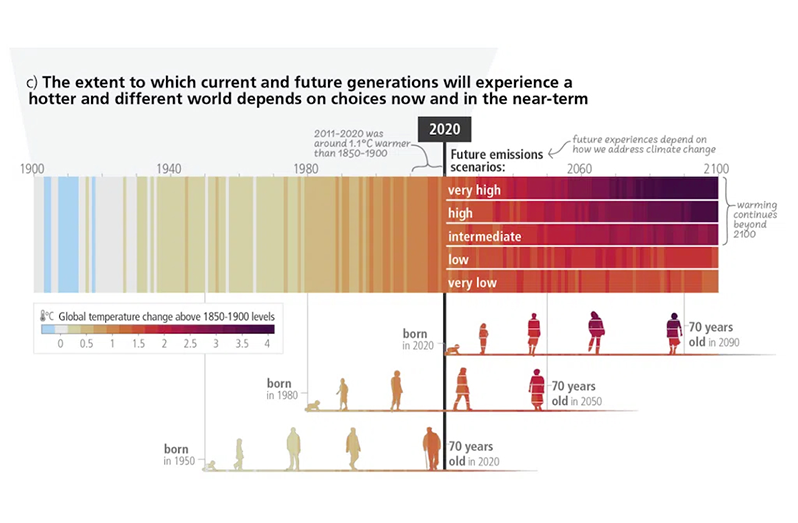
My professor reminded us of life expectancy and that the current older generation will not be here to experience life on a hotter planet. As such, he encourages us all to be active participants in climate justice and action because we will be the unfortunate ones to face the brunt of the consequences. The impacts are no longer something we pass by in a text, because we can feel their effects more and more every day. It is important to note that historical data and research prove that Earth’s climate has naturally changed over time. However, since the Industrial Revolution in the 19th century, many of the changes have resulted from human activities.
As more advocacy is done, more young people are becoming aware of what their future might look like amid the devastating effects of climate change. As such, many young people might also be faced with increased risks of experiencing climate anxiety. This overwhelming stress can lead to a decline in mental health among young people. There is also uncertainty about economic stability. Climate change can reduce job opportunities in agriculture, tourism, and other sectors. While these realities currently exist, we are also taking matters into our own hands. Many believe that it is unfair that this burden was imposed upon us to “make amends” for what generations before us did. Nonetheless, young people are now adopting climate-friendly lifestyle changes. We are reducing our waste and supporting sustainable policies and development. More young people are also becoming environmental and climate academics, students, professionals and scientists. Climate change is a defining issue for young people. While we face serious risks, youth are also driving global awareness, activism, and solutions for a more sustainable future.
We are bringing new ideas and solutions to solve an issue that will mainly affect us in the years to come. Young people will experience the long-term impacts of climate change more than older generations. Rising temperatures, extreme weather, food insecurity, and water shortages will shape our futures—our voices must be heard.