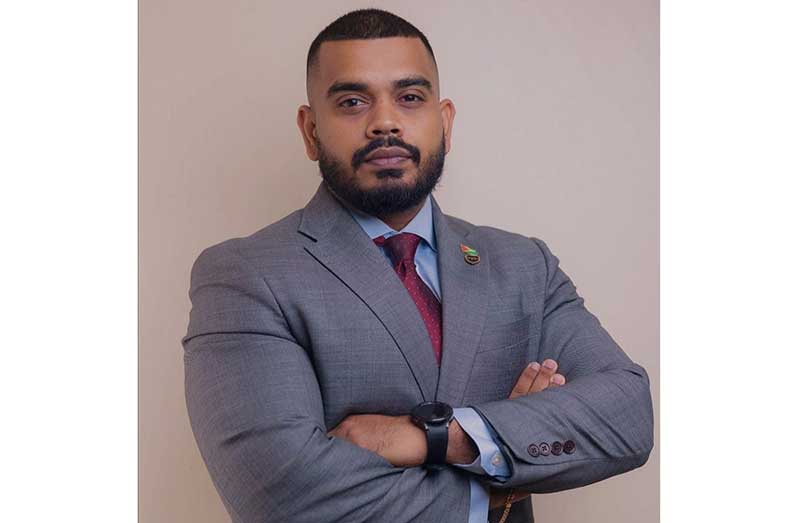
ECONOMIST Richard Rambarran has welcomed the recent staging of BBC World Questions in Guyana, describing the forum as an important step toward encouraging deeper policy discussions and greater public engagement on national issues.
The international programme was recorded last week at Pegasus Corporate Suites in Georgetown and featured a panel discussion with political representatives and policymakers before a live audience.
The panel included Senior Minister in the Office of the President with responsibility for Finance, Dr. Ashni Singh; Opposition Member of Parliament for the We Invest in Nationhood (WIN) party, Tabitha Sarabo-Halley; Founder and Managing Director of Blossom Inc., Ayodele Dalgety-Dean and Secretary of the Private Sector Commission and businessman, Clinton Urling.
The discussion was chaired by BBC journalist, Jonny Dymond.
BBC World Questions is a global public debate programme produced by the British Broadcasting Corporation (BBC), in which audiences from different countries pose questions to a panel of political leaders, experts and public officials on major issues affecting their societies.
Reflecting on the event, Rambarran said the discussion highlighted key policy areas that are shaping Guyana’s development.
“Dr. Ashni Singh, Minister of Finance, I believe he conveyed some excellent points, especially around the Natural Resource Fund (NRF) and the reforms that were made to ensure that the NRF, in its current form, is more stable. It’s more solid and a more structured Act than the one that ensued previously,” Rambarran said.
He noted that the discussion around the management of the country’s oil revenues stood out as one of the most significant moments during the forum.
Another major issue raised during the programme, he said, was the government’s education policies and their implications for national development.
“I believe [another key point] was the one around education and the fact that now education is free from nursery to tertiary, as well as the Guyana Online Academy of Learning Scholarship Programme and what that fundamentally does for human capital or for the development of Guyana,” he explained.
Rambarran argued that forums like BBC World Questions can help move national conversations beyond superficial commentary.
“From my perspective, those were two poignant areas of discussion and I believe that more of these sorts of programmes ought to be done in Guyana to ensure that we can have solid policy discourse,” he said.
According to him, such discussions encourage individuals to publicly present and defend their viewpoints on national policies.
“Because what it really moves us from is an era of cosmetic, surface-level commenting on issues, perhaps social media style or from some sort of anonymity, hiding behind something, into asking: who are you and what do you know about this topic?” Rambarran said.
He added that structured debates require participants to clearly articulate their positions.
“Present your standpoint, present your point which may be critical or present your point which may be supportive of a particular policy measure,” he noted.
Rambarran also observed that many of the questions during the event came from young people, which he said reflects a growing interest among the youth in Guyana’s economic development.
“It was interesting because in the first place, I recognised that there is an interest by young people in the development of our country,” he said.
However, he expressed concern that some questions suggested gaps in the information being consumed by the public.
“But some of the questions that were asked, I think, demonstrate that perhaps information is not being consumed in the way that it ought to be, or that the medium to which consumers are paying attention is either feeding them disinformation or misinformation, or they are not able to get information from accurate and reliable sources,” Rambarran stated.
While he described the level of youth engagement as “heartening,” he said that greater reliance on credible sources of information is important for meaningful national dialogue.
The economist also addressed reactions from some observers who criticised the enthusiastic responses from members of the audience during the programme.
According to Rambarran, strong reactions from the audience are a natural part of public debate, particularly when people feel deeply about issues affecting their lives.
“Well, I’m not sure what one would mean by good behaviour or good example,” he said.
“In particular, if there is passion behind a topic or if someone feels strongly about a point of view, from time to time, when faced with a discussion or an answer that may be evasive from the actual question, you will find that happening.”
He pointed to one moment during the discussion on transparency and accountability where he felt a question was not directly answered.
“There was a discussion about holding public officials accountable… I believe there was an opposition member of parliament there emanating from the major opposition party. And a question was asked directly about the leader of the opposition [Azruddin Mohamed] and there was no response given,” Rambarran said.
He noted that the government representatives were also questioned on several issues relating to accountability.
“The Government of Guyana was pressed on a number of questions in relation to transparency and accountability,” he said.
Rambarran added that the Finance Minister addressed several institutional mechanisms aimed at strengthening oversight, including the Integrity Commission, the Public Procurement Commission and the work of the Auditor General.
Ultimately, Rambarran said public reaction during such forums should be viewed in the context of citizens’ strong interest in issues that affect the country.
“I think one has to understand that we are passionate about issues that impact us. If questions being asked are not answered to the satisfaction of the audience, that type of response can be elicited,” he said.