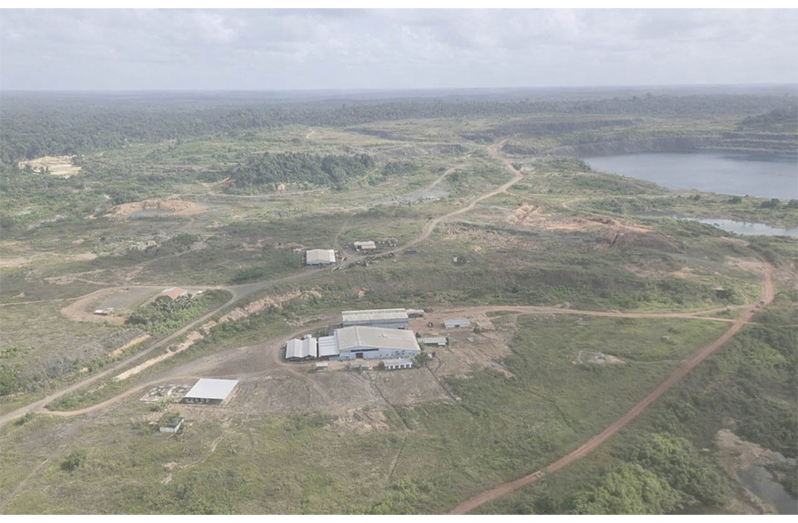
EXPLORATION and development work continue at the Omai Gold Project in Guyana as Avalon Gold Exploration Inc progresses on a path to develop a long-life, large-scale mining operation.
Located in Region Seven, the previous Omai mine still stands as the largest gold producer Guyana has seen to date.
In fact, when in production, it also held the position of the largest primary gold producer in all of South America.
The mine was operated from 1993 to 2005 and produced approximately 3.7 million ounces of gold before operations ceased.
More recently, the site has been the focus of aggressive and persistent exploration activity which has resulted in the discovery of almost twice as much gold as was mined previously.
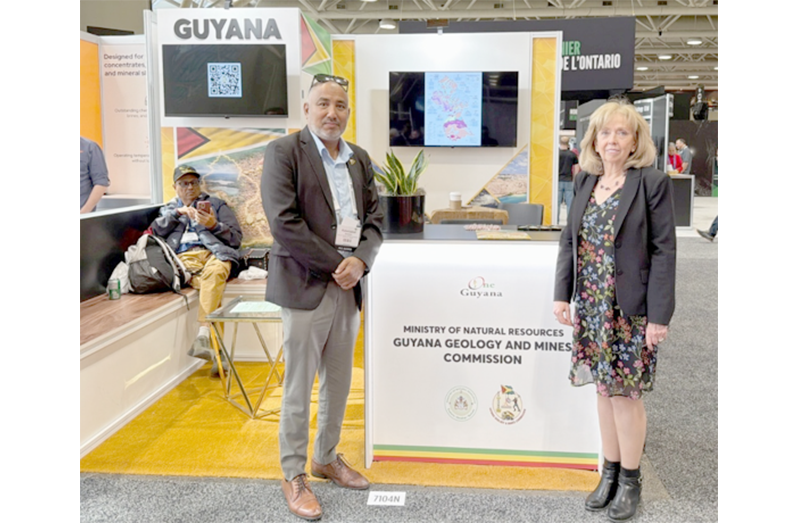
Avalon Gold Exploration Inc., which has been exploring on the Omai Prospecting Licence for the past five years, has completed over 80,000m of drilling, as well as multiple airborne surveys and ground surveys and studies.
The company is currently conducting the required detailed drilling and technical studies to better define the mineral resources and has work underway that will advance the project towards a feasibility study.
Current estimates place combined indicated and inferred resources at approximately 6.5 million ounces of gold.
Almost all of this gold mineralisation is in fresh rock, below-the-surface saprolite, which was previously mined out.
Unlike saprolite, fresh rock requires crushing, grinding and an extraction process to recover the gold.
The project’s main exploration targets are the Wenot deposit and the Gilt deposit, both located within the broader Omai property.
Resource estimates suggest that the Wenot deposit contains roughly 4.7 million ounces of gold that can mostly be mined by open pit.
The adjacent Gilt gold deposit with an estimated 1.8 million ounces of gold is deeper below surface and will require underground mining methods.
Work is completed for the Preliminary Economic Study (PEA), and the results are expected in the second quarter of 2026.
The study will provide an updated technical and economic analysis and include details on the proposed mill size, mining methods and metallurgy.
Work towards the next step, which is a Pre-Feasibility Study (PFS), has already commenced.
Alongside exploration activities, an application for the Environmental Impact Assessment (EIA) was submitted to Guyana’s Environmental Protection Agency.
The process includes environmental studies as well as consultations with communities and stakeholders in areas near the project.
Public consultation meetings have been held in several locations, including Linden, Mile 58, Georgetown and Mahdia.
These meetings aimed to provide information on the project and gather input from residents and other stakeholders.
Employment prospects and potential opportunities for local businesses have been among the main topics raised during these consultations.
As with many large-scale mining projects, development of the Omai site would generate jobs and procurement opportunities.
While the project remains in the exploration and assessment phase, further technical studies and regulatory approvals will be required before development can begin. Presently, the company is doing drilling and resource-evaluation work as part of this process.
Upon approvals, construction of a new mining operation at Omai could begin as early as 2027.
The timeline will depend on the outcome of the environmental review process, technical studies and permitting requirements.
Construction of a new mine at Omai would mark a significant development for Guyana’s mining sector, returning economic activity to a site that played a major role in the country’s economy during the 1990s and early 2000s.