






–Agriculture Minister highlights plan to protect vulnerable communities
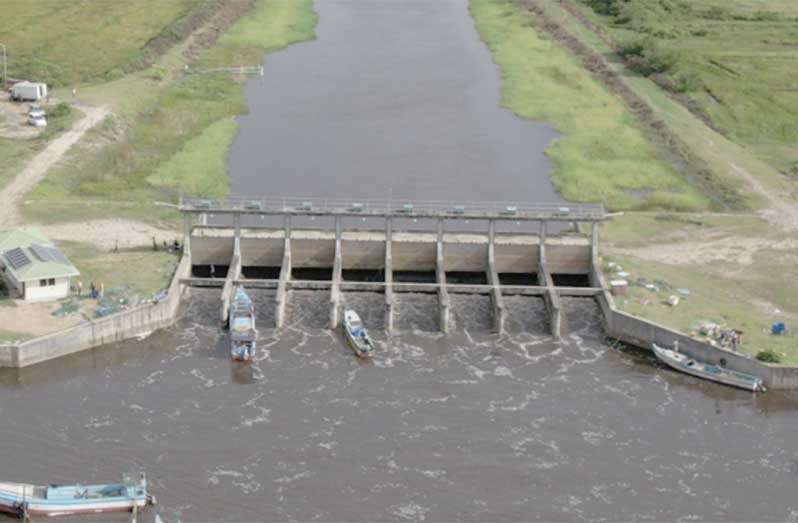
WHILE detailing the plans to expand drainage networks nationwide, Agriculture Minister Zulfikar Mustapha stated that this year will see the rolling out and rehabilitation of new canals, sluices and pumps.
During a recent airing of the ‘Starting Point’ podcast, the minister said the government is constructing approximately five high-level canals in Regions Six and Five.
Those canals will drain the water directly from the backlands, right into the Atlantic Ocean.
Notably, the Hope-like canals currently under construction in Berbice are on track for completion in 2026.
This project is part of the government’s broader strategy to enhance the country’s drainage and irrigation network, particularly in areas that are vulnerable to flooding and drought.
The canals are designed to replicate the successful Hope Canal model on the East Coast of Demerara, which was built to provide a reliable outlet for excess water during the rainy season.
Once operational, the canals located in Regions Five and Six are expected to directly benefit thousands of farmers and households in Berbice by safeguarding farmlands, reducing crop losses and increasing productivity.
The completion of the Hope-like canals will mark another major milestone in the administration’s efforts to modernise the agricultural sector, while protecting communities from the impacts of climate change.
Additionally, almost 63 sluices across the country are being constructed across the country and the minister said they will be purchasing 40 new pumps this year to ensure vulnerable areas are well protected.
He said: “You know for a fact that now climate change is real in these parts of the hemisphere, and we are seeing serious problems whenever we have heavy rainfall. We’ll be doing a number of irrigation canals. These irrigation canals will give fresh water to the farmers.”
Recently, the government expounded on its wide ranging vision to transform Guyana’s agricultural sector into a resilient, high value engine of development and economic growth, which entails a suite of investments and policy priorities that span sugar, rice, livestock, coconut, and other emerging value chains.
In this year’s national budget, $113.2 billion was allocated to support food security.
Recognising the importance of critical drainage and irrigation systems across the country, the sum of $81.9 billion was earmarked to continue improvement countrywide.
Last year, President, Dr Irfaan Ali announced a major step forward in addressing Guyana’s long-standing drainage challenges, revealing that comprehensive plans were in place for improvements to the country’s drainage and irrigation infrastructure starting with Georgetown.
Following extensive consultations, the government had completed detailed mapping and a full-scale assessment of existing drainage facilities, alongside an implementation plan that includes digital mapping of all pump stations and the identification of new sites.
“After consultations, we now have detailed mapping of all drainage facilities, a full-scale assessment, and an implementation plan for Georgetown and every single region, including digital mapping of all pump stations—where they are and where new ones will be located—because drainage is an important aspect of development, especially for a country that is below sea level,” the President said last week during an address in which he outlined the government’s economic plans for the next five years.
Central to the government’s plans for the beautification of the country too is the improvement of waste management and sanitation countrywide; upgrading landfill sites; deploying more critical waste-management equipment; upgrading waste-water treatment and launching an aggressive waste-recycling programme.
The President reaffirmed his administration’s commitment to cleaner communities, sustainable waste-management solutions and the beautification of the country, noting that the plans presented are not merely conceptual.
The National Drainage Task Force concluded its public consultations on the Georgetown Drainage Improvement Project back in November.
These engagements spanned a two-week period, with outreaches in more than 50 communities in 15 constituencies, as well as consultations with several private-sector organisations.
This was a key component of the ‘Rescue Georgetown,’ initiative, a city revival plan for sustainable urban development.
The initiative will include the highlighting of the city’s architectural history, constructing a walking trail along the city, which will lead to the historic transport building and train station, transforming it into a museum and training centre, as well as immediate works on the Stabroek waterfront and improvements to markets and shopping areas.
Alongside the consultations on drainage and irrigation, the government had also commissioned Railway Courtyard located at Lamaha and High Streets, erected a community hub at the Stabroek market square, ushering in the festive season with Christmas décor and fanfare.




