EXXONMOBIL Guyana Limited is preparing to seek environmental approval for a second offshore natural gas project, a move that could significantly broaden Guyana’s energy sector and lay the groundwork for major industrial development, particularly in Berbice.
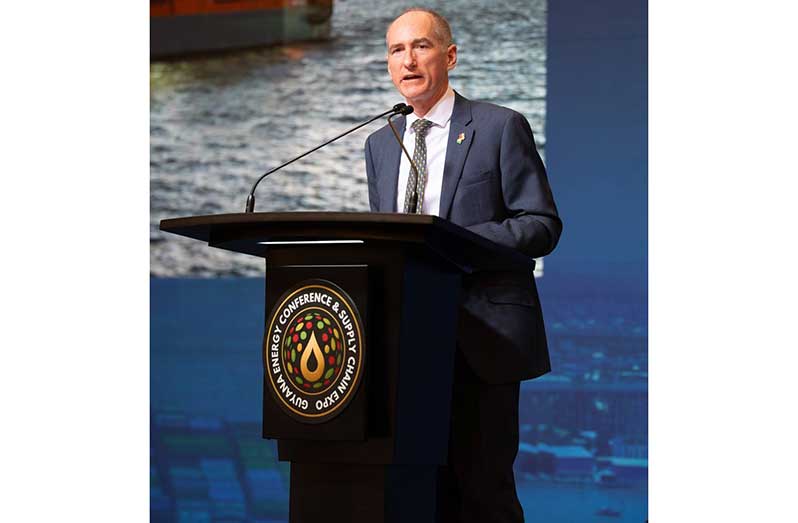
Speaking on the second day of the Guyana Energy Conference and Supply Chain Expo, President of ExxonMobil Guyana, Alistair Routledge, said the company expects to submit a request for environmental authorisation within the coming weeks or months for the proposed development in the southeast section of the Stabroek Block.
The planned project signals a further diversification of Guyana’s rapidly expanding oil and gas industry, building on momentum generated by the country’s first Gas-to-Energy initiative and growing confidence in its natural gas resources.
“We anticipate that in the coming weeks — the next couple of months — we will likely submit a request for environmental authorisation for a second gas project in the southeast part of the Stabroek Block,” Routledge told delegates.
Although Guyana has historically not been known as a gas-producing nation, recent discoveries and ongoing infrastructure planning have strengthened prospects for commercial gas development. Routledge noted that natural gas projects are generally more complex than oil production but said increasing resource confidence and stakeholder support are making the venture more viable.
He explained that developing a full gas value chain remains the primary objective, allowing gas to support domestic industries while opening new export opportunities. Potential uses range from energy generation to petrochemical production and other industrial applications.
Drawing comparisons with Trinidad and Tobago’s long-established gas-based economy, Routledge said successful monetisation requires diversified uses, including liquefied natural gas exports and downstream manufacturing. Guyana, he noted, is still in the early stages, as it currently lacks a developed onshore gas market.
The executive also referenced the government’s broader vision to expand gas utilisation beyond electricity generation, including plans linked to industrial development initiatives associated with the Wales Gas-to-Energy project.
According to Routledge, three critical pillars will determine the success of the proposed project and Guyana’s wider gas ambitions: sustained confidence in the resource, development of adequate onshore infrastructure, and continued collaboration between government, industry and regional partners.
Preliminary work has already begun on key technical considerations, including pipeline design, capacity requirements and potential onshore delivery points.
The proposed development aligns with ExxonMobil’s longer-term plans, which include supplying natural gas to a potential offshore LNG export facility and supporting new industries in Berbice, such as alumina and fertiliser production, as well as possible data centre operations.
If approved and implemented, the initiative could accelerate industrial expansion and position Berbice as a major hub for gas-based manufacturing, further transforming Guyana’s energy landscape as the sector continues its rapid evolution.