






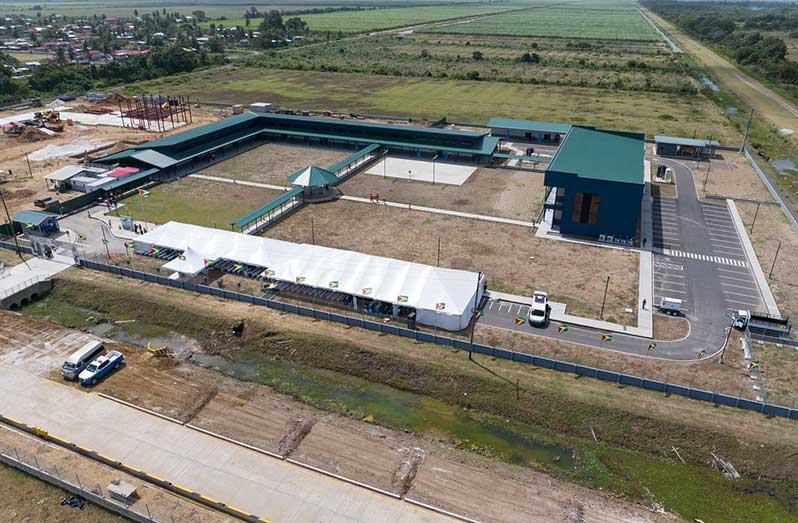
–as Region Six set to become oil and gas training hub
By Bebi Shafeah Oosman
PRESIDENT, Dr Irfaan Ali on Saturday commissioned the US$120 million Guyana Technical Training College Inc (GTTCI) at Port Mourant, underscoring the central role of young people, particularly women, in building a world-class technical training ecosystem to support the country’s rapidly expanding oil and gas sector.
Delivering the feature address, the President said the decision to construct the facility was shaped by strategic engagements in 2020 between the Government of Guyana and its development partners, including ExxonMobil.
He explained that, rather than opting for short-term distribution of oil revenues, the administration chose to channel more than US$120 million into long-term national capacity building, focusing on infrastructure and human capital that will deliver sustained benefits for future generations.
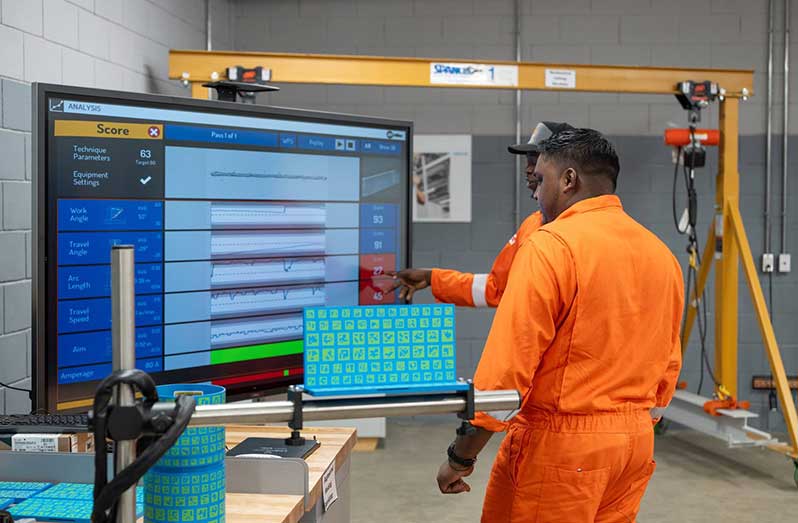
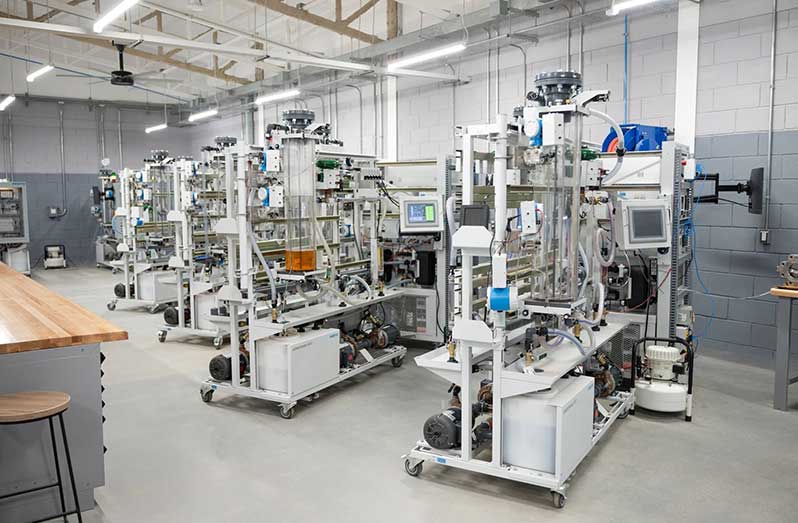
The state-of-the-art institute, outfitted with advanced simulation technology, now joins a limited group of similar facilities globally. President Ali said the selection of Port Mourant was deliberate, given its historic reputation for producing highly skilled technical workers through the former Port Mourant Technical Institute.
During the ceremony, the President invited current GTTCI students, already enrolled in programmes at the institution, to stand, describing them as the true inspiration behind the country’s strategic investment in technical education.
He observed that, a decade ago, significantly fewer young women viewed technical training as a viable pathway, but their growing participation today reflects a transformative shift in Guyana’s development trajectory.
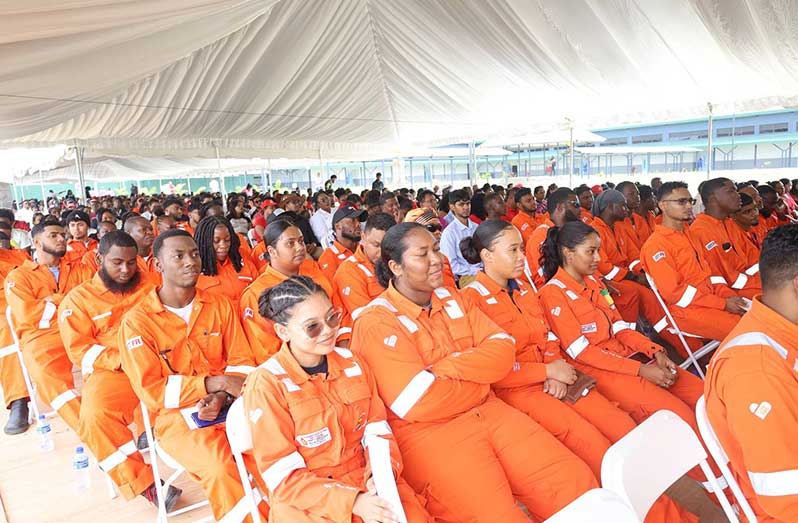
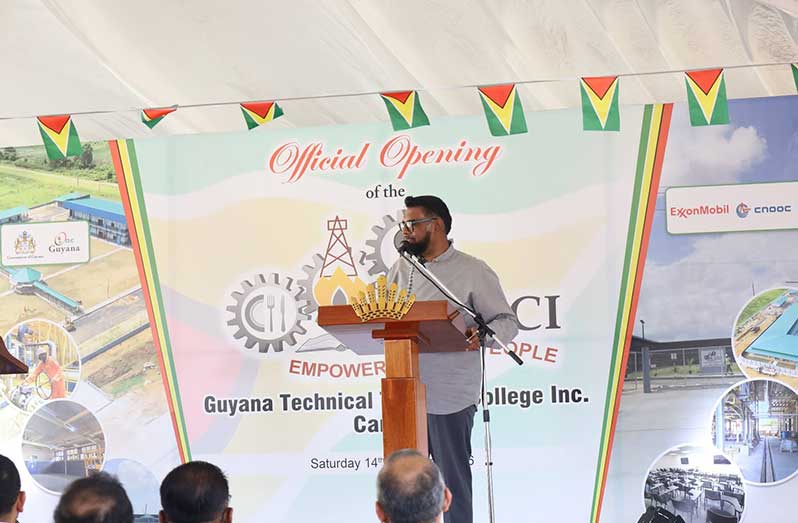
“This is what inspires the future,” the President said, expressing confidence that the next generation will be instrumental in driving long-term national prosperity.
He noted that the commissioning of the college firmly positions Region Six as Guyana’s national oil and gas technical-training capital and a future regional hub for specialised workforce development in the petroleum sector.
The President disclosed that the programme moved from concept to operationalisation in under four years, well ahead of the initial six to seven-year projection.
He emphasised that the facility forms part of a wider development strategy for Region Six, which also encompasses a new nursing school, expanded engineering programmes through the University of Guyana, plans for a comprehensive medical-training presence, a new Level Five teaching hospital in New Amsterdam and major investments in sporting infrastructure.
Further expansion is planned in agricultural training, industrial capacity, and projects linked to the gas-to-energy initiative and the development of a deep-water port, all of which are expected to accelerate economic diversification and regional growth.
President Ali said the training institute is a critical pillar in Guyana’s strategy to convert oil wealth into human capital; strengthen local-content participation; diversify the economy and create stable, high-income technical careers for young Guyanese. He stressed that the development model being pursued advances agriculture, energy, manufacturing and knowledge-based industries simultaneously.
He pointed out that prior to 2020, Guyana possessed significant petroleum resources but lacked a structured national framework to train its own technical workforce. The establishment of the institute, he said, now guarantees the development of certified local technicians, expanded industrial capability, and greater economic sovereignty. The objective, he added, is not merely resource extraction but the deliberate construction of enduring national capacity.
The President stressed that the development unfolding in Berbice, including infrastructure, housing, education and industrial expansion, positions the region for unprecedented growth and opportunity in the years ahead.
Meanwhile, Director of the GTTCI, Professor Clement Sankat, told the gathering that the transformation reflects the vision of President Ali and the Government of Guyana, “but not only a vision, his tremendous capacity for action and shaping the new Guyana for opportunities for our people.”
According to Sankat, the technical training college forms part of the “new Guyana,” adding that “our President’s vision is to train Guyanese students at GTTC using global standards and best practices.”
In 2024, Guyana’s first state-of-the-art oil and gas training facility — The FacTor (Facility Simulator) — was commissioned at Port Mourant, Berbice, Region Six. The US$13 million (GY$2.6B) project represented the first phase of the wider Guyana Technical Training College Inc.
Sankat disclosed that three batches of students have already been trained. The programme for those students was conducted in Canada, with practical training completed at the FacTor, after which the graduates were employed on various ships. However, with the commissioning of the training college, students will no longer have to travel overseas as the entire programme will now be delivered in Port Mourant with the necessary accreditation. “The need to send our students to Canada for such training has come to an end.”
He noted that the college is among the few, globally, offering such specialised training, positioning Guyana to attract overseas students and earn regional and international recognition.
President of ExxonMobil Guyana, Alistair Routledge, in his remarks, stated that President Ali holds a fundamental belief in maximising the opportunities from oil and gas resources. He said discussions commenced on ensuring Guyanese benefit in every aspect, with the government making it clear that Guyana intends to raise its standards to be among the best in the world, and that the institute’s standards must match that ambition.
Routledge also underscored the importance of Professor Sankat’s role in advancing the project and maintaining high standards throughout construction, while reiterating the government’s focus on developing a globally competitive, skilled workforce.




