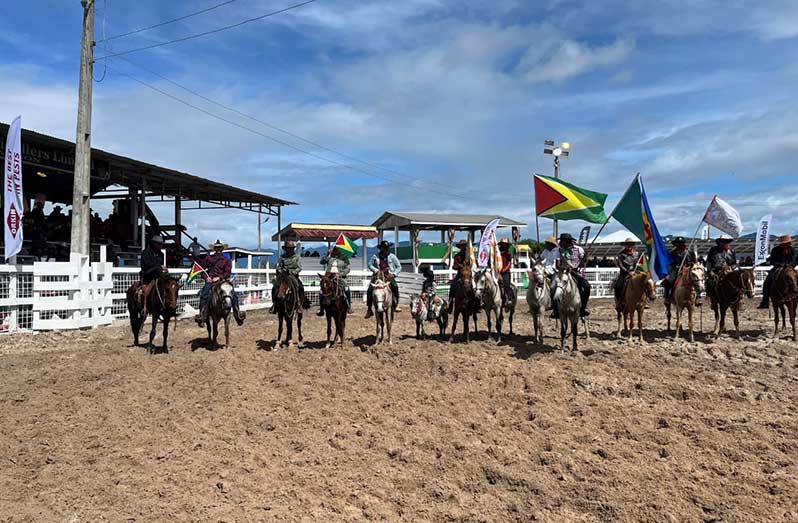
BEFORE the sun rises, the Rupununi is already alive. In the blue-grey calm of morning, vaqueros move quietly across the rodeo grounds. Boots sink into dry earth still cool from the night. Horses snort softly, their breath visible in the morning air. Saddles are lifted, ropes uncoiled, and bridles checked by hands that have done this thousands of times before. Nearby, a small fire burns, coffee strong and black, shared in a communal ceremony. This is the rodeo before the crowd. Before the dust. Before the noise. For the vaqueros of the Rupununi, the Rupununi Ranchers’ Rodeo does not start when the gates open. It begins here, at first light, in ritual, memory, and traditions passed down through generations. More than sixty years ago, there were no grandstands or announcers.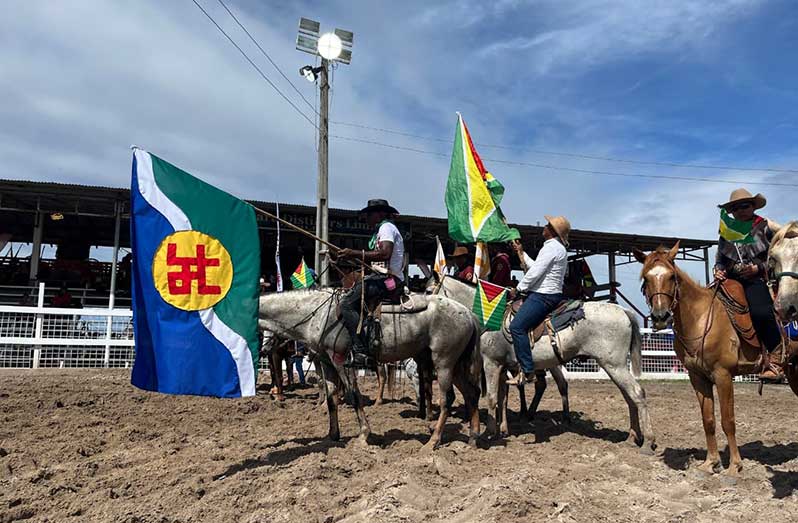
What existed were annual cattle roundups held across the Rupununi Savannahs in the 1950s and 1960s, before the rains came. Ranchers gathered to brand cattle, separate herds, assess livestock, and prepare for flooding that would soon change the land. When work ended, the vaqueros tested one another informally at first. Who could ride the wildest horse? Who could rope cleanest and fastest? There were no prizes, only reputation and pride. That story, of a rodeo born as an extension of ranch life, was highlighted at the Georgetown launch earlier this year. Organisers reminded audiences that the event grew from necessity, skill, and community, not from a desire for spectacle. It was a reminder that the rodeo’s roots run far deeper than Easter weekend. From Savannah to the National Stage.
As participation grew through the 1960s and 1970s, the informal competitions moved from ranches to public places, including the Stock Farm at St. Ignatius, before finding a permanent home in the 1980s at Tabatinga, Lethem—now known as the Triple R Rodeo Grounds. By that time, the rodeo had become an annual event, held over Easter when travel across the savannahs is easiest and when roundups historically took place.
At the Georgetown launch, organisers described that evolution as organic rather than engineered. This tradition expanded because communities embraced it, not because it was planned to grow. This year’s rodeo is backed by a team that was often described at the launch as vibrant and committed. This team combines deep ranching roots with a clear national vision. Alongside the vaqueros, organisers highlighted the vibrant team shaping this year’s celebrations. Led by the Rupununi Livestock Producers Association’s (RLPA) Chairman Kyle Joseph, with strengthened collaboration from the Ministry of Tourism, Industry and Commerce and the Guyana Tourism Authority, the team was described as both rooted and forward-looking — committed to preserving authenticity while positioning the rodeo as a flagship national cultural event. Speaking at the launch, Joseph emphasised that bringing the rodeo to Georgetown was not about changing its identity, but about meeting partners where they are and ensuring the Rupununi story is heard and supported across the nation. This year’s Rupununi Ranchers’ Rodeo will be held from April 3 to April 5, 2026, at the Triple R Rodeo Grounds in Lethem, Region Nine, during Easter weekend. Today, the Rupununi Ranchers’ Rodeo is one of Guyana’s most well-known cultural events. It attracts spectators from around the country and visitors from Brazil, North America, and Europe. But its origins have never shifted.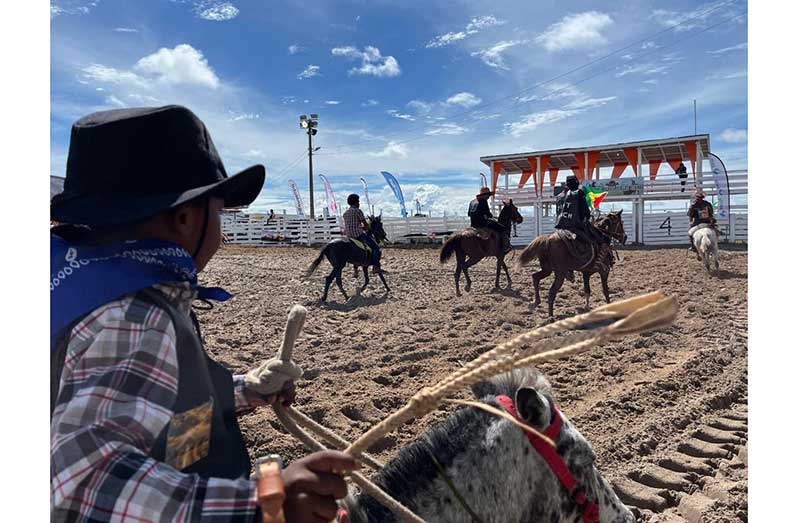
“The vaquero remains at the heart of this story,” one speaker noted at the launch. “Everything else grows around that.” The term “vaquero” itself tells a story—one of cross-border movement, Brazilian influence, and a ranching culture shaped by geography rather than borders. In the Rupununi, vaqueros are not performers trained for an arena. They are horsemen and women whose everyday lives demand mastery of riding, roping, and handling animals across vast, open savannahs. Events like bareback bronc riding, calf roping, and wild cow milking are not just symbols; they are competitive displays of real work—skills learned at a young age, often from parents and grandparents who once rode the same grounds. At the launch, speakers pointed out that the rodeo serves as a living record—a place where intergenerational knowledge is not documented but demonstrated, roped, and repeated. Over time, the rodeo has grown beyond competition.
Today, it unfolds as a multi-day cultural festival featuring horse racing, music, parades, food fairs, craft and agricultural markets, pageants, and dance. Government representatives at the launch spoke candidly about the rodeo’s expanding role in cultural tourism and regional development, noting its economic impact on Region Nine—from transportation and accommodation to small vendors and artisans. But there was also a clear note of caution. As one organiser said, “Growth must never come at the cost of authenticity.”
The goal, they said, is not to remake the rodeo but to preserve what makes it distinctly Rupununi while allowing more Guyanese to experience it. Back at the rodeo grounds, the sun has risen. Dust swirls as horses are led toward the pens. Music floats across the savannah. Spectators gather, cameras in hand. The vaqueros mount up. When the gate swings open and the crowd erupts, it may look like a sport. But beneath the spectacle lies something older—a tradition shaped by land, hard work, and resilience, still honoured quietly at dawn before anyone is watching.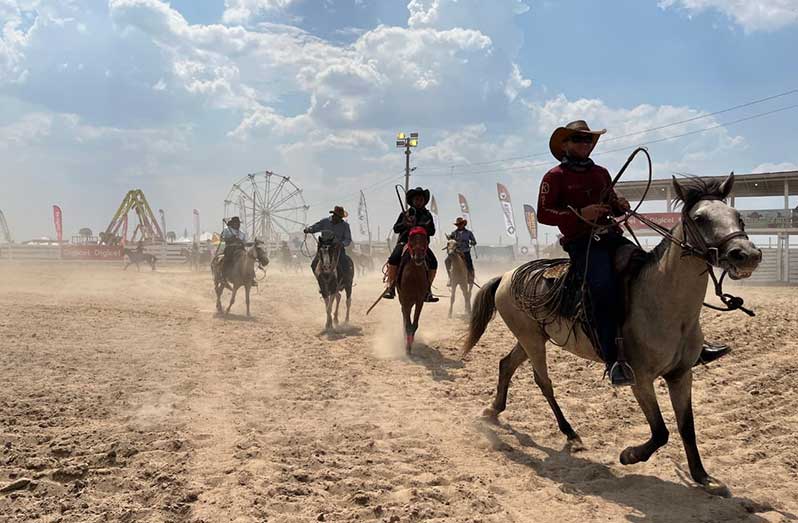
The 2026 celebrations are expected to be a major homecoming event, with renewed emphasis on Guyanese culture, local creatives and community participation. Organisers and government representatives pointed to the rodeo’s expanding role within what recent reports describe as Guyana’s growing “orange economy” — where culture, creativity and heritage generate both identity and income. From artisans and musicians to food vendors, designers, and performers, the rodeo weekend has become a powerful platform for showcasing local talent while driving economic activity across Region Nine. As the Rupununi Ranchers’ Rodeo continues to grow in national and international recognition, it stands as a unique opportunity: a cultural institution that remains rooted while reaching outward. For partners and sponsors seeking to connect with heritage, authenticity, and community impact, the rodeo provides more than visibility. It offers a chance to be part of a living Guyanese story—one that has lasted for generations and, with the right support, will keep moving forward.