–as tourism numbers soar
GUYANA’S aviation landscape is changing due to rapid economic growth, increased international attention, and efforts to promote the country as a top travel destination.
These elements have led to record numbers of visitors for business and leisure, prompting a re-evaluation of the country’s air connectivity management and expansion.
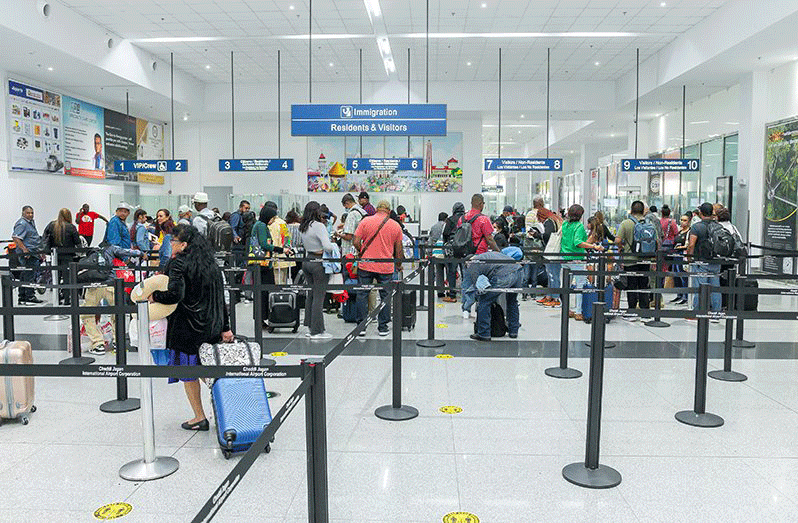
At the centre of this response is the Cheddi Jagan International Airport (CJIA), which has transformed over the years from a small international gateway into an important hub for investors, tourists, and the Guyanese diaspora.
The rise in visitor numbers has exposed the limitations of the current infrastructure, such as congestion during peak hours and the need for better passenger processing and services. The government has stated that to continue attracting investment and eco-tourism, the airport must meet the demands of its ambitions.
In this light, plans to significantly expand and modernise CJIA are in progress. During the current term, the government, according to Senior Minister in the Office of the President with Responsibility for Finance, Dr Ashni Singh, will build the new arrivals terminal as part of a broader initiative to align the airport with international standards and to establish it as a fully functional regional transport hub with in-transit capabilities.
Preparatory work on this new facility, covering 150,000 square feet, started in 2025, showing that the project is moving from concept to execution. Budget 2026 underlines this commitment with a substantial allocation of $3.2 billion for the new arrivals terminal.
This investment aims to create a foundation for ongoing tourism growth, increased investor confidence, and stronger regional ties.
A larger, more efficient terminal will enhance the passenger experience from landing to exit, shorten waiting times, and allow CJIA to accommodate more flights and larger aircraft comfortably.
The expansion of CJIA will be supported by plans for new municipal airports and the upgrade of hinterland airstrips, all focused on building a smooth national and international air network. These initiatives recognise that Guyana’s tourism extends beyond the coast and capital.
More visitors are drawn to the interior, its rivers, rainforests, waterfalls, and indigenous communities, necessitating safe and reliable access to remote areas.
Improved hinterland airstrips and new municipal facilities will facilitate this shift, ensuring tourism growth benefits communities beyond Georgetown.
Overall, the new arrivals terminal at CJIA, the establishment of additional municipal airports, and the ongoing upgrade of hinterland airstrips contribute to a well-rounded aviation strategy.