






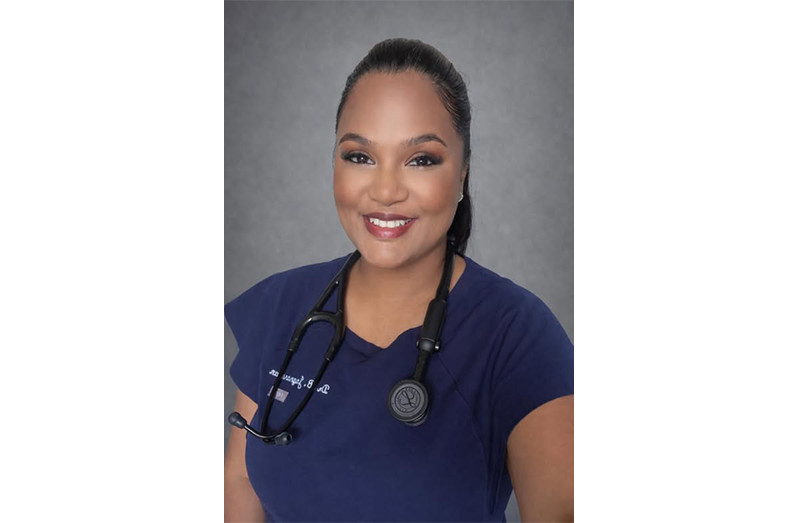
FROM childhood play that mimicked healing to a career grounded in service and social responsibility, Bibi Jagnarayan’s journey into medicine has been shaped by compassion, curiosity, and commitment to community health.
Long before medical school, Dr Jagnarayan was already imagining herself as a healer. Her mother remains one of the strongest influences in her decision to pursue medicine, nurturing a calling that would grow into a life-long vocation.
Dr Jagnarayan, Medical Officer at the Campbellville Health Centre, trained as a medical doctor in Cuba, where medical education is deeply rooted in community-oriented, preventive care and a strong awareness of social determinants of health. This experience shaped her clinical philosophy, emphasising not only the treatment of disease but also the conditions in which people live, work, and age.
Over the past decade, she has accumulated extensive clinical experience, including two years in obstetrics and gynaecology and more than five years in family medicine, an area that allows her to provide continuous, comprehensive care to patients across the lifespan.
Her academic journey reflects the same integrative vision. In addition to her medical degree, Dr Jagnarayan holds a Master’s degree in Global Public Health and is currently pursuing a Master’s in Family Medicine. Together, these disciplines strengthen her ability to blend clinical expertise with public-health principles, enabling her to deliver holistic, equitable care tailored to diverse and often underserved populations.
In family medicine, no two days are the same. Dr Jagnarayan’s work involves a dynamic balance of outpatient care, preventive services, chronic disease management, and patient education.
She works closely with multidisciplinary teams to address not only immediate medical concerns but also the broader social and environmental factors that influence health outcomes. Drawing on her background in obstetrics and gynaecology, she frequently provides women’s health services and prenatal care, ensuring continuity and trust throughout different stages of life. Community outreach and population-health initiatives are also integral to her practice, reinforcing the bridge between clinical care and public health.
What she finds most rewarding is the opportunity to build lasting relationships with patients and families. Family medicine allows her to walk alongside patients through illness, recovery, and long-term wellness.
For Dr Jagnarayan, helping underserved patients overcome barriers to care and witnessing how education and support empower them reaffirms her purpose. The continuity of care inherent in family medicine, and the privilege of being a trusted presence in patients’ lives, remains deeply fulfilling.
At the core of her practice is a personalised, patient-centred approach. Dr Jagnarayan prioritises shared decision-making and culturally sensitive communication, recognising that health is shaped by social, economic, and environmental realities. Her goal is simple yet profound: to ensure that every patient feels seen, heard, and better when they leave her care than when they arrive.
Dr Jagnarayan believes patients value empathy above all else.
She shared, “Doctors are like the mothers of this world: as a child, if you scrape your knee, you run to your mother for that comfort and care, and that is essentially what a doctor embodies. Patients often value being heard, respected, and involved in their care decisions. They look for trustworthy relationships where their unique circumstances are understood and addressed, not just their symptoms.”
Beyond individual care, Dr Jagnarayan sees family medicine as a cornerstone of public healthcare. By integrating prevention, chronic disease management, education, and community engagement, family medicine departments help reduce health disparities and promote health equity. They serve as essential access points for underserved populations and contribute to sustainable public health systems.
On challenging days, her motivation comes from a deep sense of responsibility to her patients and a belief that prevention is always better than cure. By delivering effective primary care, she not only improves individual lives but also eases the burden on hospitals, strengthening the healthcare system as a whole.
Dr Jagnarayan advises young doctors and medical students to embrace life-long learning, cultivate empathy, prioritise their own health and strengthen communication skills alongside clinical expertise.
Looking to the future, Dr Jagnarayan hopes to see expanded access to quality primary care throughout Guyana in both urban and rural communities. She envisions a healthcare system that prioritises equity, invests in its workforce, strengthens public health infrastructure, and fosters collaboration between healthcare providers and community organisations.
For Dr Bibi Jagnarayan, medicine is more than a profession, it is a life-long commitment to care, community, and the belief that meaningful change begins at the primary level, one patient at a time. (GPHC)




