






THE Ministry of Education has issued detailed guidance to Grade 10 and Grade 11 students as they prepare for the second Caribbean Secondary Education Certificate (CSEC) mathematics mock examinations set to take place soon.
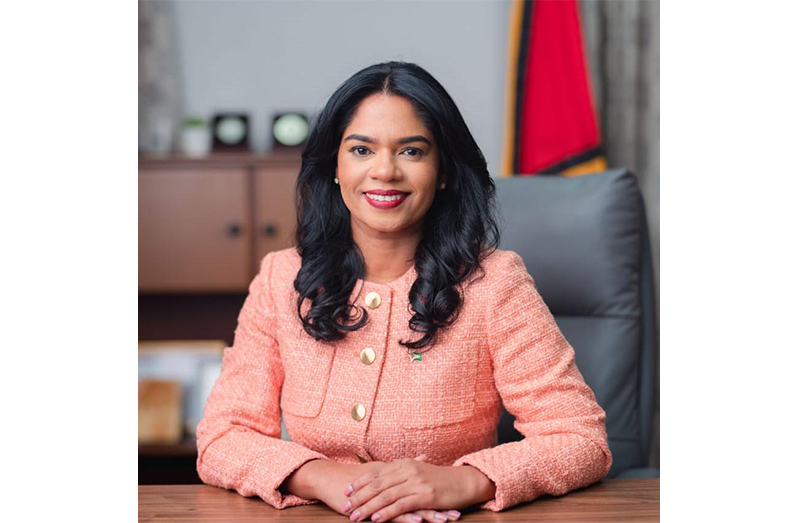
This was disclosed in a video message posted to the ministry’s Facebook page during which Minister of Education Sonia Parag said the guidance is aimed at easing anxiety among students, while helping parents support effective preparation ahead of both the mock examination and the final exam set for May.
“I know you students… are anxious, you’re a bit nervous, and you need some guidance,” Minister Parag said, noting that mathematics remains critical to students’ academic development and future opportunities.
The upcoming mock examination will test parts of the Grade 10 syllabus alongside content that will appear in the final CSEC examination. According to the ministry, performance in the first mock exam held in December was used to identify areas where students require additional support.
Head of the ministry’s Mathematics Intervention Programme, Leon Beaton, explained that the CSEC mathematics exam consists of three components: the School-Based Assessment (SBA), worth 20 per cent; Paper One, which accounts for 30 per cent; and Paper Two, which carries the remaining 50 per cent. He emphasised that strategic preparation across all components is essential.
“Once you work strategically, passing the exam becomes a lot easier,” Beaton said.
For Paper Two, Beaton identified computation and number theory as a major focus area. This includes fractions, approximations, percentages, ratios, consumer arithmetic and effective use of the scientific calculator. He urged students to become confident with their calculators, noting that strong calculator skills can significantly boost scores.
Added to this, algebra was highlighted as another critical topic. Students should be able to simplify expressions, solve equations and linear inequalities, substitute values into expressions and solve simultaneous equations using either the substitution or elimination method.
Statistics is also expected to feature heavily, even as Beaton advised to practise completing frequency tables, distinguishing between class limits and class boundaries, calculating cumulative frequency and determining probability.
To this end, functions were described as an area where students should aim to maximise marks. This includes evaluating functions, finding composite and inverse functions, and solving equations involving function notation.
“You should not be getting anything wrong in the functions question,” Beaton said.
Students should also focus on other key areas such as patterns and sequences, matrices, and related topics.
Meanwhile, for paper one, Beaton encouraged students to practise multiple-choice questions extensively, using CSEC-style past papers.




