By Trina Williams
THE government has unveiled sweeping proposals to overhaul Guyana’s solid waste management framework, with the draft Integrated Solid Waste Management Bill placing strong emphasis on a circular economy model, stricter enforcement mechanisms and penalties exceeding $2 million and/or imprisonment for serious breaches.
At a national consultation held on Friday at the Arthur Chung Conference Centre (ACCC), Minister of Local Government and Regional Development, Priya Manickchand, highlighted that accountability, recycling and modernisation form the backbone of the proposed legislation, which seeks to replace Guyana’s fragmented and outdated waste governance system with a single, comprehensive framework.
The Bill provides for the establishment of a National Waste Management Authority, alongside a National Waste Management Committee comprising representatives from key agencies, tasked with policy oversight, coordination and regulatory enforcement.
Legal Consultant for the United Nations Environment Programme (UNEP) Zero Waste Programme, Rommel St. Hill, presented the findings of a comprehensive legislative review that informed the drafting of the Bill. Currently, Guyana’s legal framework for solid waste management is fragmented and St. Hill pointed out that existing regulations fail to adequately address modern waste challenges.
Weak legislative frameworks could lead to escalating environmental damage, public health risks and long-term economic consequences if corrective action is not taken. In this regard, the government is pushing aggressively to modernise waste management across Guyana.
A series of new and revised definitions were added, such as circular economy, extended producer responsibility, polluter-pays principle, E-waste, special care waste and waste picker.
According to the draft bill, these terms broaden the regulatory scope beyond traditional landfill control toward resource recovery, recycling and producer accountability. The inclusion of these concepts enables clearer policy alignment with sustainable production and consumption
models and clarification of obligations under the new Solid Waste Management and Waste Recovery Act, 2026.
The transition into a circular economy was also stressed upon as St. Hill noted that it is not simply about using and disposing. The circular economy approach —which will see designing, production, reusing and consumption— will see capacity building and operational transaction, instead of linear approach.
Additionally, graduated enforcement system—complaint procedures, compliance orders, record inspections, notices of violation and a new ticketing mechanism for minor offences and financial-security refund provisions were clarified to deter non-compliance.
The draft regulation proposes a fine of not less than two million dollars or imprisonment for a term not exceeding three years or to both, for the unlawful removal and disposal of waste, disposal of waste without approval, littering, unauthorised disposal and making false or misleading statements as it pertains to the issue, grant or renewal of any licence or permit under this Act.
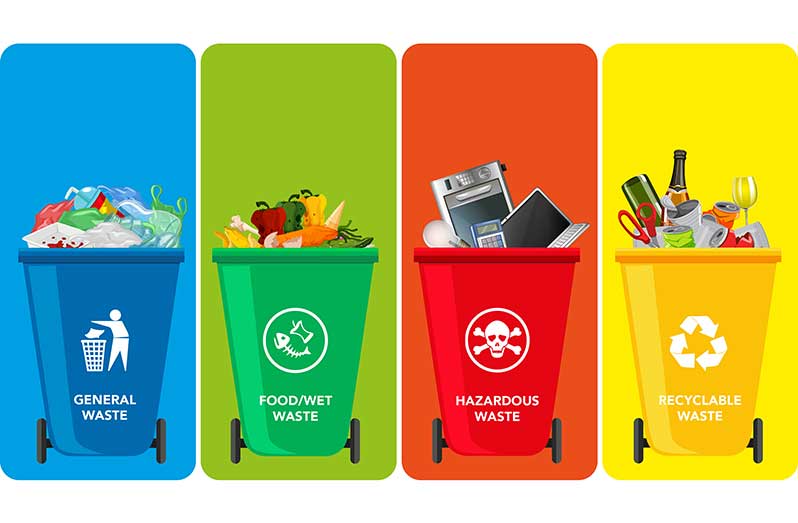
Separate, detailed rules were added for biomedical waste, used oil, waste tyres and special waste. Colour-coded segregation systems, mandatory sterilisation, labelled containers and staff training were inserted to enhance safety and traceability.
The bill also establishes an oil and gas waste integration framework, which aligns with the Petroleum Activities Act and the Environmental Protection Agency (EPA)’s mandate—to ensure that the management of this type of waste is done through a national system.
It is anticipated that the completion of drafting coupled with stakeholder consultations will take six months, parliamentary consideration in 12 months and the completion of capacity building and operational rollout in 18 months.