–urges return to in-person court hearings, highlights gaps in legal practice
–stresses need for professional accountability, modernisation at Law Year 2026 opening
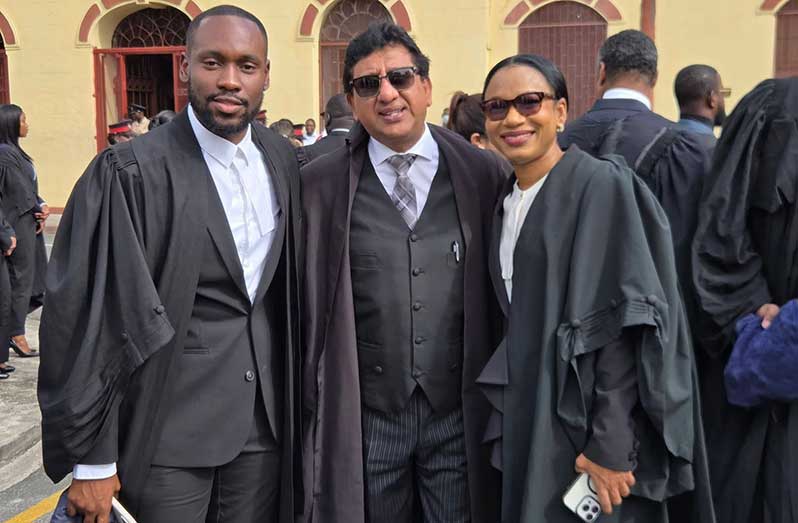
AT the opening of Law Year 2026 at the High Court in Demerara, Attorney General and Minister of Legal Affairs Anil Nandlall, SC, delivered a candid address that spotlighted concerns over the conduct of magistrates and the wider legal profession, urging a return to in-person hearings and greater adherence to existing legislation.
Speaking to the gathering of mostly legal professionals, Nandlall highlighted that certain laws, particularly those governing plea-bargaining, restorative justice, and paper committals, are being ignored in Magistrates’ Courts.
He emphasised the mandatory nature of these provisions, stating: “The first section of the plea-bargaining legislation mandates a magistrate to put plea-bargaining as an option to the defendant.”
Nandlall stressed that while the government and parliament have introduced innovative laws reflecting global legal developments, these tools are underutilised.
“We are churning out, at the level of the Executive and the Parliament, a tremendous amount of new, modern, and innovative legislation, capturing the developments that are taking place in the law. But I say this with the greatest of respect: I don’t think that we are reading them. We are not reading the law,” Nandlall stated.
Beyond legislative compliance, he addressed the impact of the COVID-19 pandemic on legal training and professional development.
He argued that the shift to virtual hearings has diminished the learning opportunities traditionally available to young lawyers through in-person observation of senior counsel.
Nandlall said: “Madam Chancellor (ag) Justice Roxane George-Wiltshire, SC, I’m hoping that I can persuade the judiciary to resort to in-person hearings with greater regularity. I do not underestimate the value of Zoom hearings. They have great utilitarian value in relation to certain applications. But trials, submissions, presentation of oral arguments, I believe should be done in person.”
The Attorney General reflected on his own experience, noting that the practical lessons learned from observing court proceedings in person are irreplaceable.
“The amount of knowledge that I gathered on the corridors of the court alone can equal my learning of law in the law school. And we have lost that. And it is being reflected in the conduct of this new generation of lawyers. And you can’t blame them because they have not seen anything better,” he said.
EROSION OF PROFESSIONAL CAMARADERIE
Nandlall also highlighted the erosion of professional camaraderie among lawyers due to the lack of personal interaction in recent years. He observed that young lawyers, particularly those graduating in the last five years, remain largely unknown to their senior counterparts, a phenomenon he described as unprecedented.
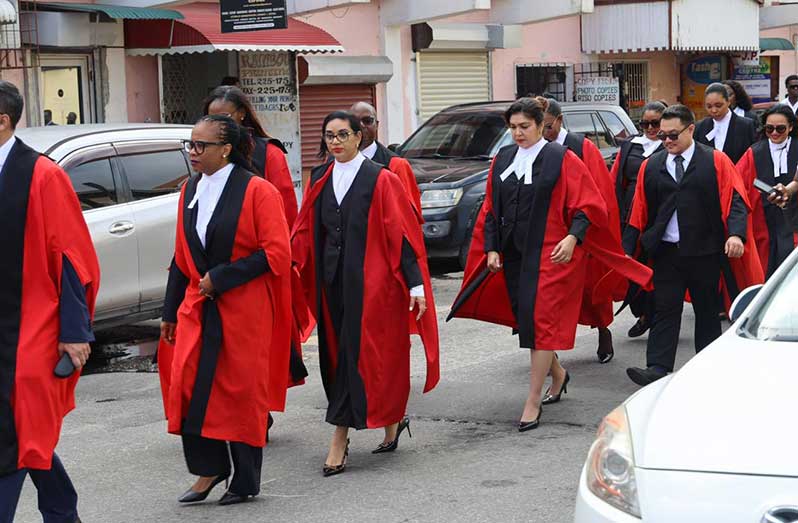
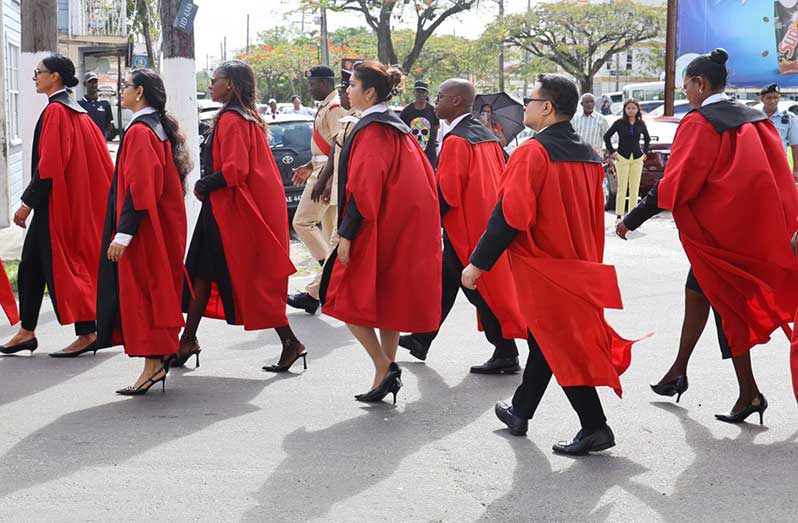





The Attorney General said: “Half of the lawyers here who graduated over the last five years are unknown to lawyers who graduated before. And I don’t think we have had that degree of unfamiliarity at any stage of the legal profession before.”
Despite these challenges, the Attorney General acknowledged progress in judicial efficiency, particularly in estate matters and high court cases.
He noted that backlogs have significantly decreased, though some pending appeals, including cases from as far back as 2016, still highlight areas needing improvement.
“I had a brief conversation with the Honorable Chief Justice [Navindra Singh] last week, and I was pleased to note that the backlog in estate matters has almost been completely dissipated. There is hardly any backlog in the High Court. But, no doubt, with the addition—the increased complement of judges at the Court of Appeal—will enhance and augment expediency in the hearing and disposal of cases,” he said.
Nandlall also drew attention to initiatives aimed at strengthening legal research and resources. He announced plans for the launch of the revised Laws of Guyana, updated from 2012 to 2022, as well as the Guyana Law Reports from 2008 to 2021.
He emphasised the importance of law reporting in maintaining doctrine of precedent, consistency, and predictability in the legal system.
AG Nandlall said: “Law reporting is important for the legal profession, it’s important for the doctrine of precedent, it’s important for the judges to have easy access to their decisions… I am hoping that the now regular publication of the law report would be an added incentive for us to do research and for us to write.”
GRADUATE INDUCTION SYSTEM
Addressing young lawyers directly, Nandlall highlighted the challenges of entering the profession and called for reforms to ease the transition. He advocated for a graduate induction system, continuing education, and mentorship programmes.
“It is unreasonable to expect a lawyer just emerging out of law school, being shouldered with that magnitude of responsibility. I advocate for a graduate induction into the profession. And all these mechanisms exist in other jurisdictions far more advanced than ours. We need a system of rigid and accountable continuing education,” he said.
Concluding his remarks, the Attorney General urged the legal profession to embrace responsibility and accountability to maintain its self-regulatory status, stressing the ongoing transformation within the judiciary and the broader legal landscape.
“You have a facility no other profession has. You are self-regulatory and don’t take that professional autonomy for granted. To remain self-regulatory, you have to become responsible and you have to become accountable.”