

NEATLY tucked away along a quiet street in Den Amstel Village, West Coast Demerara, is the well-kept home and farm of Abiola “Goldie” Hill. Surrounded by flowering plants, fruit trees, and food crops, her property reflects disciplined land use and purposeful production. More than a personal enterprise, Hill’s small-scale livestock operation represents a critical link in Guyana’s contribution to national and regional food security efforts, particularly within the CARICOM framework.
A resident of Den Amstel Village for the past 27 years, Hill relocated from Wakenaam Island in the Essequibo River following her marriage. Over time, she has become a respected community figure, recognised for her work ethic and her role as a female farmer contributing meaningfully to the domestic meat supply. At 50 years old, Hill embodies a growing cohort of women whose agricultural activities strengthen rural livelihoods while supporting broader food security objectives.
Hill told Pepperpot Magazine that she grew up in Maria’s Pleasure, Wakenaam Island, in a household not traditionally engaged in agriculture. Her mother worked as a sweeper and cleaner, while Hill herself was employed in a village shop. Her transition into farming was therefore neither inherited nor accidental, but rather shaped by opportunity, resilience, and increasing access to government-supported agricultural systems.
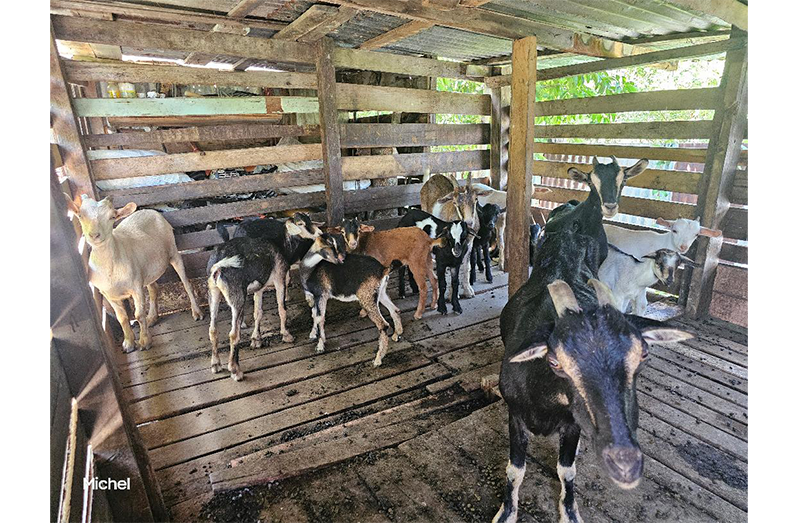
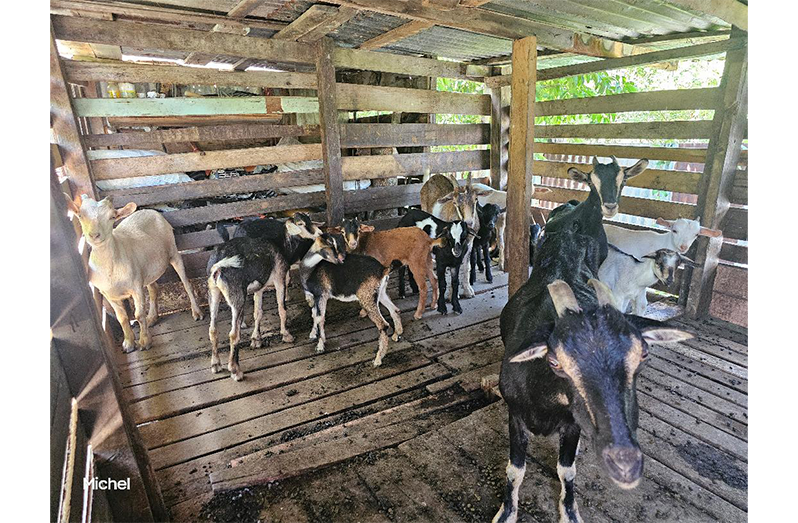
Today, Hill rears sheep, goats, and cattle, while cultivating crops and fruit trees within her farm. Her livestock enterprise is her primary source of income and contributes directly to the availability of locally produced red meat. By supplying sheep and goats to the domestic market, Hill helps reduce Guyana’s dependence on imports, a key pillar of food security and a central objective of CARICOM’s regional agricultural agenda.
Hill’s entry into small ruminant farming began approximately 12 years ago when an abandoned dog kennel—left unused after the family dog stopped returning home—was converted into a sheep pen. Around the same time, Hill invested her Penny Banking savings into livestock. With her husband’s support, the first sheep was purchased, laying the foundation for a production system that consistently contributes to the local meat supply.
Despite early success, Hill faced significant challenges, including a devastating dog attack that resulted in the loss of approximately 25 sheep. At the time, her animals comprised Creole, Nubian, and Barbados Black Belly breeds. Rather than exiting the sector, Hill diversified into goat production, an adaptive strategy that strengthened household resilience and maintained continuity of supply to the local market.
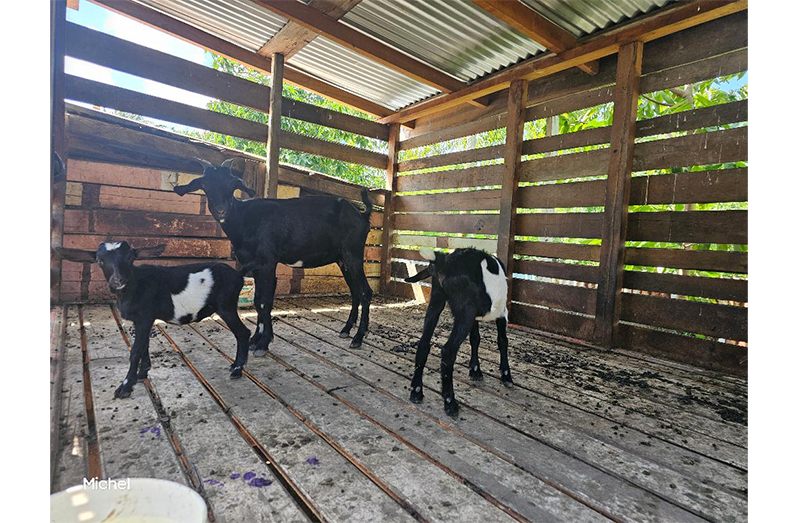
Her goat enterprise began after her younger daughter, Kendra, received a goat as a gift following the Common Entrance Examination. With the acquisition of a ram, the herd expanded rapidly. At peak production, Hill managed approximately 40 goats and nine sheep, while her husband maintained 10 cattle for beef production and breeding. Collectively, these enterprises contribute to the steady flow of meat into village and regional markets.
Hill is the mother of two daughters, with her younger daughter, Kendra, sharing her passion for agriculture. A trained Agricultural Science teacher, Kendra actively supports animal husbandry practices on the farm, reinforcing the application of science-based methods in small-scale livestock production. This intergenerational transfer of skills strengthens the sustainability of the operation and aligns with national efforts to modernise agriculture through education and training.
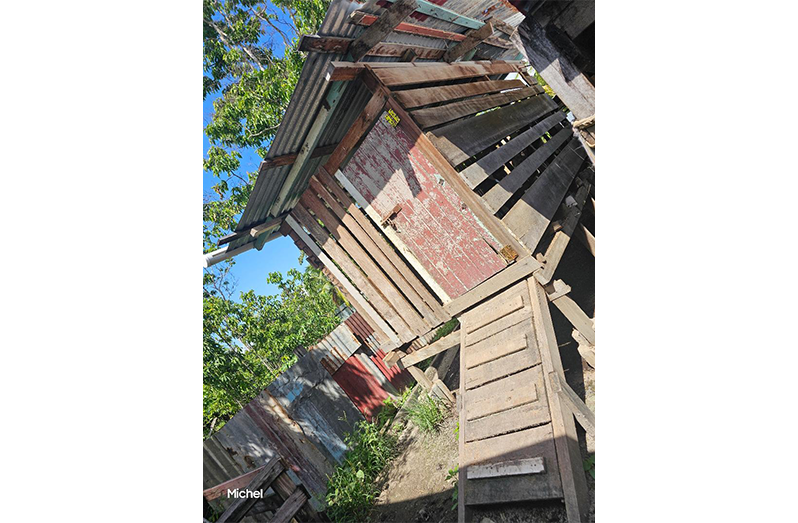
Central to Hill’s contribution to food security has been sustained support from the Guyana Livestock Development Authority (GLDA). Through extension services, Hill has accessed free training, improved management techniques, and upgraded infrastructure, including an elevated pen constructed with materials provided by the Ministry of Agriculture. According to Hill, the elevated design has significantly reduced disease incidence and prevalence, such as foot rot, improved animal welfare, and enhanced productivity—critical factors in ensuring reliable food supply.
Looking ahead, Hill plans to improve the genetic quality of her herd through artificial insemination and the introduction of improved breeds such as Dorper–Barbados Black Belly crosses and Boer goats. These genetic upgrades are expected to increase growth rates, carcass quality, and feed efficiency, thereby strengthening her capacity to meet local demand and contribute to Guyana’s expanding role as a food supplier within CARICOM.
As a small-scale farmer, Hill sells sheep and goats once they exceed 50 pounds in live weight, marketing approximately 15 to 25 animals annually. While modest in scale, such consistent production, when replicated across hundreds of similar farms, forms the backbone of Guyana’s livestock sector and supports the country’s positioning as a net food producer within the region.
Hill expressed gratitude to her family and the GLDA for their support, emphasising that government-enabling agricultural policies have been instrumental to her success. She highlighted the PPP/C Government’s commitment to empowering farmers—particularly women—through access to free training, improved genetics, market access, and financial support via the Agriculture Development Bank.
With interest-free financing now available, Hill plans to expand her infrastructure to house pregnant animals and newborns, further stabilising production and reducing losses. Such investments, she noted, will allow her to increase output, enhance animal welfare, and strengthen her contribution to national and regional food security goals.
Abiola “Goldie” Hill’s journey from converting a dog kennel into a sheep pen to operating a diversified livestock enterprise illustrates how empowered female farmers are central to Guyana’s food security strategy. Her work contributes not only to feeding households in Den Amstel Village but also to advancing Guyana’s role in CARICOM’s vision of regional food self-sufficiency.