
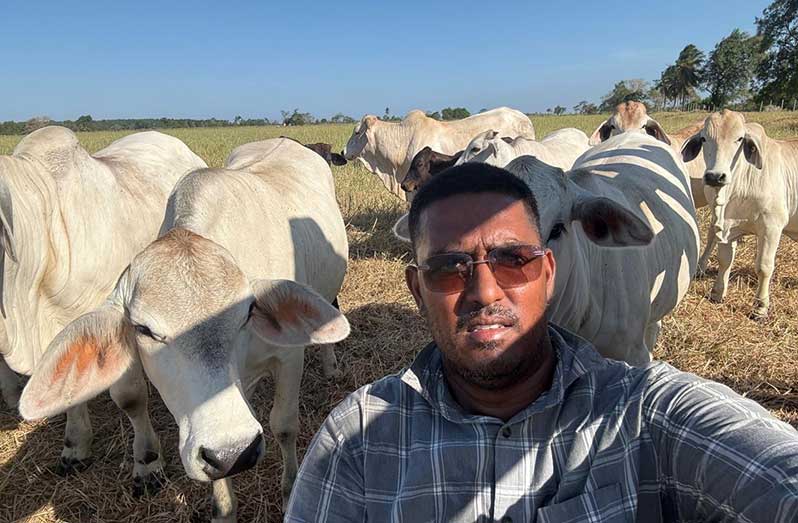
LEGUAN Island, cradled in the Essequibo River, has long been celebrated for its fertile soil and rich history of rice cultivation.
For generations, families worked tirelessly in paddies that stretched across the landscape, feeding communities and sustaining livelihoods. Among them is Seenarine Nandram who comes from generations of agriculturalists. Though a civil engineer by profession, farming runs deep in his family heritage.
“I always felt I was a cattle farmer at heart,” Nandram reflects. With land at his disposal and a lifelong connection to agriculture, he saw an opportunity to develop a pasture-based cattle farm that could meet the growing demand for quality breeding stock.
What began as a small-scale subsistence operation soon evolved into a structured enterprise, guided by mentorship from experienced farmers and the support of the Guyana Livestock Development Authority (GLDA).
Initially, Nandram faced a challenge common to new farmers: despite excellent animal husbandry practices, including proper feeding, his cattle were not gaining sufficient weight.
“The issue was the quality of the genetics,” he explains. The slow growth affected production costs and profitability, prompting him to import his pedigree Brahman bulls to improve the herd’s genetics.
He envisions that with these improvements, he can produce offspring that can be offered to the local industry, thereby raising the standard of livestock across the country. He is now remodelling Nandram Cattle Company as a local breeding facility to support this vision.
Recognising the need for cattle breeds better suited to Guyana’s climate, Nandram decided to import Brahman cattle from Alabama, USA.
Despite being new to animal importation, he is grateful for the exceptional support provided by GLDA, including Dr Walrond, CEO; Dr Tihul, DCEO and Head of the Quarantine Unit; and GLDA’s Region 3 extension team, especially Uncle Prakash, his area Livestock Officer, who all continue to provide guidance and hands-on support.
“My experience importing animals was seamless because of the technical support from GLDA,” Nandram says. He encourages anyone interested in the importation or exportation of animals and animal products to fully utilise the services of GLDA.
The importation process, including permits, transportation, and quarantine, was seamless and carefully managed. The quarantine stage, in particular, was critical in ensuring that the animals were healthy, free of disease, and acclimatised to local conditions before joining the herd, safeguarding both his farm and the broader livestock sector.
Today, ‘Nandram Cattle Company’ is home to seven registered Brahman cows, two pedigree bulls, and an additional seventy Zebu cows. The farm benefits from regular visits by GLDA extension officers, who provide veterinary advice, monitor welfare, and offer practical guidance on animal health and husbandry.
Nandram himself has received hands-on training in administering medications and is prepared to adopt artificial insemination techniques to improve breeding outcomes.
Farming on Leguan Island comes with its challenges. Traditionally, both crop and livestock production were vulnerable to the island’s low-lying terrain and seasonal flooding.
Pastures could quickly turn into waterlogged fields during high tides, threatening the health of livestock. “Whenever the waters rise, I move the cows to roofed sheds on higher ground to keep them safe and healthy,” Nandram explains.
Thanks to government initiatives dredging waterways, reinforcing sea defences, and maintaining kokers, farmers like Nandram now have greater confidence to protect their herds and expansion plans.
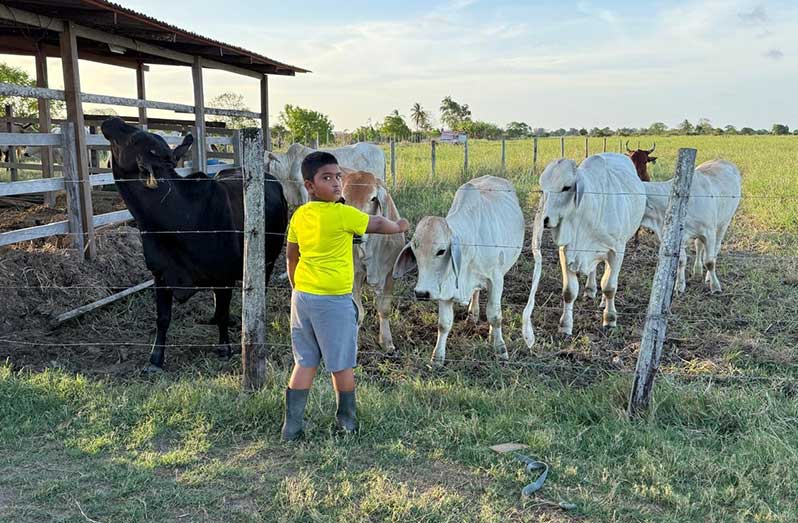
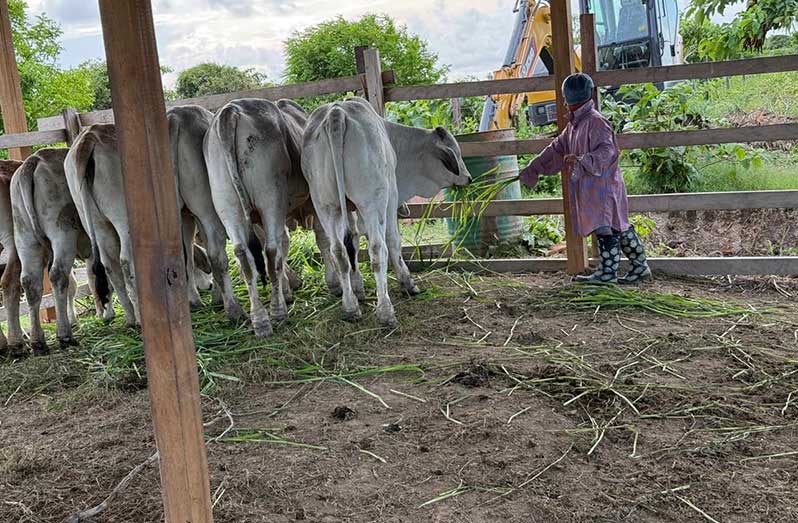
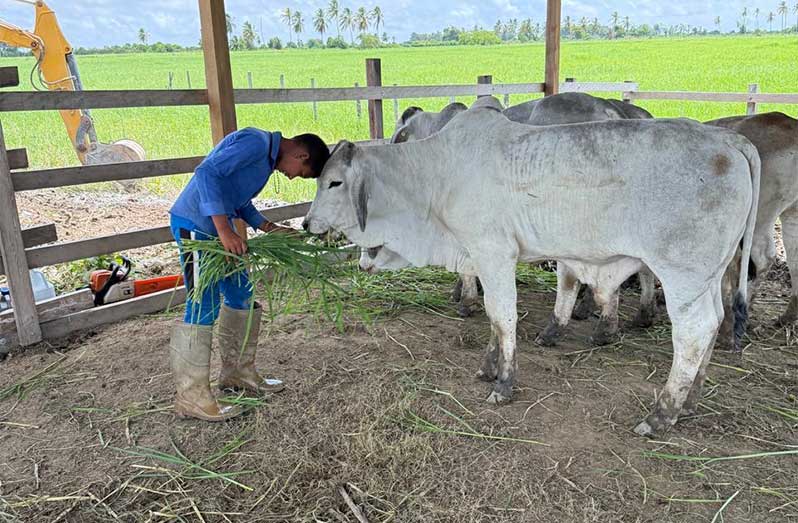
Nandram’s approach to cattle management is both practical and sustainable. His animals are primarily pasture-grazed, with minimal supplemental feeding. Cows are reared carefully, and once they reach approximately 15 months to two years old, they are sold as quality bulls and heifers.
With improved genetics and animal husbandry, he sees Leguan’s lush pastures as ideal for the fattening stage, making the island a highly lucrative zone for livestock production in Region Three.
For Nandram, cattle farming is also a family affair. His young son has developed a natural affinity for the animals, often found gently patting the large Brahman cows.
“Passing down traditions and involving the next generation is important,” he says. It is this blend of family, heritage, and dedication that defines Nandram Cattle Company.
The farm also reflects a larger trend on Leguan Island: the gradual shift from rice cultivation to livestock production. Nandram has converted 80 acres of prime rice land into pastures, recognising the potential of cattle farming to contribute to both food security and economic resilience.
He believes in the PPP/C government’s vision for agriculture under President Dr Irfaan Ali, which seeks to modernise the sector and create opportunities for farmers across Guyana.
Central to this vision is the establishment of the Agriculture Development Bank, which promises to provide no-collateral loans and critical financial support to small- and medium-scale farmers.
“With access to funding and the right infrastructure, cattle farming and agriculture more broadly can become a viable and profitable enterprise,” Nandram explains.
“The demand for beef, quality breeding stock, and other agricultural products is growing, and initiatives like the Agriculture Development Bank will catapult livestock and other sectors to new heights, unlocking their full potential.”
Nandram also sees significant market expansion on the horizon with the establishment of the National Abattoir at Onverwagt, West Coast Berbice. He acknowledged that the new facility will be equipped with modern, hygienic, and internationally certified equipment, allowing farmers to produce premium cuts of meat while meeting global standards.
Coupled with improved animal genetics and husbandry, Leguan Island has the potential to become the livestock hub of Region Three, producing high-quality beef for both local and regional markets.
Seenarine Nandram’s journey from rice fields to cattle pastures is a story of vision, resilience, and adaptation.
Rooted in a family legacy of agriculture, guided by the expertise of GLDA and its dedicated team, and grounded in sustainable practices, he is helping to shape a future where livestock farming strengthens food security, drives economic opportunity, and passes down a meaningful legacy to the next generation.