
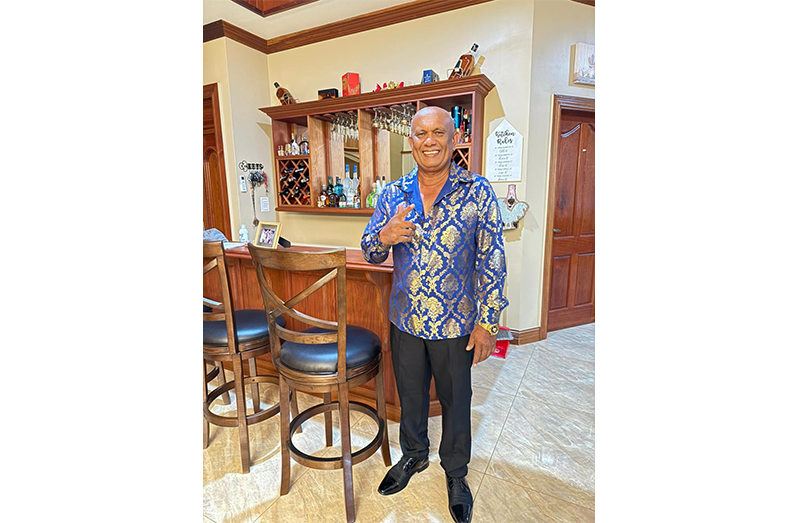
AS dawn spills over the winding waterways of the Essequibo Coast, Roopan Ramotar—known affectionately as “Fowl Cock”—steps out onto the land he calls home.
The morning air is rich with the scent of wet earth and coconut trees swaying gently in the breeze.
Here, on the lush plains of Land of Plenty Village, Ramotar’s vision for agriculture and community is unfolding through improved animal breeds and plant varieties, coupled with modern architecture.

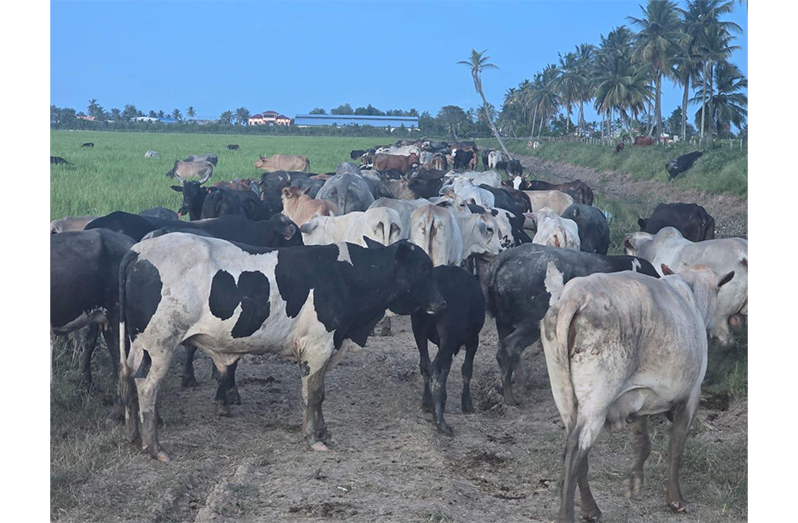
Farming runs in his blood. “I grew up around cows,” he recalls, a quiet smile on his face as he walks past his herd of Zebu and Holstein cattle.
“It’s part of who I am.” As a boy, he learned the rhythms of rural life—feeding animals, tending to crops, and helping his family harvest rice.
Today, those early lessons have blossomed into large-scale agricultural enterprises that honour his roots while embracing innovation.
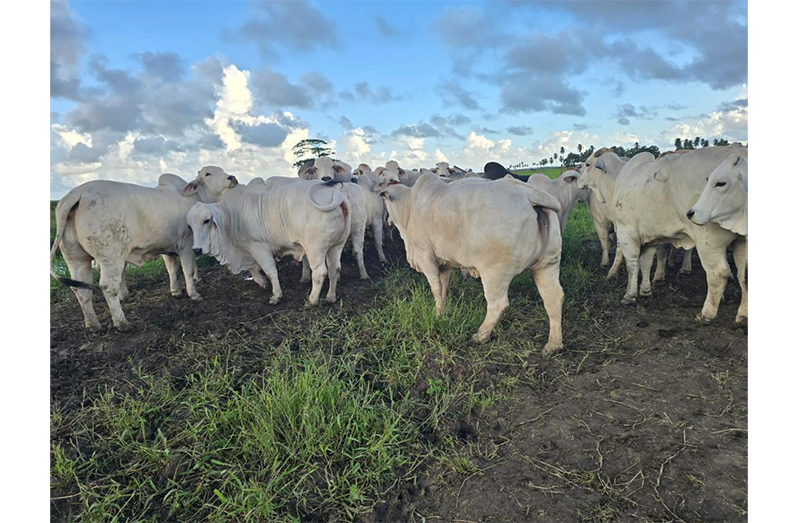
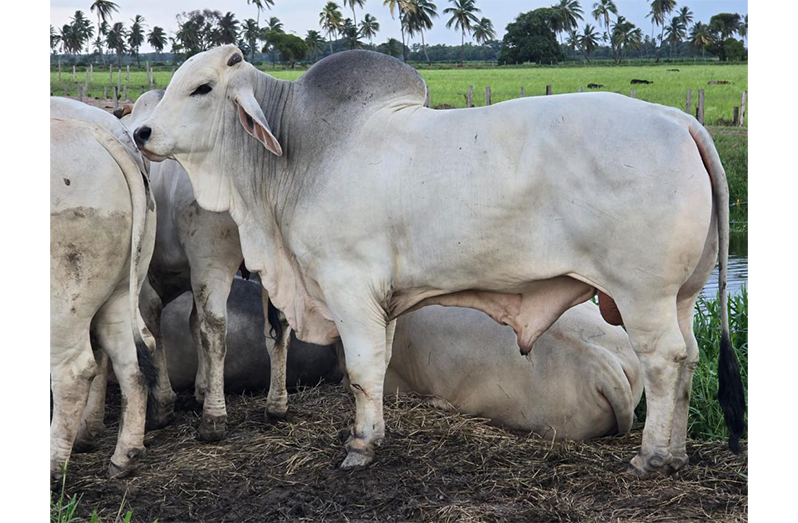
Ramotar oversees 300 local cows, and recently imported Brahman bulls through the guidance of the Guyana Livestock Development Authority (GLDA).
One bull was acquired from the Ministry of Agriculture, and 25 high-quality female cows now graze alongside his herd. “The process was seamless,” he says.
“From the permits to verifying the animals’ health and quarantine, GLDA supported me every step of the way. Their technical expertise and farm visits were invaluable.”
Quarantine and veterinary oversight, he emphasises, are critical. “Introducing new breeds is not just about my farm—it’s about protecting all livestock in the region,” he explains, walking among the Brahman bulls with careful pride.
But Ramotar’s vision extends far beyond cattle. He cultivates rice on hundreds of acres, manages goats and sheep, and has invested deeply in coconuts.
From his Pomeroon plantation, he harvests high-yielding, improved coconut varieties used to produce Rooster coconut water, now exported to the Caribbean, Canada, and the United States.
“We are producing coconuts at a scale that will sustain production for the next 30 to 40 years,” he notes, tracing his fingers along the lush coconut fronds.
For him, diversification is about more than business—it’s about community. “I’ve created employment for dozens of people, and I’ll continue investing in this rapidly growing economy,” he says.
“Region Two has fertile lands, unpolluted waterways, and eco-friendly practices. It’s Guyana’s untapped agricultural frontier.”
That frontier, he believes, is also a canvas for agro-tourism. Ramotar is developing Rooster’s Hotel in Anna Regina, slated to open between late December 2025 and January 2026.
The hotel, which already features a completed boardwalk, will offer visitors a modern retreat amidst the sweeping vistas of his farmland, livestock, and coconut estates.
“Coupling agriculture with tourism shows what Region Two can offer,” he says, a glint of pride in his eyes. “Our lands are productive, our water is clean, and the experience is unique.”
Government support has been key to his success. He praises the policies of President Dr Irfaan Ali and Minister of Agriculture Zulfikar Mustapha for making technical support, improved crop and livestock varieties, and financing more accessible.
“The government is doing a good job in agriculture and food security. Guyana has always been considered the food basket of the Caribbean, and now, we can produce locally to feed ourselves,” he says.
Ramotar’s commitment to development doesn’t stop with agriculture. He owns 400 acres at Land of Plenty Village and has interests in gold mining, construction, logging, and sawmilling.
Yet, despite his extensive portfolio, he remains grounded. “I’m a simple man,” he says. “I’ve spent years putting in the work to realise my visions.”
From the breathtaking scenery of his coconut groves in the Pomeroon to the lush green rice fields and pastures with healthy cattle and small ruminants—or the tower of hope at the construction site of Rooster’s Hotel—it’s clear that Ramotar is building more than a farm or a business—he’s cultivating a legacy.
Through high-yield livestock and coconut varieties, eco-friendly practices, job creation, and agro-tourism, he is transforming Region Two into a beacon of sustainable prosperity.
His modern hotel, thriving livestock, coconut estates, and refreshing Rooster coconut water are a testament to what vision, dedication, and strategic diversification can achieve.
In the heart of Guyana’s Essequibo Coast, Roopan “Fowl Cock” Ramotar is doing more than farming—he is redefining what agriculture can mean for a community, a region, and a country.