






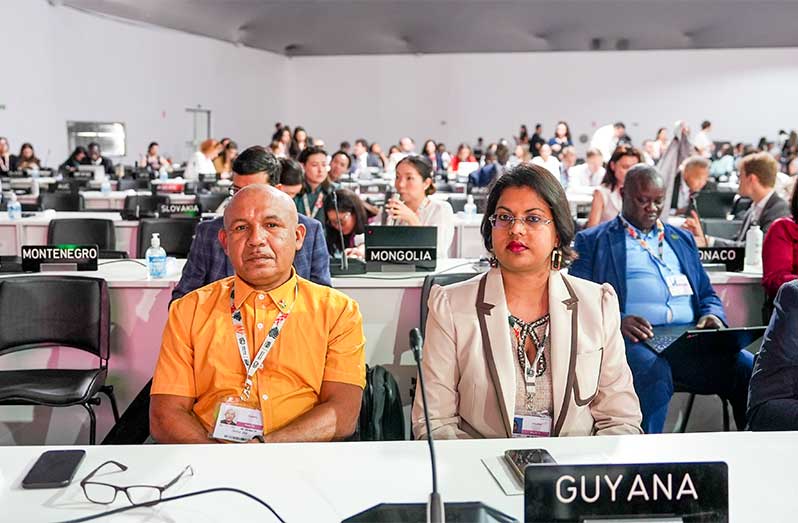
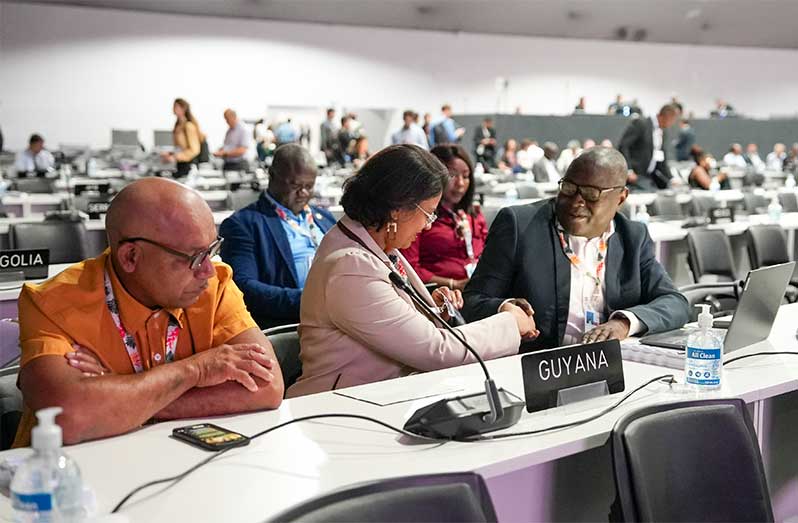
GUYANA reaffirmed its global leadership in sustainable development, biodiversity protection, and Indigenous empowerment as the country’s delegation joined world leaders for the opening of the COP30 climate negotiations in Belém, Brazil.
The delegation highlighted Guyana’s Low Carbon Development Strategy (LCDS) 2030 as a model for achieving the Sustainable Development Goals (SDGs) while maintaining one of the world’s lowest deforestation rates.
Originally launched in 2009, the LCDS pioneered a global approach to valuing forest climate services, enabling Guyana to monetise its environmental assets for reinvestment in national development.
The updated LCDS 2030 builds on that foundation, charting a pathway for the country to benefit from other ecosystem services—such as biodiversity conservation and water resource management—while pursuing inclusive, low-carbon economic growth.
The strategy aims to: Guide Guyana toward inclusive, non-polluting, low-carbon development; promote the sustainable use of natural resources to combat climate impacts; integrate ecosystem services into the global economy, enabling payments for environmental services; and align with international climate goals to achieve net-zero emissions and limit global warming to below 1.5°C.
INDIGENOUS PARTICIPATION AT THE CORE OF LCDS 2030
Following extensive national consultations on the LCDS 2030, Guyana identified two key investment pathways: national programmes and community/village-led initiatives.
The national programmes focus on renewable energy, climate resilience, land titling, and other national priorities. Meanwhile, the community-led approach empowers Indigenous Peoples and Local Communities (IPLCs) to design and implement their own Village Sustainability Plans (VSPs) under the principles of Free, Prior, and Informed Consent (FPIC).
A landmark feature of the strategy is the dedication of 15 per cent of forest carbon market revenues directly to Amerindian communities—the second largest owners and stewards of Guyana’s forests.
These communities can choose to “opt-in” to produce their own VSPs, ensuring that benefits flow directly to local populations and that development priorities are determined by those most connected to the forest landscape.
US$3 MILLION PROJECT TO STRENGTHEN INDIGENOUS LEADERSHIP
To support the implementation of community-driven sustainability planning, a US$3 million project will be rolled out over three years through the National Toshaos Council (NTC), with Conservation International Guyana serving as the financing intermediary.
The initiative seeks to build long-term capacity among Indigenous communities and strengthen the institutional foundations for sustainable village development.
KEY OUTCOMES INCLUDE:
Outcome 1 – Equipped Villages for Sustainable Planning:
• Strengthen village-level planning structures in line with the LCDS 2030;
• Provide technical assistance for the creation of 10-year Village Sustainability Plans focusing on environmental management and climate resilience;
• Deliver training for village leaders, NTC staff, and community members on sustainable development planning.
Outcome 2 – Empowered Villages for Implementation:
• Offer technical guidance to support plan implementation;
• Foster partnerships among villages, government agencies, and NGOs;
• Pilot sustainable projects in select villages.
Outcome 3 – Monitoring and Knowledge Sharing:
• Develop tools for tracking progress and evaluating impacts;
• Create a national knowledge-sharing platform to document best practices;
• Facilitate exchange visits and collaborative learning among villages.
Outcome 4 – Strengthened Institutional Support:
• Establish a Sustainable Village Development Unit within the NTC Secretariat;
• Enhance institutional capacity in line with the Amerindian Act of 2006;
• Promote interagency collaboration between the NTC, the Ministry of Amerindian Affairs, and other government departments.
Guyana’s approach at COP30 underscores how forest nations can simultaneously protect biodiversity, empower Indigenous communities, and drive climate-resilient economic growth. By aligning local priorities with global sustainability goals, the country continues to demonstrate that conservation and development can go hand in hand.
As global climate talks intensify in Belém, Guyana’s leadership stands as a compelling example of how forest stewardship, Indigenous knowledge, and national policy innovation can converge to shape a sustainable future for all.



