






–says will advance food production resilience, create new shipping, air links for trade
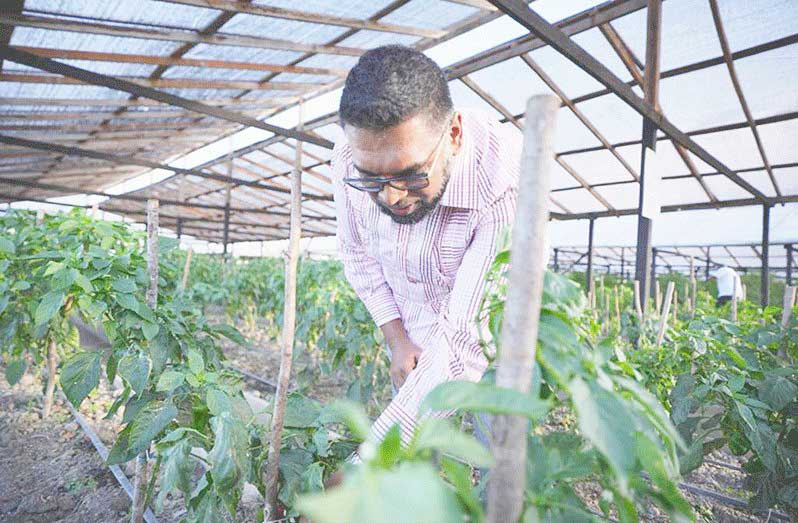
PRESIDENT, Dr. Irfaan Ali, has recommitted to accelerating efforts to modernise agriculture and drive trade, with the aim of slashing Guyana’s and by extension the Caribbean Community’s (CARICOM)’s food import bill.
Dr. Ali, who took the oath of office for a second term on Sunday, following the September 1 general and regional elections, also returned as the lead Head of Government with responsibility for Agriculture in the CARICOM Quasi Cabinet.
“We’ll accelerate food security and logistics, modernising agriculture and agro-processing, opening new shipping and air links, and driving down the region’s import bill so Caribbean tables are fed by Caribbean farms,” Dr. Ali said during an inaugural address at State House, Georgetown, on Sunday.
Guyana too, he noted, will champion energy security and competitiveness, leveraging its resources.
The President outlined plans to partner with regional neighbours to lower cost, expand manufacturing and build resilient, cleaner energy systems that power jobs and industry across the Caribbean.
“In CARICOM, our purpose is practical and people-centred: to make this single market work for ordinary families with cheaper energy, faster payment and roaming, recognisable skills across borders, and scholarships and apprenticeships that open doors for youth,” he said.
He outlined plans too for climate adaptation, building the region’s sustainability and resilience.
Dr. Ali said: “We’ll strengthen collective resilience through disaster risk financing, shared emergency response, and joint action on climate adaptation, because when the sea rises or the winds rage, we stand or fall together.”
Back in February, the Head of State had revealed a holistic framework, which aims to overhaul the food systems across the Caribbean.
The vision includes plans to strengthen the Caribbean’s food supply with the aim of not only safeguarding food security, but also modernising agricultural infrastructure, integrating technological solutions, and increasing participation from youths and women.
Dr. Ali had said the plan also includes overcoming the challenges posed by climate change, supply chain disruptions, and the shifting global market landscape.
As part of the strategy, the Caribbean will expand its focus to include not only food security but also technological innovation, increased private sector investment, and greater regional collaboration to tackle common challenges.
President Ali had highlighted six strategic projects developed in collaboration with the Inter-American Institute for Cooperation and Agriculture (IICA) to further enhance the region’s agricultural capacity, these included: capacity building for Caribbean agriculture extension services, enhancing adaptive capacity of coastal communities’ agro-marine systems, establishing a digital fabrication lab (fab lab), diversifying the Caribbean fruit crop industry, bio-economic model in organic waste management and improving water security.




