






THE Ministry of Education has flipped the switch on what it calls the most ambitious literacy push in Guyana’s history, the National Literacy Programmes, a countrywide, no-child-left-behind plan to close education gaps, raise standards and ensure every learner can read and write with confidence.
The programmes, designed to improve access and inclusivity for all learners regardless of religion, political affiliation, or ability, were described by Minister of Education Priya Manickchand as a game-changer for the education sector.
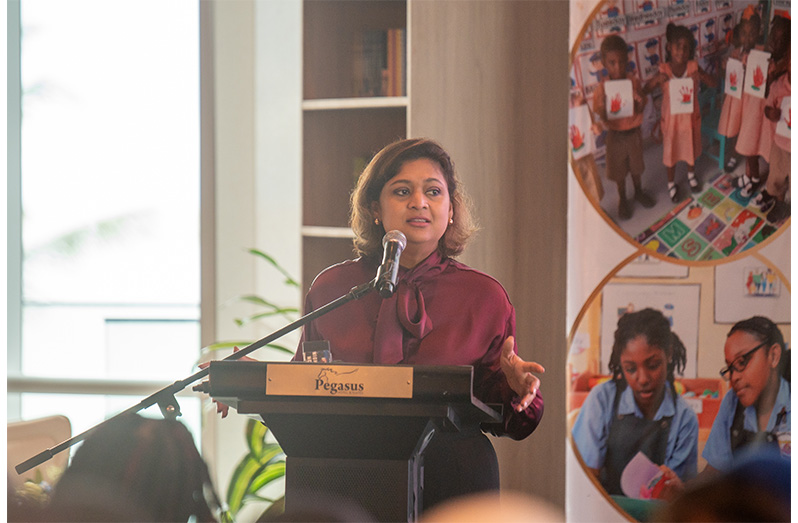
“Today, it gives me great pleasure to commission for Guyana the historic literacy programmes, so that each of our children will leave grade four reading, learning, literate and able to comprehend what they read. So that each child in the school system who exists right now, post grade four, is going to have an intervention that allows them to exit either primary or secondary school reading,” the Minister declared at the launch.
The National Literacy Programmes, which can be accessed online via https://nld.gov.gy, represent the People’s Progressive Party Civic (PPP/C) Government’s commitment to ensuring every child in Guyana can read with confidence, write with clarity and dream without limits.
Built on the foundation laid by past education leaders, the renewed literacy journey began in September 2023 with a high-level meeting led by Minister Manickchand, setting in motion a bold national movement to transform literacy outcomes at all levels of education.
The programmes are rooted in the science of reading and supported by culturally relevant materials that cater to the unique needs of Guyanese learners.
Whether building phonetic awareness and fluency at the nursery level, improving comprehension at the primary level, or delivering targeted interventions to students in secondary school, the programmes are designed to ensure literacy instruction is deliberate, structured and impactful.
Assistant Chief Education Officer (ACEO) for Literacy, Stembiso Grant, noted that a significant increase in the budget for the National Literacy Department has resulted in the development of rich resources, including printed books, digital e-books, instructional videos, and teaching guides.
With this boost, the Ministry has expanded its workforce to include 87 National Literacy Officers and a greater number of Regional Literacy Officers.
For the first time, literacy committee members have been assigned to nursery schools, with 161 now in place, and 165 serving at the primary level.
These efforts will be further strengthened when schools reopen on September 8, as Literacy Support Teachers are deployed across the country to execute the intervention programmes in full.
According to Grant, the initiative is not just a series of scattered interventions, but a well-structured system of support that brings intentional literacy teaching into every classroom.
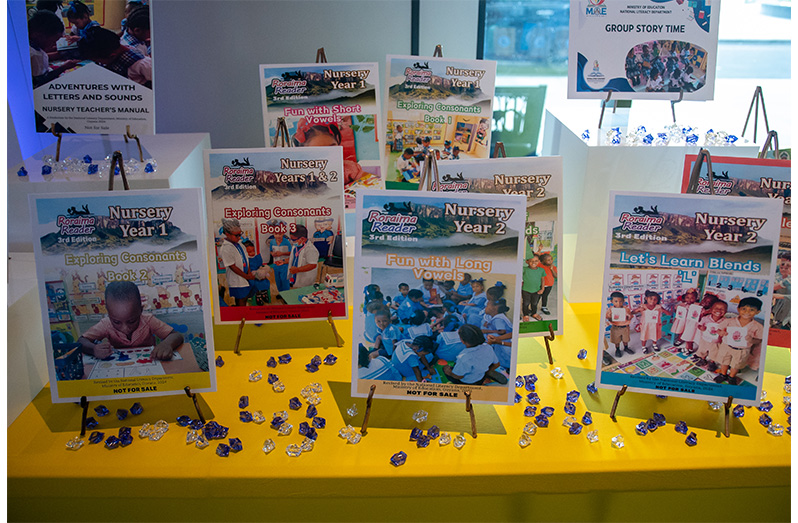
She explained that the Ministry has revised the nursery curriculum to ensure all children receive daily, structured foundational literacy instruction for the first time.
This includes the introduction of the “Adventure Through Letters and Sounds” teacher-training component, which emphasises rote learning and repetition while aligning every literacy skill with national standards and benchmarks.
Minister Manickchand also alluded to the broader vision behind the programme, noting that it is the Government’s intention that every child exits primary school with the ability to read and comprehend, and that every secondary school learner who is behind receives a tailored intervention to catch up.
The programme’s reach extends beyond the classroom, with a renewed push to revitalise school libraries, establish reading clubs, strengthen community libraries, and collaborate with local and international partners.
The Government has also expressed hope that Guyana’s Caribbean neighbours will benefit from the digital literacy resources available online, reinforcing the country’s role as a regional leader in education innovation.



