
– as country intensifies efforts to secure, distribute vaccines for COVID-19
By Vishani Ragobeer
AS Guyana intensifies its efforts to secure vaccines needed to immunise the population from the virus, COVID-19, Health Minister, Dr Frank Anthony announced that the country will soon receive nearly 104,000 vaccine doses from the COVAX facility, a global vaccination alliance.
Months ago, Guyana signed up with the COVAX facility, which is geared at accelerating the development and manufacture of the COVID-19 vaccines, and then providing them in a guaranteed rapid, fair and equitable manner. And, under this mechanism, Guyana is expected to receive its first set of vaccines to cover about 20 per cent of the population for free.
“We are going to be very happy that they (COVAX) have indicated to us that we are going to get 104,000 doses as a start and we would be working closely with them to see when these vaccines will be arriving in Guyana,” the minister highlighted on Monday, during his COVID-19 update with the Department of Public Information (DPI).
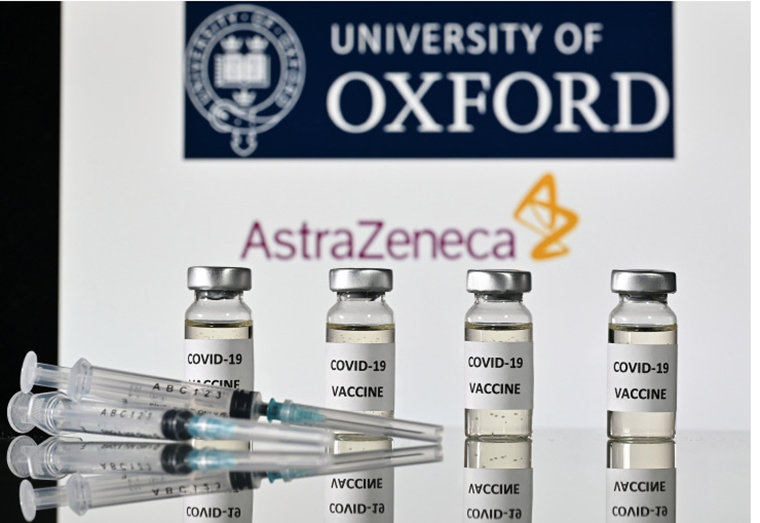
The vaccines expected are the Astrazeneca vaccine, otherwise called the Oxford Astrazeneca vaccine, which have received emergency use authorisation in the United Kingdom (UK), the European Union (EU), India and other countries. This is a two-dose vaccine, meaning that once one receives one dose of the vaccine, one will have to return sometime after to acquire the second dose.
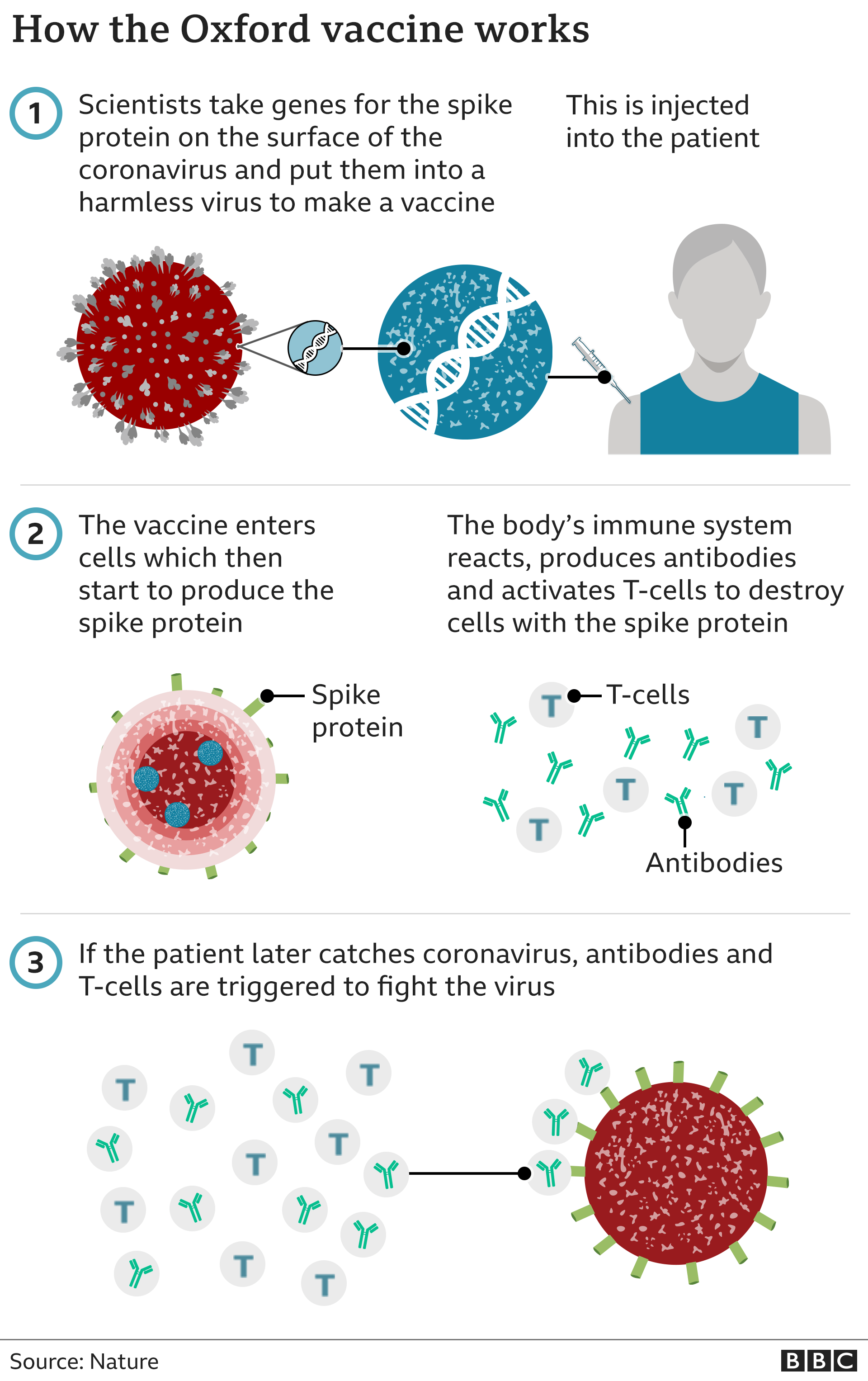
According to the BBC, this vaccine is made from a weakened version of a common cold virus (known as an adenovirus) from chimpanzees. It has been modified to look more like coronavirus, although it cannot cause illness, and when the vaccine is injected into a patient, it prompts the immune system to start making antibodies and primes it to attack any coronavirus infection.
“Research has shown it is highly effective. No one given the vaccine in trials developed severe COVID or needed hospital treatment,” the BBC reported.
Importantly, this vaccine, unlike the Pfizer and Moderna vaccines that have been distributed in few countries around the world, does not require cold or ultra-cold storage. It can be stored in the normal fridge, which makes it easier to distribute and more suitable for global south countries like Guyana.
The minister explained that this vaccine is currently before the World Health Organisation (WHO), for emergency use listing. Once that approval has been granted by the global health authority, Dr Anthony affirmed that Guyana will then be in line to receive the vaccines.
MORE VACCINES
In addition to this newly announced allocation, on Saturday, President Dr Irfaan Ali announced that China has agreed to donate 20,000 doses of its COVID-19 vaccines to Guyana. He also assured that the Government is “aggressively” pursuing all avenues to secure vaccines. This includes engaging many of Guyana’s international partners, such as India, China and Russia, who have been developing and manufacturing vaccines, in addition to major vaccine manufacturers including Pfizer-BioNTec and Moderna.
Widespread vaccination is the “exit strategy” for the pandemic; this means that only when about 80 per cent of the population is immunised through vaccination or through recovering after contracting the virus, would there be some sort of ‘normalcy’.
To cater for the deployment of vaccines, Guyana’s vaccination capacity has been bolstered. Since Guyana was not yet sure which of the COVID-19 vaccines it will receive, in anticipation, the country secured the necessary cold chain infrastructure to ensure that it is equipped to store the vaccines at temperatures that are cold enough.
Additionally, healthcare workers are being trained to administer the vaccines to adults, since a majority of Guyana’s vaccination regime deals with immunising children. Also, since COVID-19 vaccines require two doses over a period of time, copious record-keeping must be done. Health workers must also be trained to spot and treat potential side-effects of the vaccine, though these are not common.
Previously, Dr. Anthony highlighted that the local health authorities should have the capacity to administer about 7,000 vaccines per day once the rollout process begins. The minister also noted before that healthcare workers and elderly persons with comorbidities (other underlying medical conditions) will receive the vaccines first.