







–GNBS warns
STREET vending has increased significantly within recent months as many persons are now operating food stands in Central Georgetown and other parts of the country in an effort to sustain themselves and their families.
Additionally, locals and nationals of neighbouring countries can often times be seen with their push carts and food trucks filled with eatables.
As Guyana celebrates Tourism Awareness Month, the Guyana National Bureau of Standards (GNBS) is reminding these entrepreneurs of its existing standard governing street-vended food.
GNBS Public Relations Officer (PRO), Lloyd David, during a recent interview with the Guyana Chronicle, explained that this national standard was developed to serve as a code of practice for food vendors.
This standard, he added, focuses on the presentation and preparation of street-vended food.
According to the standard, food vendors are required to undergo medical examinations and obtain a valid food-handler certificate.
These measures, David said, are necessary to ensure that all food vendors are in good health and have access to the relevant knowledge pertaining to proper food handling etiquette. In so doing, their customers will be protected.
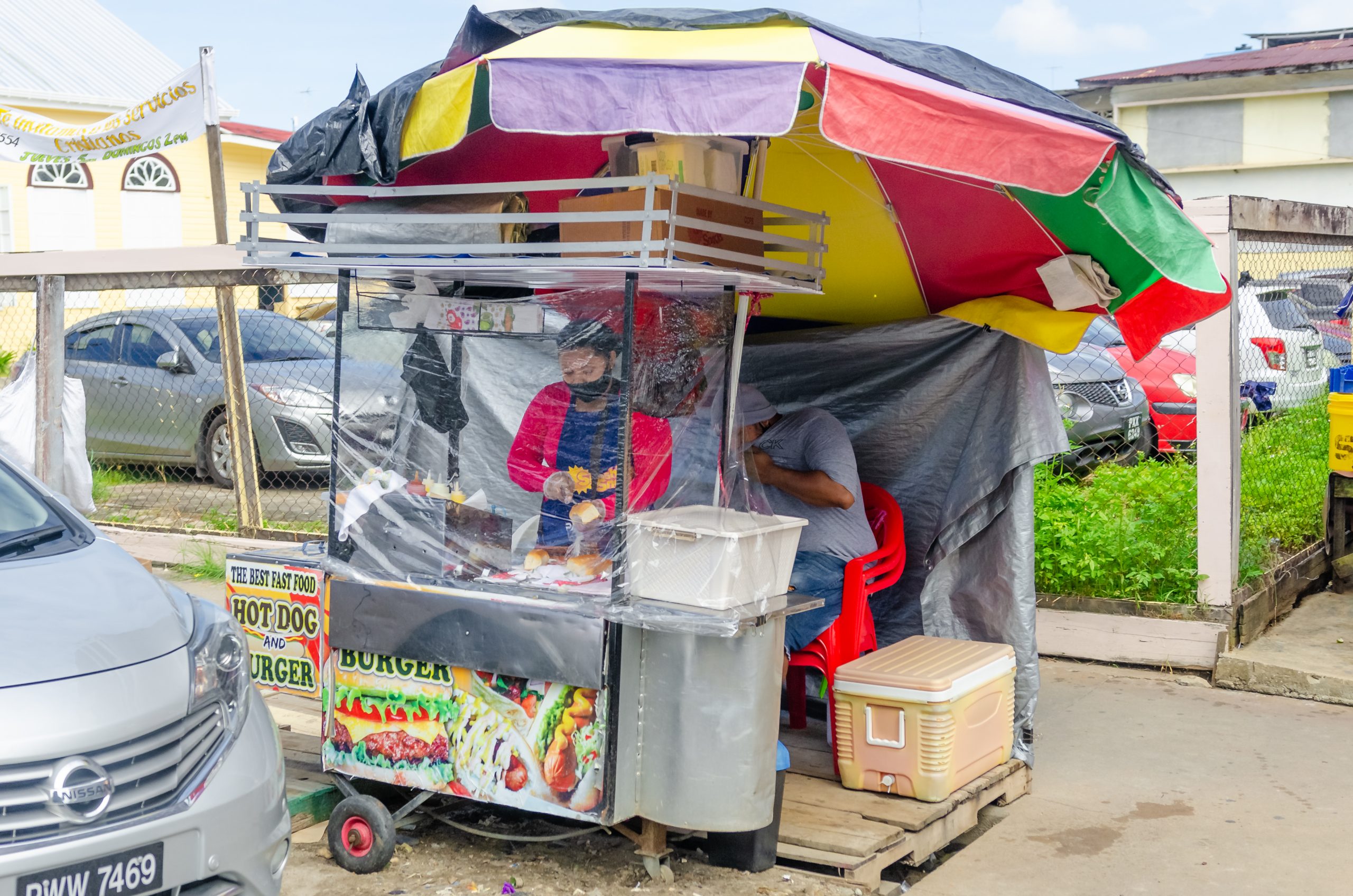
Further, the standard highlights the importance of appropriate clothing and garments. Regarding this, David said it covers the transportation and storage of food items and the proper disposal of waste materials.
“Vendors have a host of food items that they use– sausages, chicken, bread– and so on, and we are cognizant that they might not have the best storage facility at their vans or their carts or so, but we try to remind them to at least be mindful of how they store these food items and how to transport it and when they receive it, what kind of container can be used to store their items,” David explained.
He told the Guyana Chronicle that the GNBS standard also speaks to the importance of adequate food-heating equipment. David explained that these heating equipment are important to prevent bacteria from growing and possibly causing food-borne illness.
He reminded that vendors have an obligation to not just keep their facilities clean, but to ensure that any spots selected to vend are hygienic.
“We want the vendors to not just choose any random spot because it’s open. We want them to ensure that they select spots that are hygienic, not close to where persons dump their garbage or put their garbage bins, because that would encourage not just a smell, but also flies and we wouldn’t want flies being on the item people would have to consume,” he added.
David said that given the COVID-19 pandemic, it is even more important for street vendors to comply with the standard.
“The GNBS generally expects the standard to be followed, but especially now with the COVID pandemic, we expect them to ensure that their customers are protected from any potential spread. Right now, it’s Tourism Awareness Month and the vendors may be getting more customers, but locals and tourists who may want to try their items, and we want everyone to be protected,” David stressed.




