






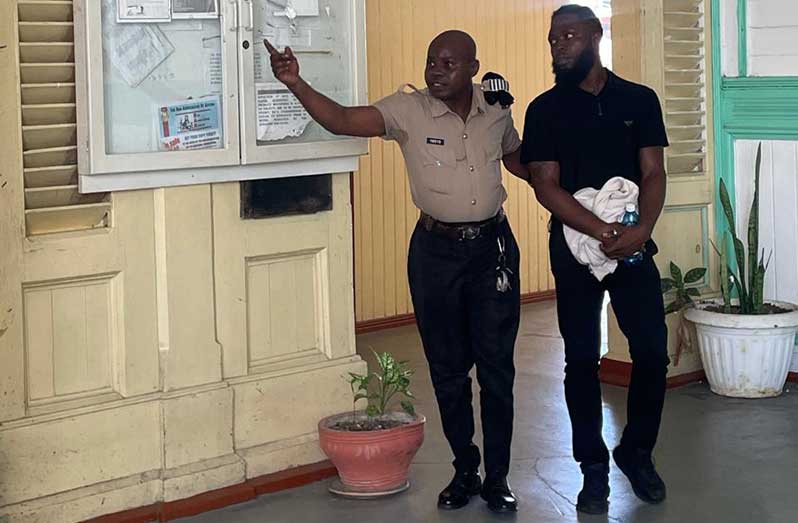
A SECURITY guard who maintained that a shotgun was discharged accidentally, despite ballistic evidence presented during his trial, was on Monday, November 23, sentenced to 25 years’ imprisonment for the fatal shooting of 18-year-old Jared Jagnandan.
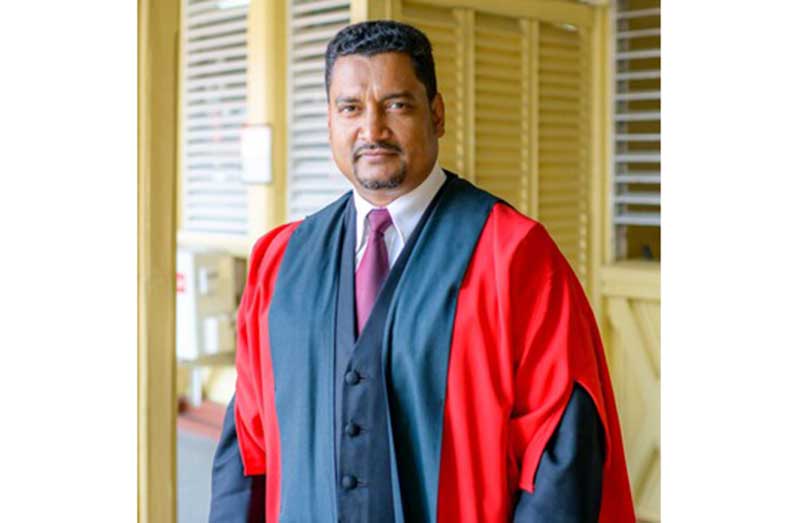
Acting Chief Justice Navindra Singh questioned whether Deandrell Semple, also known as “D.D,” could be rehabilitated as he sentenced him at the High Court in Demerara.
The 23-year-old father of one, of Lot 30 Kingelly Village, West Coast Berbice, had continued to maintain that the shooting was accidental.
“If you can’t accept what you did, how can you be rehabilitated?” the judge asked.
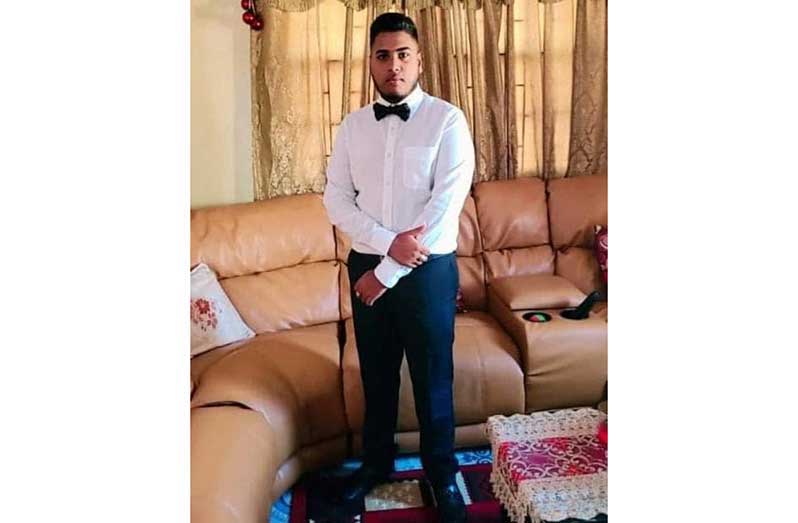
Semple was convicted of manslaughter by an 11-to-one majority jury in October over Jagnandan’s death on March 21, 2024. The teenager was shot with a 12-gauge shotgun at SMK Shaft Auto Sales and Spares in Lusignan, East Coast Demerara, where Semple worked as a security guard.
Justice Singh said the starting point for sentencing after a trial was 25 years.
He deducted two years because of a mildly favourable probation report and a further two years because Semple appeared to have tried to assist Jagnandan after the shooting.
However, the judge added four years to account for the devastating effect of the teenager’s death on his family, resulting in a sentence of 25 years.
In explaining his decision, Justice Singh criticised Semple’s account of the shooting, stating it was inconsistent with the scientific evidence presented during the trial.
“I am of the view that Mr. Semple concocted an explanation in order to avoid accepting responsibility for what he did. The explanation he sought to force onto the jurors, it’s completely at odds with all of the scientific evidence led in this court,” the chief justice said.
The judge also criticised Semple for possessing a firearm without authorisation and despite having admitted that he had never been trained to use it. He said the convict and his defence team had treated that conduct as trivial, although the weapon had ultimately claimed a life.
Justice Singh questioned why Semple had chosen to contest the charge at trial while maintaining an explanation rejected by the jury but was now seeking considerations that might have been available had he pleaded guilty.
The chief justice declared, “He demanded a trial and now he’ll face the penalties of a trial.”
He warned that dishonest defences could be treated as an aggravating factor in future sentencing exercises. He said he would not apply that approach in Semple’s case, but intended to do so in subsequent matters.
“I’m not going to do it in this trial, but the world is put on notice that I intend to from hereon,” he said.
PAINFULLY TAKEN FROM US
The court considered victim-impact statements from Jagnandan’s parents, Avalon and Reshma Jagnandan, his girlfriend, Phileena Bhoj, and his siblings, Semirah and Tyreek.
In their joint statement, the parents said their son had been at an important stage of his life, with opportunities and ambitions still ahead of him. They had looked forward to seeing him pursue his goals, marry and have children.
“Tragically, all those hopes and expectations were suddenly and painfully taken away from us,” they wrote.
They described the loss as an unbearable experience for parents, stating: “I can stand here today and tell you that there is no greater heartbreak for a parent than to lose a child, and see their lifeless body in a casket.”
The couple said their grief remained constant and that their home and family life had been permanently changed.
Their statement read, “The grief is constant. There is hardly a day that passes without us thinking about Jared and the life he was deprived of living.”
They also told the court that the effects of the tragedy extended beyond emotional suffering. Reshma said she had experienced several seizures since her son’s death, including one at the Magistrates’ Courts. Her husband reported struggling with depression and making several visits to doctors over the preceding two years.
Bhoj, in her own statement, described Jagnandan as her best friend, companion and the person with whom she had expected to share her future. She said they had discussed completing their studies, getting engaged, marrying and building a home.
“We spoke about getting engaged, eventually getting married and building a home and family together. We imagined growing older together, supporting each other through life’s challenges, celebrating birthdays and anniversaries, travelling and experiencing new things,” she told the court.
Bhoj said she continued her education and worked towards her own goals, but achievements she had expected to share with Jagnandan were now accompanied by the pain of his absence.
Jagnandan’s siblings also described the loss. Semirah was 16 when her brother died and said she had struggled to understand what had happened while preparing for her CSEC examinations. Tyreek said he had expected to watch his younger brother grow into a man, achieve his dreams and have a family.
DETERRENT SENTENCE
The prosecution was led by State Counsel Christopher Belfield and State Counsel Praneta Seeraj, both of the Office of the Director of Public Prosecutions (DPP).
They urged the court to impose a deterrent sentence, arguing that Semple had knowingly taken on an unlawful responsibility by possessing a firearm without a licence or training.
The prosecutors also highlighted the post-mortem findings, telling the court that six pellets had been retrieved from Jagnandan’s body. The prosecutors said the teenager’s family had been deprived of seeing him fulfil his ambitions, including getting married and becoming a father.
GOOD REHABILITATION POTENTIONAL
Semple’s attorneys, Eden Corbin, Shercola Exeter-Sardina, Dexter Smartt and Dexter Todd, asked the court to consider his age, family responsibilities, lack of previous convictions and potential for rehabilitation.
The defence maintained that the shooting was not a planned attack or deliberate confrontation. It said Semple had consistently maintained that the firearm discharged accidentally and that he had not intended to harm Jagnandan.
His lawyers also relied on his actions immediately after the shooting. They said he rushed to assist the teenager, applied pressure to the wound, called for help and accompanied him to hospital. They further submitted that he did not flee or attempt to evade responsibility.
The defence asked the judge to consider the effect of imprisonment on Semple’s two-year-old son, his fiancée, mother and siblings. His mother, the lawyers said, had not missed a court date or prison visit since his incarceration.
The defence urged the court to balance deterrence with rehabilitation, arguing that Semple was young and had family support to help him return to society.
The probation report prepared by the Guyana Probation and Welfare Service described Semple as quiet and mannerly and recorded no previous convictions or known history of misconduct.
It said he was raised in a stable family environment in West Coast Berbice, completed secondary school and later worked in construction before becoming a security officer.
The report also recorded that Semple expressed remorse, guilt and emotional distress, and said the incident had caused insomnia and repeated mental replays. He nevertheless maintained that the shooting was accidental.
In the end, the judge ordered that the time Semple had already spent on remand for the offence be deducted from the 25-year sentence.




