






— trained teachers now account for 98 per cent of national teaching workforce; hinterland figure expected to reach nearly 95 per cent
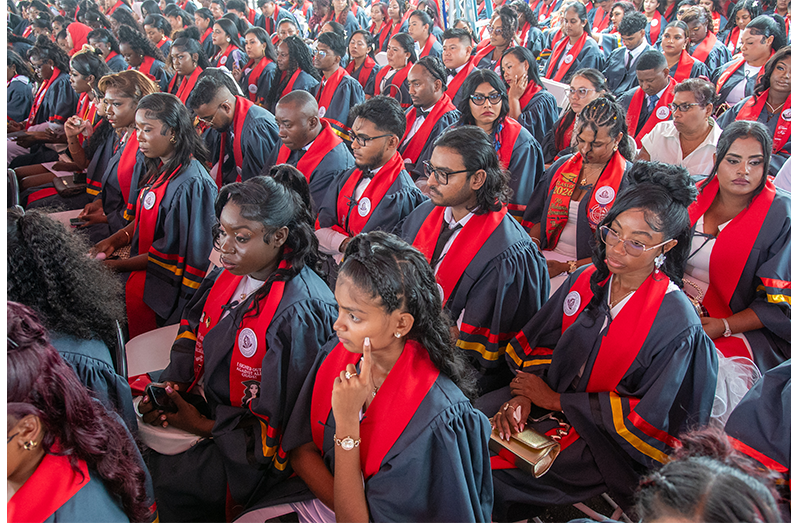
GUYANA has taken another significant step towards achieving a fully trained teaching workforce with the graduation of 1,959 teachers from the Cyril Potter College of Education (CPCE) on Friday, as the proportion of trained teachers nationwide reaches 98 per cent.
The institution’s 93rd graduation ceremony marked one of the largest graduating cohorts in its history, comprising 1,700 women and 259 men from all 10 administrative regions and across several academic and technical disciplines.
The achievement represents a significant expansion in teacher training since 2020, when the institution graduated an average of 535 teachers annually. Last year, 1,345 teachers graduated from the college.
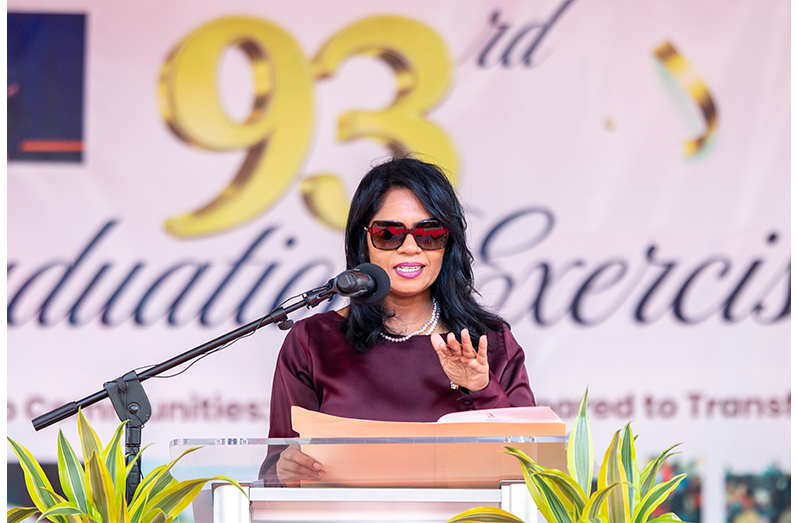
Delivering remarks at the ceremony, Minister of Education Sonia Parag disclosed that the number of trained teachers in Guyana has increased by more than 55 per cent since 2020.
“Six years ago, approximately 68 per cent of our teachers were trained. This year, the figure is 98 per cent. In the hinterland, we started at 43 per cent, with this graduation we expect to be close to 95 per cent,” the minister said.
Parag maintained that the education system is in its strongest position yet, pointing not only to the expansion of teacher training but also to improvements in students’ academic performance.
According to the minister, 8,042 persons have qualified through CPCE since 2020, of whom 6,688 graduated across five cohorts between 2022 and 2026.
Additionally, 1,331 trainees have already registered to commence training this year at 20 CPCE satellite centres across Guyana.
STRENGTHENING EDUCATION ACROSS ALL REGIONS
The graduating cohort comprises teachers trained in Early Childhood Education, Primary Education, Secondary Academic Programmes, Technical and Vocational Education and Training (TVET), Health and Family Life Education, Literacy Studies, Special Educational Needs and Disabilities (SEND), Technical Teacher Education, and Guidance and Counselling, among other programmes.
Region Four accounted for the largest number of graduates, with 425, followed by Region Six with 404, Region Two with 244, and Region Three with 216.
Region Five recorded 188 graduates, Region Ten 134, Region Nine 124, Region One 119, Region Seven 57, and Region Eight 48.
The graduates are expected to strengthen the teaching workforce and expand educational opportunities for children and young people, particularly those in hinterland, riverine and underserved communities.
One of CPCE’s most significant contributions to national education development has been its ability to train teachers who return to their respective communities to serve.
This approach supports the national objective of ensuring that teachers in government schools are either professionally trained or actively pursuing professional qualifications.
It also aligns with the United Nations Sustainable Development Goal Four, which promotes inclusive and equitable quality education and lifelong learning opportunities for all.
DEVELOPING WELL-ROUNDED STUDENTS
Minister Parag said the expansion of teacher training is reflected not only in the number of qualified educators but also in students’ performance at the National Grade Six Assessment (NGSA), Caribbean Secondary Education Certificate (CSEC), Caribbean Advanced Proficiency Examination (CAPE) and Caribbean Certificate of Secondary Level Competence (CCSLC).
“We see that in the awards that we continue to win across the region. Your training also tells us something about what Guyanese children need today,” the minister said.
She highlighted the diversity of disciplines represented among the graduates, including agriculture, languages, science, mathematics, technical and vocational education, and the arts.
“Last year one music teacher graduated, today there are seven,” Parag noted.
The minister emphasised that while mathematics and science remain important, equal attention must be given to the fine arts to support the holistic development of Guyanese children and prepare them for the modern world.
She also underscored the importance of guidance and counselling, noting that schools increasingly require educators equipped with the skills to support students beyond their academic needs.
Meanwhile, CPCE Vice-Principal Tamsin Henry encouraged the graduates to inspire curiosity, nurture creativity, build confidence and create classroom environments in which every child feels valued and has an opportunity to succeed.
“Be mentors, role models and advocates for positive change. Remain compassionate, patient and committed to continuous professional development,” Henry urged.
She acknowledged that the teaching profession would present challenges but encouraged the graduates to approach their careers with the same determination that enabled them to complete their training.
The graduation marks another milestone in Guyana’s efforts to expand access to quality education, reduce regional disparities in teacher availability and build a professionally trained teaching workforce capable of meeting the country’s evolving educational needs.




