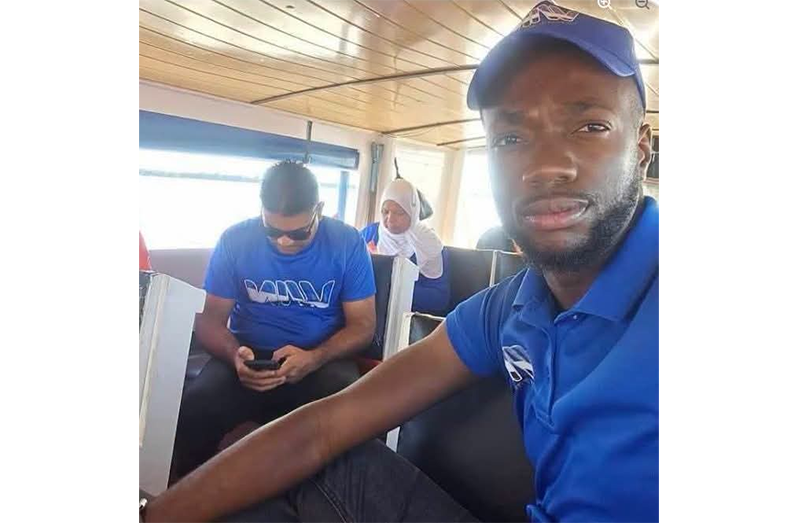
U.S. officials in Washington, D.C., have revoked the permanent residency (Green Cards) of WIN member Shane Fordyce and his ex-wife, Venita Layne Fordyce.
Fordyce is a member of Azruddin Mohamed’s WIN party and has been charged with two counts of terrorism stemming from an alleged plot to burn down schools and other public buildings, along with critical Guyana Power and Light (GPL) infrastructure.
He is also the husband of WIN Member of Parliament Natasha Singh-Lewis and now joins a growing list of the party’s members, who have had their visas revoked.
Fordyce, along with five other men, last week appeared at the Vigilance Magistrates’ Court to answer to a terrorism charge in connection with the November 10 fire at the GPL substation at Good Hope, East Coast Demerara.
The charge was laid contrary to Section 309A(1)(b)(ii) of the Criminal Law (Offences) Act, Chapter 8:01.
It is alleged that, on November 10, 2026, at Good Hope, East Coast Demerara, the accused, with intent to threaten the security or sovereignty of Guyana or to strike terror in the people, used flammable substances to set fire to the GPL substation, causing damage or creating the likelihood of destruction of the facility or disruption of electricity services essential to the community.
Fordyce and two of his co-accused were subsequently rearrested and charged in connection with a separate alleged arson attack at Strathspey Primary School, East Coast Demerara. On Monday, November 23, 2026, they made a court appearance on another terrorism charge and were remanded to prison.
Meanwhile, the Full Court of the High Court is expected to rule today on whether to dismiss an appeal by the Director of Public Prosecutions (DPP) challenging the bail granted to the six men charged in connection with the GPL firebombing.
On Monday, Acting Chief Justice Navindra Singh and Justice Deborah Kumar-Chetty issued two interim orders suspending Magistrate Teriq Mohammed’s decision to grant bail to Fordyce and three of his co-accused.
Attorney-at-law Sanjeev Datadin, representing the DPP, argued that the allegations raised serious national security concerns and those on bail should have been remanded.