






PRIME Minister, Brigadier (Ret’d) Mark Phillips, on Friday reaffirmed the government’s commitment to using Guyana’s natural resource revenues to better prepare the next generation through investments in education, healthcare and infrastructure.
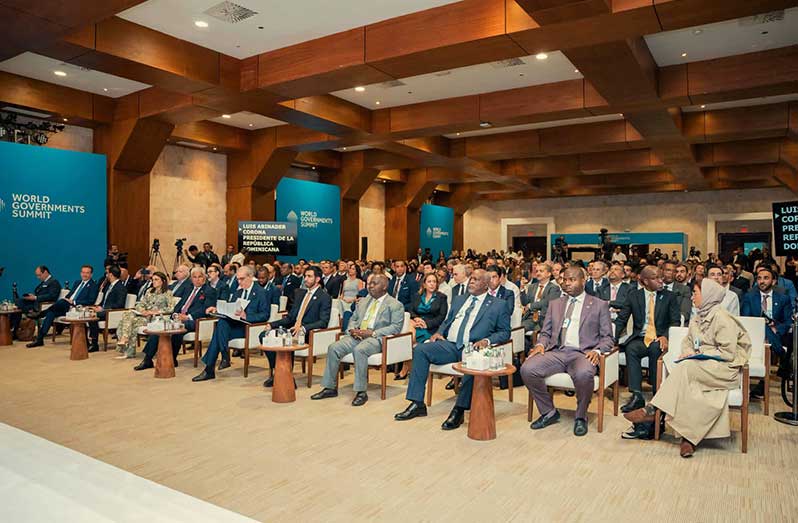
The Prime Minister outlined the government’s approach during the “From Natural Wealth to National Wealth” plenary at the World Governments Summit Dialogue – Latin America and the Caribbean in Cap Cana, the Dominican Republic.
He emphasied the importance of making these investments early, explaining that “natural wealth can only be converted to a nation’s wealth if you invest the money wisely early”, adding:
“There is a Guyanese saying that the next generation must be better prepared than this generation, and I want the next generation to continue that.”
Prime Minister Phillips said that responsibility begins with how the government manages the country’s resources today. He pointed to amendments to the legislation governing the Natural Resource Fund to strengthen transparency and accountability.
Looking ahead, he said, “We want the next generation to take that mantle further. Responsible governance to be sustained throughout the history of Guyana and the future of Guyana.”
On the subject of education, the Prime Minister highlighted the restoration of free education in Guyana through to the university level, and the 40,000 scholarships the government has been offering over the past five years. He also pointed to the school-feeding programme and cash grants for children in nursery, primary and secondary schools as measures that directly support families throughout their children’s school years.
He explained, too, that in hinterland and riverine communities, the government’s investments extend beyond the construction and equipping of schools.
Buses and boats provide transportation for learners, while dormitories allow children from several villages to attend secondary school. He added that the government has connected 253 communities to the internet, enabling children in remote areas to use the service to complete their schoolwork.
The Prime Minister also outlined the progress being made in expanding access to electricity in Indigenous communities, and that in addition to providing household solar systems, the government has also installed community solar systems in 51 communities, with the intention of extending the programme to every community. These systems power schools, health centres, village offices and other public facilities.
In recalling his time at the Inter-American Defense College some 15 years ago, PM Phillips noted that gaps in Guyana’s infrastructure had been evident even then.
He said the government is now directing natural resource revenues towards roads, bridges, wharves and housing, alongside investments in public healthcare. Six new hospitals have already been completed towards the government’s target of 12.
Prime Minister Phillips also outlined how Guyana is earning revenue from its standing forests while developing its petroleum resources.
He identified energy security, food security and climate security as national priorities and said the Government continues to advance forest conservation through the Low Carbon Development Strategy 2030.
The Prime Minister traced Guyana’s progress from its agreement with Norway on avoided deforestation to the sale of forest carbon credits. Under a purchase agreement valued at US$750 million over 10 years, Hess Corporation agreed to buy carbon credits from Guyana.




