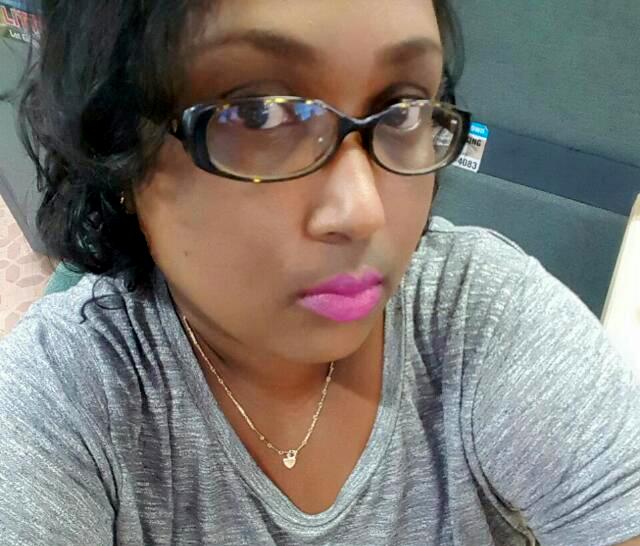
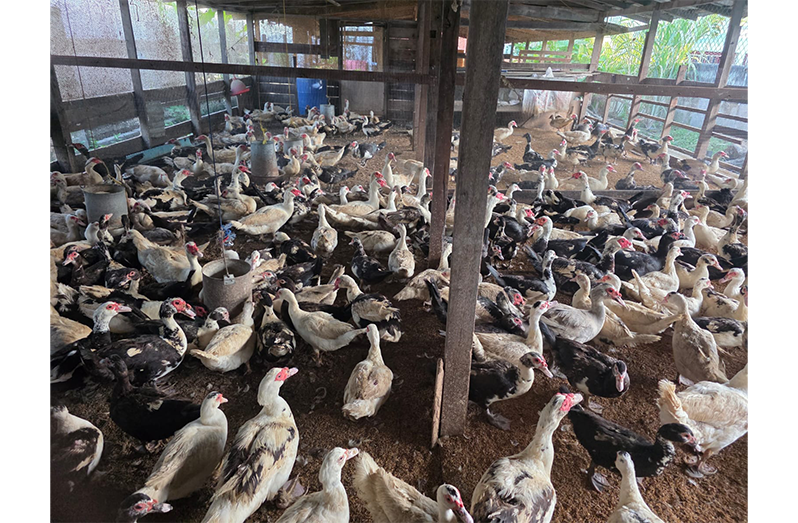
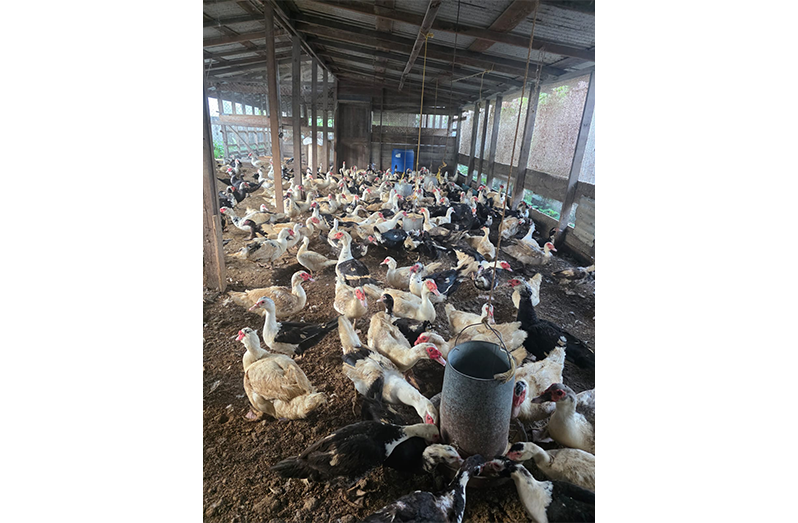
WHEN a shortage of essential supplies forced Surindra Sookraj to close his hydroponics business, he converted the structure where he had grown crops into a duck pen.
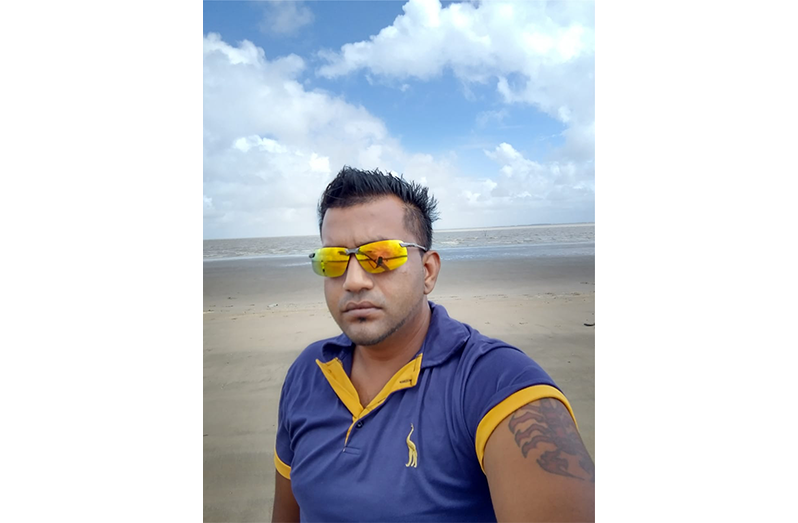
With 700 ducks provided through a presidential grant, the 34-year-old electrician from Bella Dam, Pouderoyen, on the West Bank of Demerara, built a business that now supplies about 200 ducks a week to the local meat market and produces ducklings for other farmers.
Sookraj is optimistic about the future of agriculture in Guyana, drawing on his own experience to make the case for combining traditional farming knowledge with modern animal science.
The switch to livestock marked a new direction for Sookraj, who grew up in a family of traditional cash-crop farmers.
He began working and studying at 13 and later qualified as an electrician through Technical and Vocational Education and Training (TVET).
He still takes on electrical jobs and drives a taxi when customers call. When hydroponics became difficult to sustain, duck farming gave him a way to earn a living using the facilities he already had.
The converted pen gave him a place to start, and a presidential grant provided his first flock. Sookraj said he approached President Dr Irfaan Ali and received 700 ducks to establish the operation.
He drew on what he had learned from his family, but managing a flock of that size required specialised guidance.
He recalls moments of frustration and credits the Guyana Livestock Development Authority (GLDA), particularly Drs Walrond and Tihul and the Region Three extension team, with helping him work through those early difficulties.
Managing the flock
As Sookraj gained experience, he came to regard biosecurity, careful selection of breeding stock and accurate record-keeping as central to the business.
Biosecurity helps protect flock health, while careful selection allows him to maintain desirable genetic traits in his breeding birds.
Production records help him track flock performance and identify where management changes are needed.
That attention to flock performance extends to his feeding routine. Sookraj uses locally available poultry feed, starting young birds on a starter ration, then moving them to grower feed and giving a layer ration to ducks that have begun laying.
He also incorporates vegetable waste from the market into the daily feeding routine. A duck raised for meat is generally ready for sale at 16 weeks, he said, weighing about 10 pounds live and about seven and a half pounds after plucking.
Improving results at the hatchery
While continuing to fatten ducks for the meat market, Sookraj moved into breeding. The expansion made fertile egg production and hatchery performance increasingly important to the business.
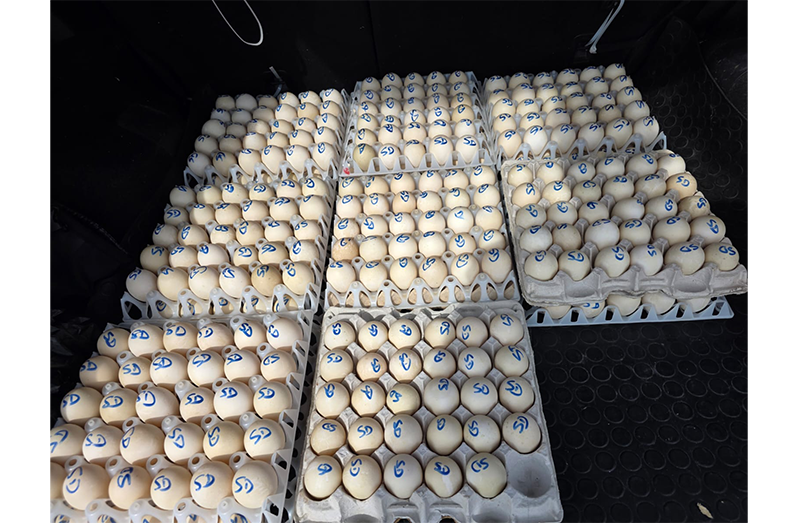
He said his flock produces about 480 eggs a week for incubation at the GLDA’s Mon Repos hatchery on the East Coast of Demerara.
He has seen a significant increase in his duckling production despite the current El Niño conditions and acknowledged the support of GLDA staff at the hatchery.
Those results took time to achieve. Sookraj said he and other farmers faced difficulties in the early stages of using the incubation service.
He credits the subsequent improvement to two developments. Hatchery capacity increased after an urgent intervention by the Hon Zulfikar Mustapha, Minister of Agriculture, this year, and he adjusted his husbandry practices on the advice of the GLDA technical team.
He said his flock now produces more fertile eggs and that his hatch rate at Mon Repos has consistently been more than double its earlier level.
For Sookraj, those gains make the subsidised service an important part of the business. He describes it as easy to access and affordable, and he values the technical advice available when a batch hatches poorly.
“We pay G$100 per duckling hatched using GLDA facilities. Using the facility is an excellent opportunity because, when we face challenges at the hatchery, we, as farmers, are offered technical support to rectify the problem.”
Accessing the Mon Repos hatchery
Sookraj explained that accessing GLDA services is simple and easy and encouraged farmers who want to use the service to contact their regional GLDA extension officer or register with FarmersConnectGY.
“When making contact, it is important to indicate that you want to use the Mon Repos hatchery. You will be provided with technical support to prepare your eggs for incubation, including proper storage, which is very important, and to confirm availability, current charges and when to bring the eggs in.”
He lauded the support he receives from the GLDA and noted that access to GLDA incubation and hatchery services, along with technical advice, helps small- and medium-scale farmers breed poultry without purchasing and operating their own incubators.
He added that, throughout the process, farmers like him are invited to observe egg screening at various intervals and, at the end, receive a comprehensive report.
Sookraj noted that the technical support he relied on is also available to other producers. Before incubation, GLDA extension officers can visit farms to advise on flock nutrition, housing and the ratio of hens to drakes.
At Mon Repos, staff use biosecurity screening and egg sanitation procedures before placing eggs in commercial-grade incubators. After hatching, extension officers can advise farmers on caring for the young birds.
Finding room to grow
With the breeding operation established and local demand helping sustain meat sales, Sookraj is seeking additional land to expand his business.
He continues to navigate marketing challenges and has applied for a G$3 million loan from the Guyana Development Bank.
He said the registration process was straightforward and welcomed the initiative as a source of financing for local entrepreneurs.
Sookraj credits H.E. President Dr Irfaan Ali and the Hon Zulfikar Mustapha, Minister of Agriculture, for helping revitalise agriculture through measures that have supported his business from start-up through breeding.
He believes farming can become more profitable as Guyana’s oil and gas economy grows, and he encourages others to start with the resources they already have.
For Sookraj, that meant a structure left vacant by a hydroponics venture. The business it now houses has grown to the point that his next challenge is finding more space.