






SURVIVORS of the MV Barima disaster on Friday described cargo-packed passenger spaces, faltering engines and a desperate struggle for survival, as the Commission of Inquiry (CoI) heard more accounts of lives lost, and the endless pain that lingers long after the dead were buried.
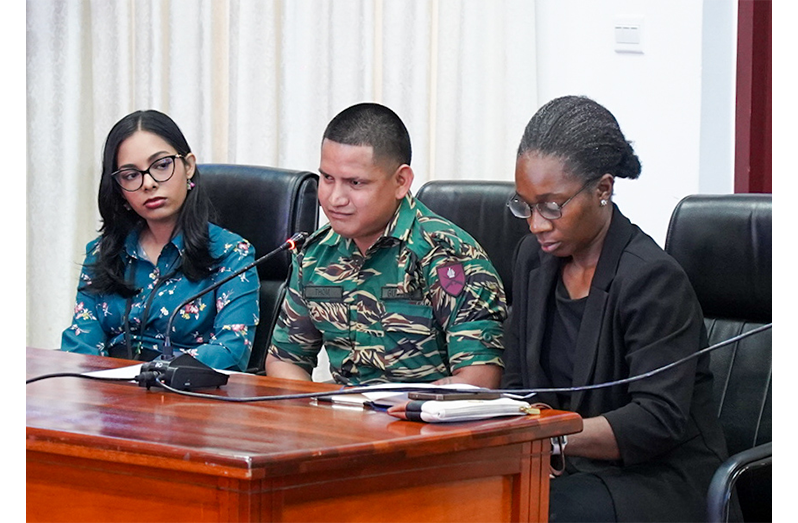
Six witnesses testified at the inquiry’s 14th sitting at the Arthur Chung Conference Centre, bringing the total number of survivors to testify to 20. In all, 60 people have appeared before the CoI so far.
The most harrowing of stories are the hours that were spent in the dark, murky Atlantic waters, hoping and praying for someone to come to the rescue.
The testimony on Friday, once again, raised questions about loading, ticketing, conditions aboard and the vessel’s operation before it capsized.
Ramrattan Doodnauth, who said he had travelled on the Barima approximately every two weeks for more than 15 years, told commissioners he had never seen it so heavily loaded.
Cargo filled the hatches and accommodation areas and was stacked on the wheelhouse roof, he said. A security guard allegedly told him that 144 passengers were aboard and another 40 were expected, against a capacity of 133.
Doodnauth said he warned the vessel’s marine superintendent that passengers would be trapped in the event of an emergency and asked for cargo to be moved.
“Nothing could move,” he told the commission.
Venita George described boarding without a ticket after repeatedly being told to wait at the Goods Wharf ticket booth. An attendant eventually waved her through, saying her fare would be collected aboard.
A woman wearing a black top subsequently collected her money but issued neither a ticket nor a freight receipt, George said. Asked whether her name had been recorded before departure, she replied: “No documentation.”
She said cargo occupied the benches, forcing her family to sit on sacks, while seven or eight hammocks hung across the aisles.
Her husband, Miguel DeJesus Mata, described an interior space packed to head height with produce sacks, boxes, drums and a freezer.
He said the engine faltered twice, and the vessel then travelled much more slowly. About 15 to 20 minutes before the sinking, he visited the canteen and saw the attendant moving through water deeper than ankle height, with passengers in hammocks above it.
GDF Corporal Jobe Thom also recalled a reduction in engine noise and speed about two hours after departure. He believed one engine had stopped, and said the vessel never regained its speed.
Travelling with his friend Joel Sutton, Thom sat on a rice bag at the rear of the upper deck. He later awoke as the vessel leaned heavily, striking his shoulder against a wall.
“The bottom turned to the top,” he recalled.
Thom escaped into the sea and reached a life raft, where he helped others aboard. A fishing boat rescued the group around 06:00hrs.
For Luis Castillo, the disaster claimed his girlfriend and his 16-year-old cousin, the son of fellow witness Anndyar Deally.
Castillo recalled the vessel tilting left before swinging the other way and submerging him. He struggled to surface as his girlfriend clung to him, but they became separated.
He eventually held onto floating debris, surrounded by cries and wailing from people searching for relatives. As he headed towards a blinking red light, he heard a Spanish-speaking woman pleading for help and turned back.
“Don’t leave me, don’t leave me … I don’t want to die,” he recalled her saying.
He stayed with her and helped her towards the light.
Deally, meanwhile, described being swept overboard as she tried to reach her son. She surfaced beside two men holding a mattress and later heard the 13-year-old girl travelling with her calling from the darkness. Her young daughter was with the girl.
Her daughter swam across to her between waves.
Around 04:00hrs, exhausted and losing strength in her hands, Deally told her daughter she was ready to let go. The child refused, holding her mother’s hand and promising to push it back onto their floating support if the pain returned.
Deally said approaching searchlights passed them twice before rescuers spotted them. The Coast Guard eventually pulled them from the water.
Witnesses differed on when engines stopped and how the vessel moved before overturning. Their testimonies nevertheless repeatedly described crowded spaces, reduced speed and little time to react, accounts now before the CoI as it examines the sinking, loss of life and emergency response.




