






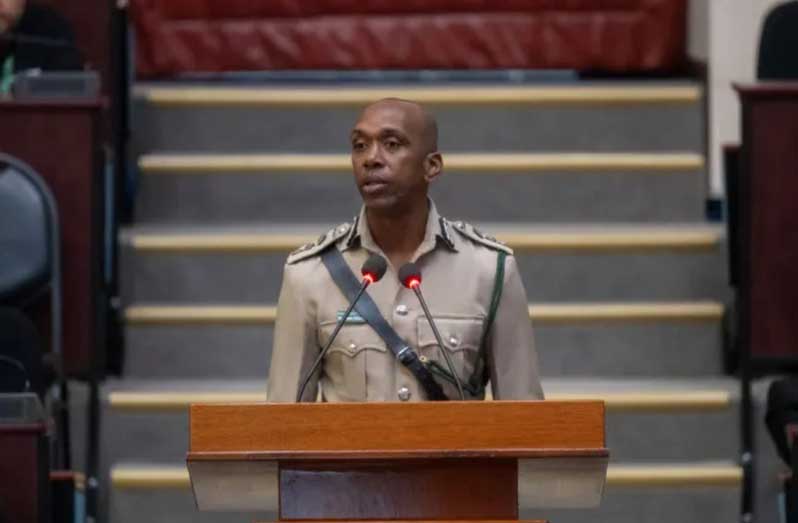
ACTING Director of Prisons, Nicklon Elliot, has rejected allegations that Opposition Leader Azruddin Mohamed is being subjected to inhumane or degrading treatment at Lusignan Prison, where he is being held on remand after being denied bail on a cybercrime charge.
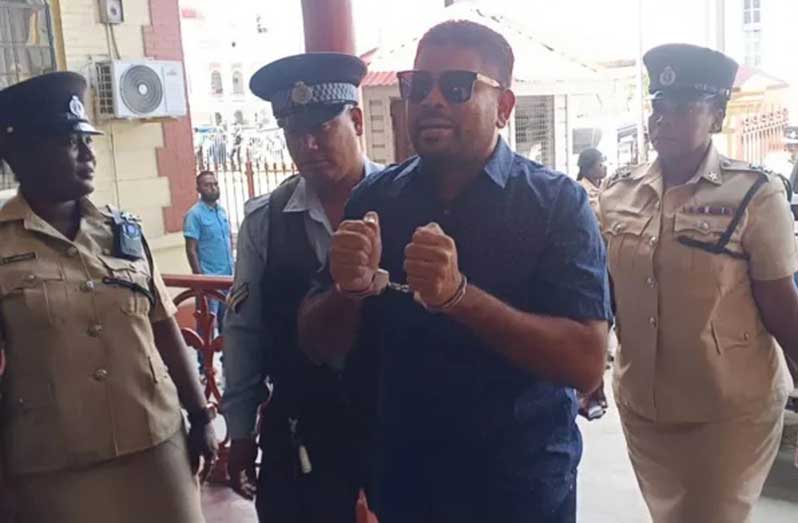
Mohamed was charged over allegations of unauthorised access to and disclosure of police surveillance footage relating to an October 12 incident outside the Kitty residence of Senior Superintendent Prem Narine, head of the Guyana Police Force’s Special Branch Unit.
In an affidavit filed in the Demerara High Court on Monday, Elliot challenged Mohamed’s account of his detention conditions. These included allegations of inadequate ventilation, continuous lighting, restricted movement, limited human interaction, and exposure to smoke and offensive odours from a nearby dumpsite.
Elliot, who has oversight of the administration and operations of the Guyana Prison Service (GPS), said Mohamed was classified as a high-profile prisoner upon his admission to Lusignan Prison on October 30, following an assessment through the Prison Management Offenders System.
He explained that the classification took into consideration the nature of the offence with which Mohamed was charged, the public interest and potential security threats to prison staff and other inmates.
According to Elliot, the classification was a security measure and was not intended as punishment.
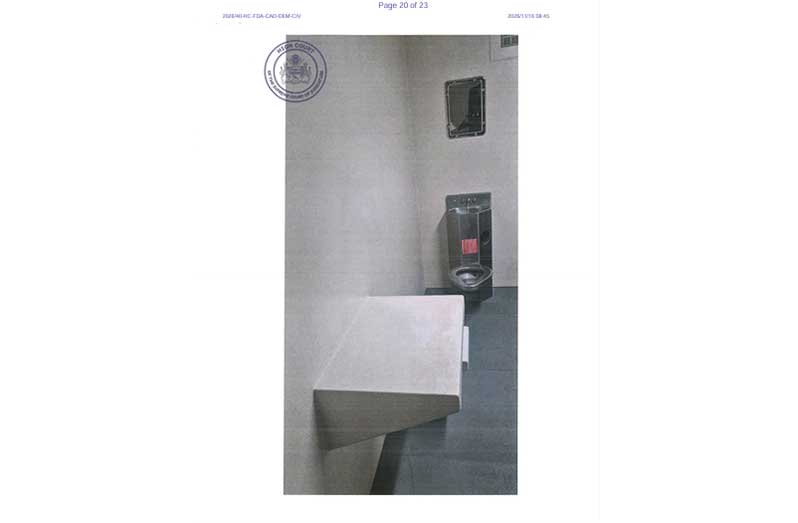
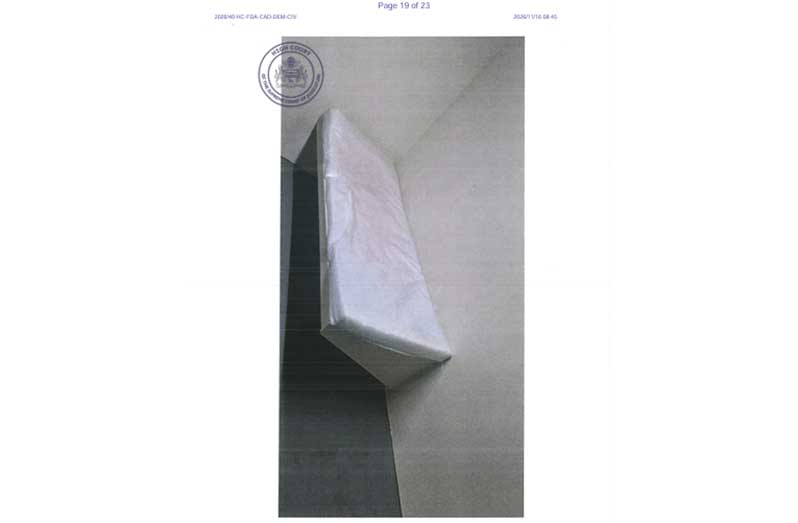
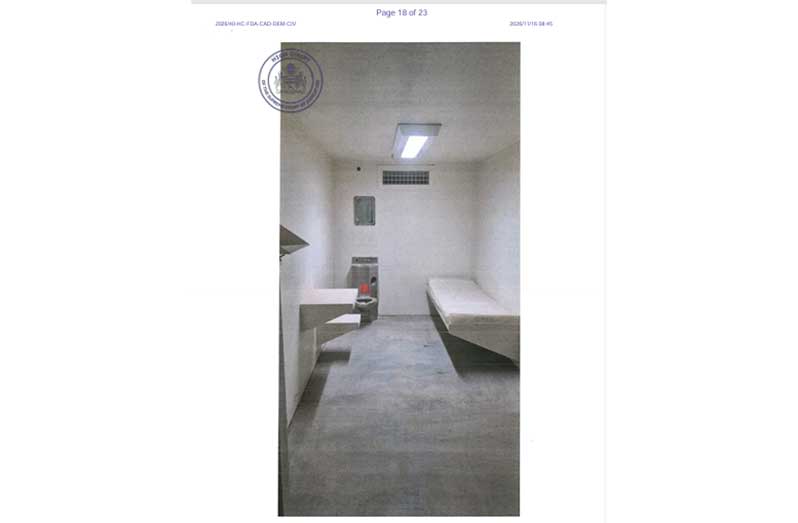
The Acting Director said Mohamed was accommodated in Building Five, a two-storey structure constructed approximately two years ago and occupies a cell on its upper floor.
He described the cell as measuring approximately seven feet by 14 feet and maintained that its design and facilities provide adequate ventilation, airflow, lighting and sanitary arrangements.
Elliot said the cells were prefabricated in the United States by SteelCell of North America before being installed at the Lusignan facility.
He further contended that their design was consistent with the accommodation, lighting, ventilation and sanitation considerations outlined in Rules 13, 14 and 15 of the United Nations Standard Minimum Rules for the Treatment of Prisoners, commonly known as the Nelson Mandela Rules.
Photographs of Mohamed’s cell were attached to the affidavit.
Addressing complaints about the lighting, Elliot said the fixtures formed part of the building’s original electrical system and were not installed to cause discomfort or deprive the prisoner of sleep. He also rejected allegations that Mohamed was being affected by smoke and offensive odours from a nearby dumpsite.
Elliot stated that the dumpsite was not constantly burning or emitting smoke, fumes or offensive odours and that the building where Mohamed is housed is situated several thousand feet north of the location.
He added that the prevailing wind direction is generally from north to south, away from the building.
On allegations that Mohamed was being isolated from other people and subjected to unreasonable restrictions on visits, Elliot maintained that his movements and accommodation were governed by the prison’s Standing Order No. 38.
He said Mohamed was permitted to interact with prison officers, medical and welfare personnel, relatives, his spiritual leader and attorneys, subject to the applicable procedures.
The Acting Director was particularly emphatic in rejecting claims that the Opposition Leader was being held in solitary confinement.
Elliot stated, “Solitary confinement is a disciplinary sanction imposed on prisoners for misconduct. There is a dedicated number of cells used for solitary confinement. The defendant has never been sanctioned and is not, or has ever been placed, in solitary confinement.”
Elliot also provided details of Mohamed’s movements and interactions during his first days at the facility, relying on official prison records.
He said that on October 31, Mohamed received visits from family members and attorneys and was permitted a telephone call to a relative lasting approximately 16 minutes.
On November 1, Mohamed was unlocked at 06:00hrs and received breakfast delivered by a relative shortly before 06:40hrs. He subsequently attended a welfare counselling session lasting approximately one hour and 30 minutes.
The records also showed that he received a two-hour visit from one of his attorneys, made three telephone calls to family members lasting approximately 29 minutes in total and was examined by a medical officer at 15:55hrs, when he was provided with cough medication.
He was also supplied with reading and writing materials.
Elliot further disclosed that he personally visited Mohamed at approximately 19:00hrs on November 1.
“During that interaction, Mr. Mohamed requested permission to telephone his son ahead of his son’s birthday on Sunday, November 1, 2026. That request was granted,” the affidavit stated.
He added that Mohamed also requested adjustments to the fan serving his cell area, and prison officers responded to the request and made the necessary adjustments.
According to Elliot, the official prison records established that Mohamed spent approximately nine hours and 20 minutes outside his holding area on November 1.
He said that figure contradicted an assertion that Mohamed had been confined to the area for approximately 23 hours and 50 minutes.
The Acting Director also disclosed that arrangements had been made for Mohamed’s relatives to supply his daily meals, which were accepted by the Prison Service and delivered to him. Approval was subsequently granted for additional family visits.
Elliot maintained that the prisoner’s conditions would continue to be monitored and that appropriate access to medical care, welfare services, family contact and other entitlements would be facilitated.
He stated, “The Guyana Prison Service will continue to ensure that Mr. Mohamed, like every person in its custody, is treated in accordance with the law, established prison procedures and applicable standards, while maintaining the security and good order of the institution.”
BACKGROUND
The affidavit was filed on behalf of the Attorney General in response to proceedings brought by Mohamed’s mother, Bonita Mohamed, as his next friend, seeking his admission to bail and judicial review of the decision to remand him
Mohamed was remanded to Lusignan Prison on October 30 after Magistrate Abigail Gibbs denied him bail on a cybercrime charge.
Mohamed is challenging the magistrate’s decision to deny him bail on a cybercrime charge alleging that he and Police Constable Ryan Greene unlawfully accessed and transferred footage from the Guyana Police Force’s Safe Country surveillance system.
The footage, linked to the October 12 shooting outside the Barr Street, Kitty residence of Senior Superintendent Prem Narine, head of the Guyana Police Force’s Special Branch Unit and a key witness in the extradition proceedings against Mohamed and his father, was allegedly sold to Mohamed for $800,000.
Police Constable Ashton Chappelle was separately charged and remanded by Magistrate Gibbs in connection with the alleged unauthorised access and transfer.
Meanwhile, Justice Priscilla Chandra-Hanif is expected to deliver her ruling on Tuesday, November 17, on Mohamed’s substantive judicial review application challenging Magistrate Gibbs’ October 30 decision to deny him bail on a cybercrime charge.
The ruling will determine whether the magistrate acted lawfully in refusing bail and ordering Mohamed’s remand at Lusignan Prison. The hearing is scheduled for 09:00hrs, with a written decision expected at 15:00hrs.




