






–MRCC Director points to improved communication, earlier vessel identification and continued modernisation
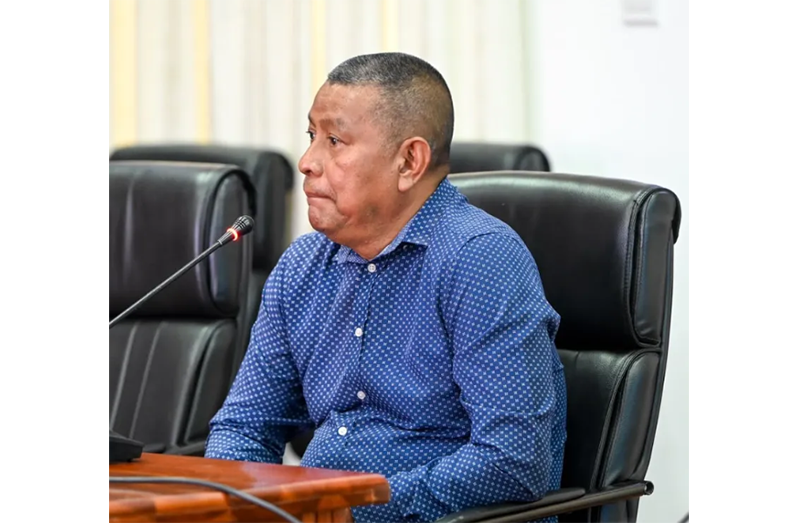
EARLIER vessel identification, more effective communication and stronger coordination with responders could strengthen Guyana’s maritime emergency response, Captain John Flores told the Commission of Inquiry (CoI) into the sinking of the MV Barima as he returned to give further evidence on Friday.
As director of the Maritime Rescue Coordination Centre (MRCC), which was created in 2023, Flores acknowledged that lessons from the operation could help strengthen the country’s ability to respond to future emergencies at sea.
Flores coordinated the search-and-rescue response following the sinking of the Barima on July 18.
At his earlier appearance, a commissioner acknowledged that responders had done “quite well” given the circumstances.
Flores had informed the COI that the MRCC will soon be able to receive satellite distress alerts directly, removing the existing relay through air traffic control at Timehri.
On Friday, he again identified the centre as part of the effort to improve rescue coordination, agreeing with the suggestion by commissioners that more reliable information during the initial hours of the tragedy could have supported a more targeted deployment of resources.
His testimony examined both the decisions taken during the emergency and the improvements that could make future operations more effective.
A central issue was how quickly authorities could identify the vessel transmitting a distress signal.
Flores agreed that knowing earlier that the alert came from the Barima, with its large number of people aboard, would have helped authorities assess the scale of the emergency and mobilise accordingly.
During the exchanges, he agreed that earlier identification could have provided approximately one additional hour for the response.
He said that rescue authorities receive distress alerts involving different circumstances and must assess the information available when determining the resources to deploy.
The inquiry examined the role of the vessel’s Emergency Position-Indicating Radio Beacon, or EPIRB.
Commissioners highlighted that the beacon, while registered, was lacking vital information, and its battery had expired, matters identified in a November 2025 inspection report. That information could have helped authorities link the distress alert to the vessel.
Flores agreed that knowing the distress signal came from the Barima would have determined the appropriate scale of the response.
Communication between the coordination team and those conducting the rescue operation was another major focus of Flores testimony.
Commissioners questioned whether fishermen, Coast Guard personnel and other responders had sufficiently clear information about the locations of survivors, life rafts and available resources during the early stages.
Flores acknowledged that communication in those initial hours could have been better. He explained that information reached the coordination team through different channels and that direct contact with every fisherman participating in the response was not possible.
He nevertheless recognised fishermen as part of the search-and-rescue response and agreed that more efficient communication could have improved the operation. By approximately 3 am to 4 am, he said, the team had developed a clearer understanding of where responders were and how the operation was progressing.
Responding to questions about improvement, Flores identified the MRCC as part of the process of strengthening coordination. His evidence acknowledged the difficulties experienced during the emergency operation.
The inquiry also examined radio limitations and vessel tracking. Flores acknowledged difficulties establishing radio contact and confirmed that the Barima was not fitted with an Automatic Identification System (AIS), which would otherwise have offered another means of locating and identifying the vessel.
Beyond the immediate rescue response, Flores discussed efforts during his earlier tenure as Director of Maritime Safety to build vessel records and obtain documentation from the Transport and Harbours Department.
He said that proper documentation supported an understanding of vessels and their operating characteristics.
Asked whether he would consider recommending that documentation be carried aboard all vessels, including state-owned vessels, Flores said yes.
Flores acknowledged that communication during the early hours of the rescue could have been more effective.
He agreed that earlier identification of the Barima and faster information-sharing could have supported a more timely, targeted response, and identified the MRCC’s development as part of the effort to strengthen coordination.




