
Building on four generations of beekeeping in West Coast Berbice
WHEN Shivpaul Rajkumar heard his stingless bee honey had placed second at the 3rd CARICOM Honey Show, held in neighbouring Suriname from November 6-8, 2026, he wished he could have been there to accept the trophy. For the beekeeper from No. 5 Village, Mon Choisi, West Coast Berbice, the award marked a milestone for a product he had only recently added to a business rooted in generations of family experience.
Rajkumar had long worked with Africanised honeybees, keeping his hives among the mangrove forests along the West Coast Berbice sea defences.
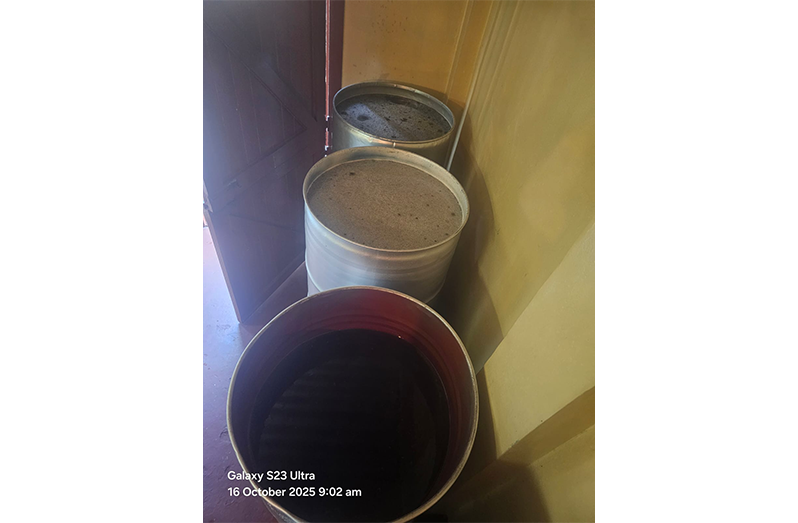
Today, he manages 285 hive boxes across nine sites and processes his harvest in his own honey house; 2026 was one of his largest harvest years, earning him recognition as Region Five’s largest honey producer for 2026 at the just-concluded Annual Honey Fest 2026 organised by the Guyana Livestock Development Authority.
The two awards tell different parts of the same story. One recognises the scale of the operation Rajkumar has built on the Berbice coast.
The other shows what he has done with that foothold. By combining the skills handed down through his family with technical guidance, equipment and opportunities to reach buyers through the Ministry of Agriculture and the Guyana Livestock Development Authority (GLDA), he has expanded production and developed another source of income.
Beekeeping in Rajkumar’s family began with his great-grandfather, who established an apiary at Bush Lot Village.
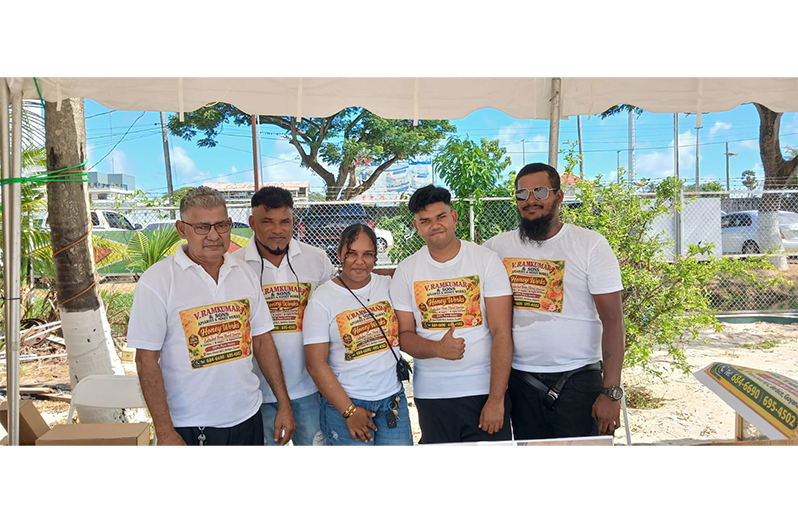
After his great-grandfather died in 1985, Rajkumar and his father took over the operation as V. Rajkumar and Sons.
He told Pepperpot Magazine that he grew to love the work over time, learning the patience and discipline needed to keep colonies through the productive and quieter months of the year.
His operation typically has two honey flows a year, with roughly six months of production. Along the sea defences, the flowering black mangroves provide forage for his bees.
With more boxes distributed across nine sites, that stretch of coastline has become productive ground for a family business that now harvests and processes its honey locally.
“This honey flow was good; I can’t complain. Due to the dry season, the honey harvest has increased significantly, and I am pleased about it,” he said.
Rajkumar credits the Ministry of Agriculture, under Minister Zulfikar Mustapha, and the GLDA with helping him scale up his operation.
He received 150 boxes from GLDA, which significantly boosted production. The additional boxes gave him room to keep more colonies, while guidance from GLDA’s technical team helped him build on what he already knew about managing bees in the coastal environment.
He acknowledged GLDA Chief Executive Officer Dr Dwight Walrond, Apiary Inspector Shamar Butts and the Region Five extension team for their support.
In Rajkumar’s case, the Ministry’s investment in apiculture has had practical consequences. He can manage more colonies, process larger harvests in his own facility, and offer customers a wider range of honey.
Suitable land for further expansion remains a constraint, making the sites he manages along the mangrove belt particularly important to his livelihood.
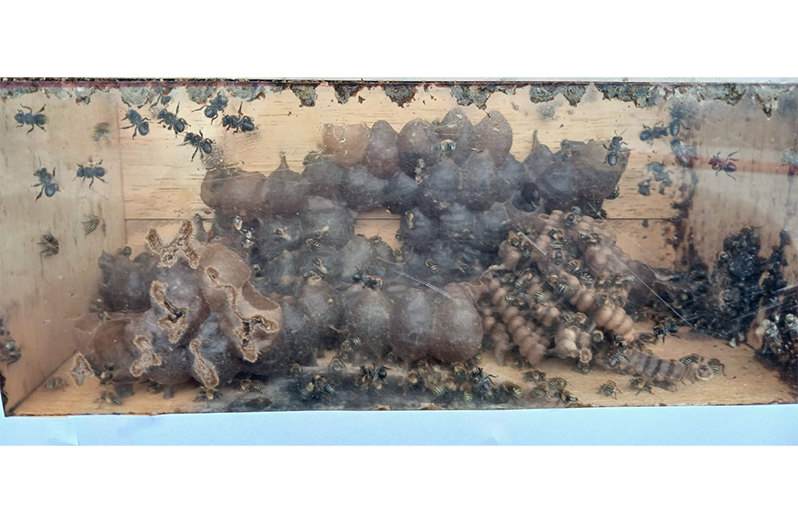
As production grew using Africanised honeybees, whose workers can sting and whose honey is stored in wax combs, Rajkumar added stingless bees.
The stingless bee workers lack a functional sting, and their colonies store honey in small pots made from wax and plant resin.
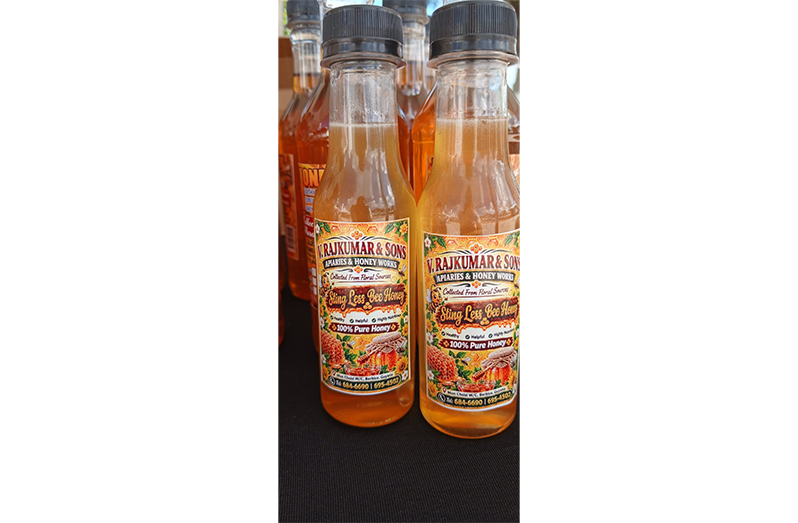
Stingless bee honey is generally thinner and more acidic, with a sweet-tart flavour that works well in drinks, with fruit, or in desserts.
Some communities also use it in traditional remedies. Stingless bee colonies generally yield less honey for harvest, and the limited supply can command a higher price.
Growing the apiary gave Rajkumar more honey to sell. Before the intervention by the GLDA, most of the honey he produced supplied the local demand, which was always high, but with the expansion of his apiary, the exposure gained as a result of his attendance at the annual Honey Fest organised by the Guyana Livestock Development Authority has catapulted his business success in marketing, networking, and visibility.
At this year’s Honey Fest 2026, held on the lawns of the Ministry of Agriculture’s compound on Regent and Vlissengen Roads, Georgetown, Rajkumar showcased and promoted his stingless bee production process and honey.
He was very impressed by the excellent quality of the value-added products displayed at the event and is proud of the industry’s evolution in Guyana.
Days later, his stingless bee honey placed second in its category at the 3rd CARICOM Honey Show, organised by the Caribbean Beekeepers Association and held in Suriname from November 6 to 8 as part of the 13th Caribbean Beekeepers Congress. Two other Guyanese exhibitors earned awards.
Neil Grant placed third in Light Honey, while Linden Stewart placed third in Beeswax Block. Rajkumar’s placement gave his newer product recognition beyond the customers he had been reaching at home.
As his business reaches more buyers, Rajkumar sees value in giving them a clearer account of where their honey was produced.
He has welcomed the national honey traceability initiative being introduced by GLDA and the Guyana Food Safety Authority.
The system uses QR codes to link products to records about their origin and processing, including information on the apiary, the vegetation in the area, and the honey house where the product was handled.
For a beekeeper whose operation is closely tied to a particular stretch of coast, that information is part of what he can offer a customer.
A jar of his honey can be traced back to an apiary along the West Coast Berbice mangroves and to the honey house where he processes his harvest.
As the system is rolled out, those records can help producers establish the origin of their honey with buyers in Guyana and abroad.
He also welcomes the government’s investment in a queen-rearing facility to help beekeepers improve their colonies and in a laboratory to test honey sold in Guyana.
He said the laboratory could help identify adulterated honey and curb its sale on the local market.
Four generations after his great-grandfather started keeping bees at Bush Lot, Rajkumar still works to the rhythm of two honey flows.
What has changed is what his family business can do with each harvest. With more hives, his own processing facility, and a public platform at Honey Fest, he can bring more of his honey to market and give customers a reason to seek out varieties they may never have tried.
Photos saved in Pepperpot November 15, 2026 as Honey, Stingless bees colony, Honey harvested, Shivpaul and family