






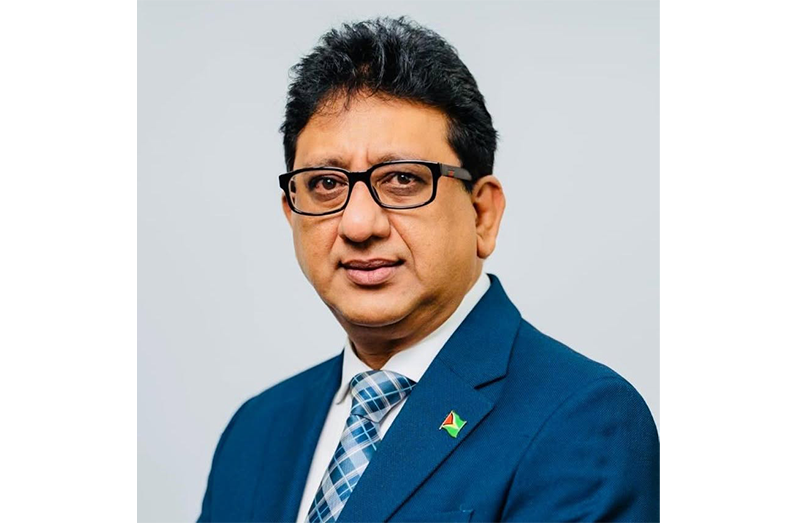
–Attorney General, DPP argue interim bail bid premature, legally misconceived
THE High Court in Demerara is expected to rule at noon on Friday on Opposition Leader Azruddin Mohamed’s application for provisional release while his substantive challenge to a magistrate’s refusal of bail remains pending.
Justice Priscilla Chandra-Hanif is also expected to rule on separate applications by Attorney General and Minister of Legal Affairs Anil Nandlall, SC, and Director of Public Prosecutions Shalimar Ali-Hack, SC, seeking to have Mohamed’s interim bail application struck out.
Nandlall has argued that Mohamed’s request is founded on a jurisprudential error, contending that bail cannot be pursued as a separate interlocutory remedy within the judicial review proceedings.
The matter came up for hearing on Thursday at the Demerara High Court, where Mohamed is challenging Magistrate Abigail Gibbs’ October 30 decision to deny him bail on the cybercrime charge.
Elaborating on his written submissions, Nandlall argued that bail could only be considered as a consequential remedy after the substantive judicial review proceedings had been heard and determined.
The judicial review application seeks to have the High Court examine the legality of the magistrate’s decision and, ultimately, quash her refusal to grant Mohamed bail.

According to Nandlall, having chosen judicial review as their legal avenue, the defence could not pursue a separate application for interim bail while the substantive proceedings remained pending.
“This cannot be classified as an application for bail. It is not. It is judicial review. Bail is a consequence. They chose the most limited option on the legislation, which is judicial review,” he submitted.
He further told the court that the application contained a fundamental legal error, stating: “There is a jurisprudential error in this application.”
Nandlall relied on provisions of the Bail Act, including Sections 17, 21 and 32, to outline what he described as the different legal avenues available to persons challenging decisions relating to bail.
He referred to Section 17, which provides for a bail application following the filing of an appeal, and Section 21, which deals with challenges through judicial review proceedings.
He also relied on Section 32(1), arguing that the provisions of the Bail Act operate in addition to, and do not derogate from, other written laws. He further referred to Section 32(3), which preserves the High Court’s jurisdiction to grant relief under the Constitution or other laws.
In advancing his argument, Nandlall also referred to Articles 139 and 144 of the Constitution, concerning personal liberty and the right to a fair hearing, respectively, as well as Article 8, which establishes the supremacy of the Constitution.
He maintained that the High Court’s constitutional jurisdiction remained available to persons seeking redress for alleged violations of their fundamental rights, but argued that Mohamed’s legal team had elected to pursue a different procedural route.
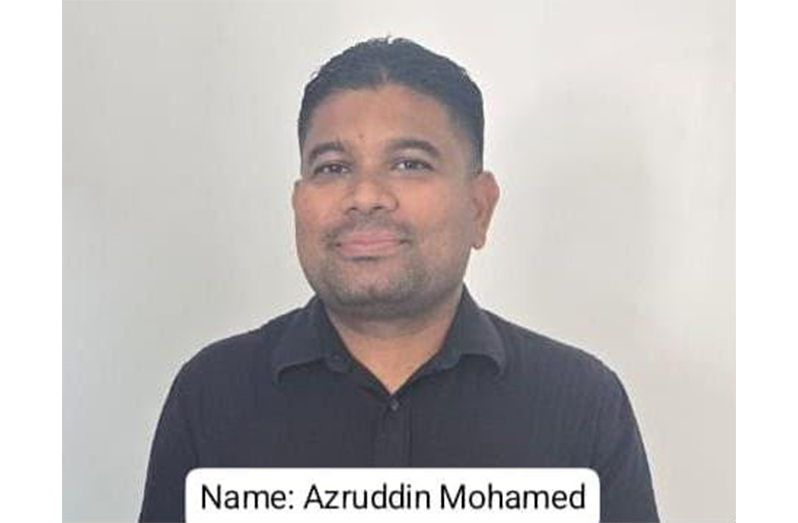
The Attorney General also questioned whether bail could properly be classified as an interlocutory remedy in judicial review proceedings, arguing that such remedies were intended to preserve the integrity of the substantive matter.
“The remedies available in judicial review proceedings are of a particular jurisprudential genesis. They are preservatory and conservatory in nature. They are designed to preserve the integrity of the substantive matter,” he submitted.
He maintained that bail did not fall within that category and questioned the very concept of interim bail, arguing that “the concept of interim bail collides grammatically and legally. What is interim bail?”
The substantive judicial review proceedings were brought by Mohamed’s mother, Bonita Mohamed, acting as his next friend, and seek to have the magistrate’s refusal of bail quashed.
With the substantive hearing scheduled for November 23, the defence subsequently filed a separate urgent application on November 8 seeking Mohamed’s release pending the outcome of those proceedings.
King’s Counsel Darshan Ramdhani, representing the DPP, adopted the Attorney General’s submissions and urged the court to dismiss the interim bail application, describing it as “an unheard-of creature in law.”
Representing Mohamed alongside attorneys Siand Dhurjon and Damien DaSilva, Roysdale Forde, SC, pushed back against the State’s arguments, maintaining that the law provides for interim bail under Sections 20 and 21 of the Bail Act.
He argued that the court was empowered to assess whether his client should remain in custody pending the determination of the substantive judicial review proceedings.
He said the court would examine the magistrate’s decision and the grounds relied upon to refuse bail, as reflected in the record of the proceedings, to determine whether Mohamed’s continued detention was justified.
Forde also argued that the court should consider whether there were sufficient grounds to justify keeping Mohamed on remand, including the risks of interference with witnesses, tampering with evidence, committing further offences or obstructing the course of justice.

The defence has also cited Mohamed’s lack of previous convictions, his family responsibilities, strong ties to Guyana, his position as Leader of the Opposition and his compliance with bail conditions in separate proceedings as circumstances supporting his release.
Dhurjon adopted Forde’s submissions, adding that the defence was seeking provisional release, whether under house arrest or a curfew.
The defence has proposed several bail conditions, including the surrender of Mohamed’s travel documents, restrictions on leaving Guyana and regular reporting to the police.
The joint cybercrime charge against Mohamed and Police Constable Ryan Greene, who is also on remand, alleged that they unlawfully accessed and transferred footage from the Guyana Police Force’s Safe Country surveillance system.
The footage relates to the October 12 shooting incident outside the Kitty home of Special Branch Unit head, Senior Superintendent of Police Prem Narine, during which Mohamed and two of his employees were reportedly involved. The prosecution alleged that the surveillance footage was subsequently transferred to Mohamed in exchange for $800,000.
The opposition leader has been on remand at Lusignan Prison.
A separate charge was also brought against Police Constable Ashton Chappelle, who was subsequently remanded by Magistrate Gibbs in connection with the alleged unauthorised access to and transfer of the surveillance footage.
Meanwhile, Greene’s separate bail application was struck out on Wednesday by Justice Zamilla Ally-Seepaul, who ruled that the application had been pursued through the incorrect legal procedure.
The DPP has also filed a separate application seeking to strike out portions of an affidavit submitted by Mohamed, contending that they contain hearsay and inadmissible statements. Justice Chandra-Hanif is expected to rule on that application as well.
Mohamed is also facing separate legal proceedings, including firearm and ammunition possession charges and an allegation of attempting to pervert the course of justice arising from the October 12 incident outside Narine’s home.
He was granted $750,000 bail on those joint charges alongside two employees.
He and his father, Nazar Mohamed, are also contesting extradition proceedings initiated at the request of the United States, where they are wanted under an 11-count federal indictment involving allegations of money laundering, wire fraud, mail fraud and gold-related financial offences.
Pending the outcome of the extradition proceedings, they were each granted $150,000 bail, subject to conditions including surrendering their passports and reporting weekly to the Ruimveldt Police Station.
Both men and several businesses associated with them were sanctioned by the United States Department of the Treasury’s Office of Foreign Assets Control (OFAC) on June 11, 2024, under Executive Order 13818, which implements the Global Magnitsky Human Rights Accountability Act, over allegations of corruption involving Guyana’s gold sector.




