






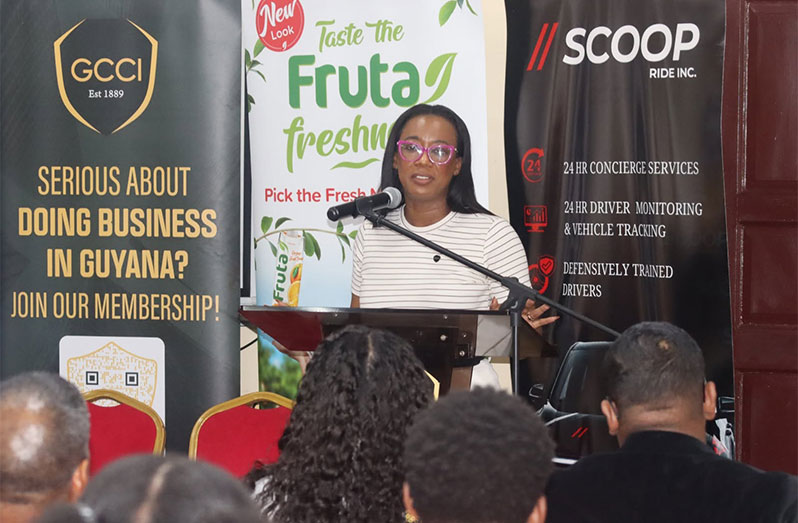
– Smith identifies opportunities in ecotourism, sustainable forestry, green financing and environmental research
GEORGETOWN Chamber of Commerce and Industry (GCCI) President, Kathy Smith, is urging Guyanese businesses to invest more actively in biodiversity conservation, identifying opportunities in ecotourism, sustainable agriculture, renewable energy and green financing that could generate economic returns while protecting the country’s natural resources.
Smith made the call during an appearance on the Starting Point podcast ahead of the Global Biodiversity Alliance Summit, scheduled for October 30 and 31 in Guyana. She said the private sector must look beyond traditional industries and recognise the potential to develop new businesses around the sustainable use of forests, wildlife and other natural assets.
She noted that participating in the inaugural summit last year had broadened her understanding of how biodiversity could create opportunities for enterprises outside the oil and gas, construction, mining and conventional agricultural sectors.
“It is now showing us that we can get enormous economic value from our forests while also keeping it intact,” Smith said, adding that the upcoming summit should help businesses better understand how to pursue opportunities in emerging industries.
Among the areas she highlighted was ecotourism, which she said could create income for Indigenous communities and other local businesses by combining Guyana’s natural attractions with its cultural heritage.
Smith suggested that entrepreneurs develop experiences allowing visitors to spend weekends in Indigenous communities, sample traditional foods, learn about local customs and explore the country’s forests and waterfalls.
With expatriates and other visitors seeking activities beyond conventional sightseeing, she said businesses needed to develop tourism products that would encourage people to experience Guyana while ensuring that communities benefit economically.
“We have to find ways to ensure that people understand Guyana and they are willing to pay for what they can see, but of course in a sustainable way,” she said.
Smith also pointed to sustainable agriculture as an area where young entrepreneurs could introduce climate-friendly methods of food production. She cited hydroponics as an example of an approach that could reduce dependence on conventional land-based cultivation and encourage innovation among young people.
“Hydroponics is showing us that the young people are thinking about green and better ways in terms of planting, climate-friendly way of planting,” she said.
Renewable energy, particularly solar power, was another area she identified as offering opportunities for businesses seeking alternative energy sources. She also highlighted green technologies and environmental consulting as potential avenues for new enterprises as demand for sustainable business practices grows.
Smith said the development of green financial markets could further expand investment opportunities for Guyanese businesses, including through carbon credits and green bonds.
She pointed to Guyana’s Low Carbon Development Strategy (LCDS) as an important framework for understanding how economic development and environmental protection could be pursued together. She urged businesses to explore opportunities to participate in carbon markets and develop partnerships that would allow them to benefit from the sustainable management of the country’s natural resources.
Smith also called for more frequent engagement between the Government and private sector, arguing that discussions on biodiversity and green investment should continue throughout the year rather than be concentrated around the annual summit.
“We need to have more breakout sessions from the summit, not just wait for the yearly summit to come around,” she said, adding that ongoing discussions in different business and community settings could help raise awareness and encourage investment.
As a member of the board of the Iwokrama International Centre for Rainforest Conservation and Development, Smith also highlighted the institution’s role in advancing sustainable forest management and research.
She said Iwokrama was developing a five-year strategic plan intended to identify areas where private businesses could contribute to its long-term sustainability and conservation work.
The plan is expected to explore sustainable forest management, research partnerships and stronger engagement with Indigenous communities, while identifying opportunities to attract investment and broaden private sector participation.
Smith said research into medicinal products derived from Guyana’s forests could also create opportunities for collaboration with international universities and research institutions.
She argued that greater investment in scientific research could help translate knowledge of forest plants and their traditional uses into products with wider commercial applications.
“We are looking to partner with international universities, international agencies, as to how we can get actual medicines out of our forests,” she said.
However, she stressed that such initiatives must respect Indigenous communities and recognise their relationship with the forests, particularly where traditional knowledge contributes to research and product development.
Smith further called on commercial banks and other financial institutions to expand access to financing for micro, small and medium-sized enterprises seeking to adopt environmentally sustainable practices.
While larger businesses have increasingly explored measures such as improved waste management and solar energy, she said smaller enterprises also needed access to capital to make similar investments and participate in the emerging green economy.
She disclosed that private sector organisations, including the Private Sector Commission, GCCI and the Guyana Manufacturing and Services Association (GMSA), were exploring the possibility of establishing a fund to support forest conservation.
Smith said the initiative reflected recognition that some conservation activities require direct financial contributions and cannot be sustained solely through investments expected to generate immediate commercial returns.
The proposed mechanism would allow businesses to contribute collectively to conservation efforts, providing an additional avenue for private sector support beyond traditional donations.
As the biodiversity summit approaches, Smith urged business leaders to participate in the discussions and consider how their operations could contribute to protecting Guyana’s natural resources while creating new economic opportunities.
“If we take, we must put back. If we remove, we must replant,” she said.




