






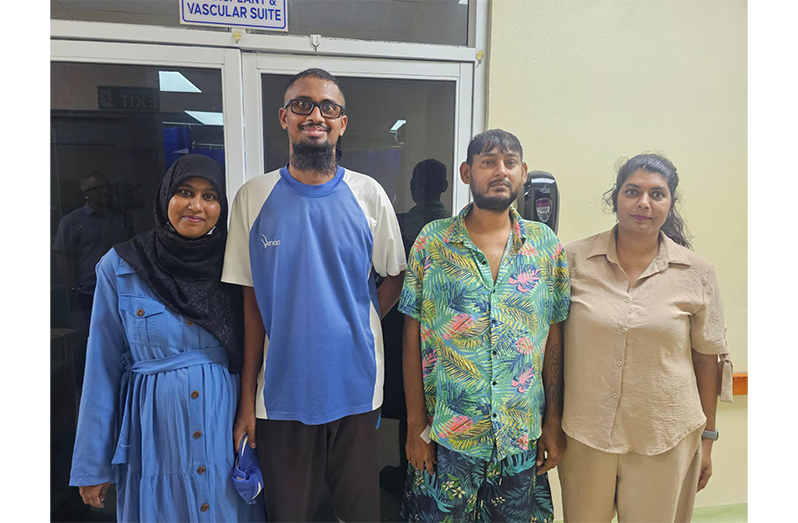
–Two WCD couples swap gifts of life
TWO husbands from the West Coast of Demerara (WCD) are living free of dialysis after the Georgetown Public Hospital Corporation (GPHC) carried out a paired kidney exchange in September.
This procedure allowed each man to receive a kidney from the other’s wife after their own spouses’ organs proved incompatible.
Both men, according to information from the GPHC, have been discharged with good kidney functions. The hospital credits the outcome to the generosity of the donors and the expertise of its transplant team.
The first patient, a 31-year-old man, was diagnosed with end-stage renal disease by GPHC’s Nephrology team.
He was referred to the Transplant Department for placement of a peritoneal dialysis catheter. Because of his young age, the team also raised the possibility of a kidney transplant, and he expressed interest.
His wife offered to donate one of her kidneys. Compatibility testing, however, showed that their blood groups did not match, ruling out a direct transplant.
The man continued on peritoneal dialysis while the transplant team looked at other options for the couple, including a paired kidney exchange.
About five months later, a second couple approached the team. The husband, aged 38, also has kidney disease, and his wife was willing to donate. Testing showed that they too had incompatible blood groups.
Seeing the opening, the transplant team proposed a paired exchange: each wife would donate a kidney to the other woman’s husband. Both couples agreed. Cross-match testing then returned favourable results, clearing the way for surgery.
Both men received their transplants in September and stayed in hospital for roughly two weeks afterwards, with the older patient needing a slightly longer stay.
They have since been discharged and no longer depend on dialysis. They return to clinic for wound care, routine investigations and monitoring, and take prescribed medications to support their new kidneys.
Both are working fathers from the West Coast of Demerara. GPHC described the transplants as a significant milestone for their families and a renewed chance at healthier lives.
The hospital said the case underscores the importance of organ donation, thorough compatibility testing and co-operation between patients and healthcare professionals.
It noted that when a willing donor is not compatible with a loved one, a paired kidney exchange may offer another route to a transplant.
“At GPHC, every opportunity to improve a patient’s quality of life matters,” the hospital said in its statement, adding that the two transplants show how teamwork, medical expertise and donor generosity can turn a challenging diagnosis into a renewed chance at life.




