






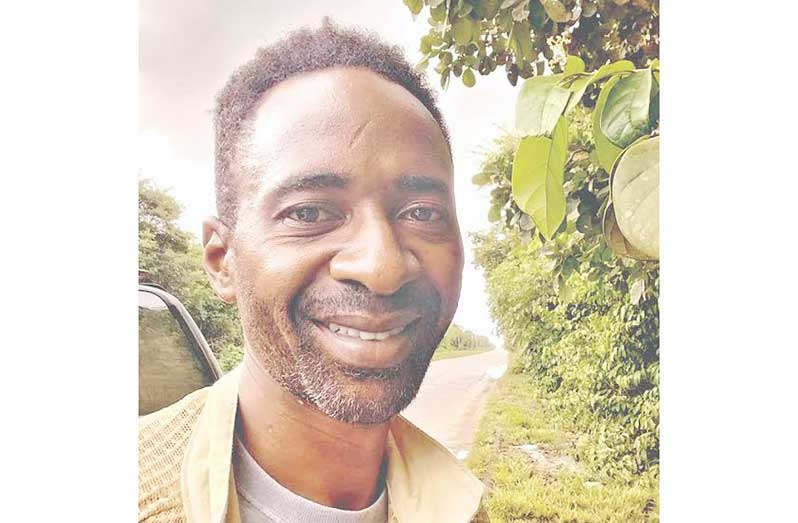
VPAC’s, Francis Bailey, has questioned Opposition Leader Azruddin Mohamed’s decision to be outside the home of a senior police officer who is a witness in extradition proceedings involving him, describing the move as unnecessary and potentially damaging to his bail.
Bailey’s criticism comes after Mohamed and two other men were arrested following an incident outside the Barr Street, Kitty, Georgetown, residence of Senior Superintendent Prem Narine, Head of the Special Branch, shortly before midnight on Monday.
According to police reports, the senior officer had reported hearing what appeared to be a gunshot as a black Toyota Allion, bearing registration number PXX 5300, approached his residence.
According to preliminary police investigations, Narine took cover and discharged several rounds from his service firearm in the direction of the vehicle, which subsequently drove away. The senior officer also reported that he had previously seen the vehicle monitoring his residence.
The vehicle was later intercepted at the junction of Vlissengen Road and Sandy Babb Street, Kitty, where its occupants were identified as Mohamed, 39; Mario Mohamed, 25; and Eugene Thorne, 35. All three were arrested.
A search of the vehicle reportedly led to the discovery of an unlicensed .32 Taurus pistol without a serial number and three live rounds of ammunition. Police also recovered one .32 spent shell near the residence and four 9mm spent shells.
The firearms, ammunition and spent shells were lodged for ballistic examination, while investigators are expected to review CCTV footage. The three men remained in police custody as investigations continued, according to the police account.
Against that backdrop, Bailey questioned why Mohamed, who is facing extradition proceedings, had placed himself at the residence of a person who is a witness in the case.
“What are you doing in front of the house of a witness in a state case against you concerning extradition for criminal matters? What are you doing there at midnight?” Bailey asked.
He argued that Mohamed’s presence at the residence could be construed as witness intimidation, adding that such circumstances could potentially place his bail at risk.
Bailey also challenged Mohamed’s explanation or apparent approach to the incident, arguing that he and his team tended to frame events around claims of victimisation rather than address questions about their own conduct.
“You’re covering under this Leader of the Opposition title, and nothing about last night was to serve the people of this country. Nothing about it,” Bailey said.
He questioned what the public had gained from the incident, arguing that it did not address the immediate concerns of ordinary citizens.
“Poor people didn’t wake up less hungry for whatever corruption was going to be highlighted there,” he said.
Bailey used the incident to renew his criticism of what he described as a lack of policy direction from Mohamed’s political movement, arguing that an opposition party should do more than identify problems or highlight alleged wrongdoing.
“I still want to see it. Where is the policy coming out of this party?” he asked.
He maintained that while an opposition party had a responsibility to scrutinise the Government and draw attention to issues affecting citizens, it should also present policies and solutions to address those concerns.
Bailey further questioned why Mohamed had attended the location himself rather than delegating the task of recording or documenting any suspected wrongdoing to other members of his party.
“If you’re an opposition leader, you have a party. Where are all the other ministers in the party? Where are all the other people in the party? Why is it you, Azruddin Mohamed, have to go in front the man house?” he asked.
He also questioned whether an ordinary citizen would be subjected to police investigation under similar circumstances, arguing that Mohamed’s position as Leader of the Opposition should not exempt him from scrutiny.
“Would any other person, any regular person, not be subject to the investigation of the police if they were doing that?” Bailey asked.
Bailey also accused Mohamed and his team of exaggerating stories, warning that he would challenge what he considered dishonesty in their presentation of events.




