






UNITED States companies are keen to do business in Guyana, but difficulties finding capable local suppliers may be limiting how much they source within the country, United States Ambassador Nicole Theriot has said.
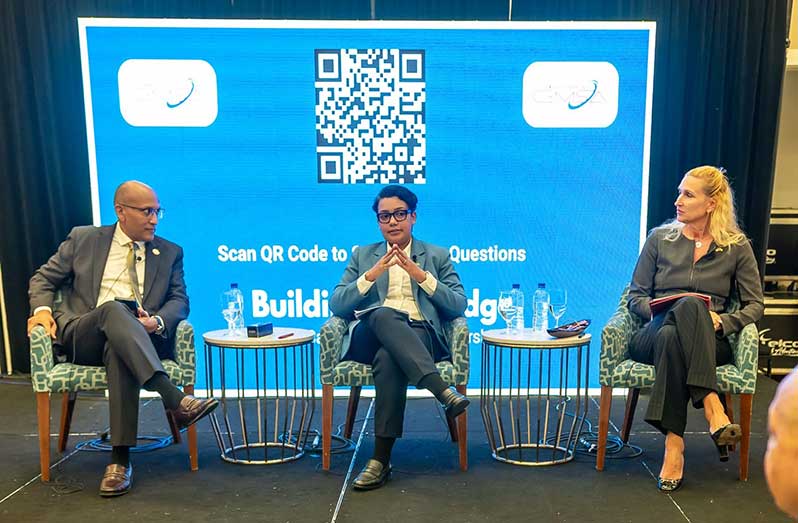
Speaking at the Guyana Manufacturing and Services Association (GMSA) Business Luncheon, themed “Building the Bridge: Local Capacity, Global Partnership,” on Tuesday, at the Kingston Marriot, Theriot said the embassy regularly hears from U.S. businesses interested in entering the Guyanese market.
“At the U.S. Embassy, we are inundated. When I say that, I mean that inundated with calls from U.S. companies who are eager to enter the Guyanese market. They see a chance to find a reliable partner, reliable suppliers,” she said.
However, she said, companies already operating here also report importing many of the goods and services they need.
“What companies tell me time and time again, is that they struggle to find local partners who can deliver at scale. They also face potential hurdles like logistics, energy costs, an onerous and unpredictable tax regime, and access to land and skilled workers,” she added.
The central challenge, in her account, is not a lack of interest from foreign investors.
That gap matters as Guyana seeks to build economic links beyond the energy sector. Theriot pointed to potential US investment in areas including agro-processing, agricultural technology, cold-chain logistics, infrastructure, healthcare, housing, and digital technology. But the opportunities, she argued, will translate into broader benefits only if Guyanese firms can participate as capable suppliers and partners.
She reiterated companies have raised a range of concerns with the embassy, including logistics, energy costs, uncertainty around taxation, access to land and the availability of skilled workers.
Strong quality-control processes, sound management, and workplace safety practices are among the capabilities she identified as important to building investor confidence.
That can make international partnerships valuable beyond the capital they bring.
Theriot said that US companies could help Guyanese businesses gain access to production technology, worker and management training, quality-control systems, and connections to overseas customers. The goal, she said, should be to transfer knowledge and build lasting capacity, rather than simply supply equipment.
Against this backdrop, she noted that the embassy here recently launched a franchising initiative aimed at supporting local businesses.
“It’s not handing someone a piece of equipment and letting them figure it out. It’s transferring know-how: how to run the machine, how to maintain it, how to meet the specifications, and how to keep improving your product,” she said.




