






-says challenges are being addressed, significant work still being undertaken
THE following is the full text of the Guyana Water Incorporated’s response to public commentary on its mandate and matters concerning its delivery of potable water:
“GUYANA Water Incorporated (GWI) wishes to respond to recent public commentary by Gordon Moseley concerning the state of Guyana’s potable water sector and initiatives being undertaken to improve access to affordable drinking water.
While GWI recognises the importance of public scrutiny and constructive discussion on matters affecting citizens, it is equally important that such discussions are informed by the substantial investments, infrastructural developments and ongoing programmes that have been transforming the country’s water sector over the past several years.
Any assessment of Guyana’s water sector that overlooks these developments that have been undertaken by the PPP/C administration risks presenting an incomplete picture of the progress being made, the challenges being addressed and the significant work still underway to ensure that every Guyanese has access to safe, reliable and affordable potable water.
Over the last five years, significant progress was achieved in Guyana’s potable water sector across all regions through targeted investments in water infrastructure, system rehabilitation, network expansion, and service improvements. These interventions have enhanced access to safe and reliable potable water, improved service quality, and strengthened the resilience of water supply systems to meet increasing demand owing to the aggressive housing programme being implemented by central government.
Regional achievements included the expansion of water supply systems to previously underserved communities, upgrades to water treatment and distribution infrastructure, rehabilitation of aging networks, and improvements in water production and storage facilities. Hinterland and remote communities particularly benefitted from projects aimed at increasing coverage and reliability, while urban and coastal regions saw improvements in treatment capacity and distribution efficiency.
Under the leadership of the Irfaan Ali-led government, GWI has been implementing an extensive programme of investment and infrastructural development guided by its strategic planning framework and national development priorities. These investments are not isolated interventions but part of a coordinated, long-term approach to expanding water access, improving water quality, strengthening service reliability, and ensuring that the country’s water infrastructure can accommodate population growth, new housing developments, and the needs of previously underserved communities.
Over the last five years, the Government’s investment in the potable water sector has delivered measurable results. Approximately 98.6 per cent of Guyana’s population now has access to potable water. This achievement reflects sustained investment in new wells, water supply systems and transmission and distribution infrastructure across the Coastland and Hinterland regions. More than 200 wells have been drilled during this period, strengthening production capacity and extending access to communities that previously experienced limited or inadequate water supply. Complementing this work, more than 200 kilometres of transmission and distribution pipelines have been installed to improve connectivity, extend services to developing communities and strengthen the delivery of water to areas that have historically been underserved.
GWI’s work has also focused on ensuring that access to water is accompanied by improvements in the quality of water supplied. Over the past five years, treated-water coverage has increased significantly, moving from approximately 52 per cent to around 80 per cent. This progress reflects the Government’s commitment to moving beyond the provision of water alone towards expanding access to treated water for more households across Guyana.
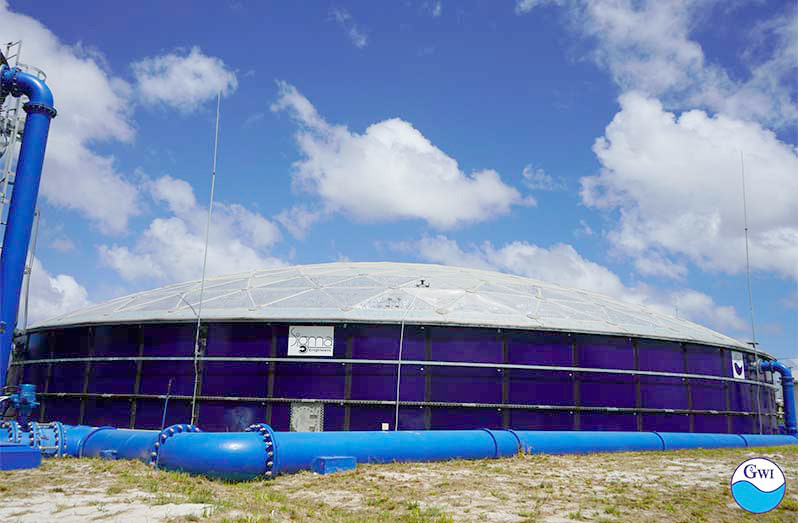
Through the Coastal Water Treatment Infrastructure Programme (CWTIP), eight new water treatment plants have been constructed across coastal and hinterland areas, strengthening the country’s capacity to produce treated water and improving service delivery. In addition, GWI has undertaken the rehabilitation and upgrading of more than 13 existing water treatment plants across the country. These interventions are intended to improve operational performance, strengthen treatment capacity, and address longstanding infrastructure limitations.
The importance of these developments is particularly evident in the Hinterland, where expanding access presents unique geographical, logistical, and operational challenges. Through sustained investment in wells, water supply systems and distribution infrastructure, potable water access in the Hinterland has increased from approximately 46 per cent to 95 per cent as of 2026. This represents a significant improvement in service coverage for communities that have historically faced barriers to accessing reliable water supplies.
GWI acknowledges that, despite the progress achieved, challenges remain in some communities. In certain locations served by groundwater wells, customers have raised concerns about elevated iron content. These concerns are not being dismissed. They form part of the continuing work required to modernise the country’s water systems and improve the quality and consistency of service delivered to customers. GWI is therefore continuing to invest in treatment capacity and supporting infrastructure to close the remaining gaps and advance towards universal treated-water coverage.
This work will be further strengthened through the second phase of the Coastal Water Treatment Infrastructure Programme. Phase Two includes plans for seven new water treatment plants, comprising two major surface-water treatment facilities at Diamond which will serve 36,000 residents from Craig to Little Diamond and another at Hope on the East Coast Demerara corridor serving 35,000 residents from Cane Grove to Cove and John, together with five additional plants at Maria’s Delight, Leguan, Wakenaam, Bath and Adventure. In addition to these larger facilities, GWI has completed the installation of 16 small water treatment plants in several rural communities and is working towards rolling out a further six. These smaller systems are particularly important in extending treated-water access to communities where large-scale infrastructure may not be the most immediate or practical solution.
GWI emphasises that the progress being recorded is the result of sustained public investment and the continued implementation of a structured programme of development. The agency’s strategic plans provide the framework for identifying priorities, directing resources and monitoring progress towards national water-sector objectives. The scale of the current investment programme demonstrates that the Government’s commitment extends beyond short-term interventions and is focused on building a stronger, more resilient water sector for present and future generations.
GWI also wishes to address concerns raised about the introduction and expansion of Government-supported bottle refilling stations and the possible implications for private water vendors.
The establishment of these facilities is a public-service initiative designed to make purified drinking water more affordable and accessible to citizens. At a time when households are managing competing financial demands, access to drinking water at a substantially reduced cost can provide meaningful relief, particularly for low-income families and residents who purchase drinking water regularly.
With five-gallon refills offered at just G$100 at refill stations, the initiative provides residents with an affordable alternative for obtaining purified drinking water. These facilities complement the wider national programme to improve access to potable water and demonstrate the Government’s commitment to ensuring that the benefits of investment in the water sector are felt directly by ordinary citizens.
The Government’s initiative is being implemented through GWI in the interest of the wider public. It is consistent with the utility’s mandate to deliver safe, adequate, and affordable water services throughout Guyana. The expansion of these facilities will provide additional opportunities for residents to access purified drinking water while complementing the broader work to improve water infrastructure nationwide.
GWI remains committed to serving the people of Guyana and recognises that public confidence must be supported by both measurable progress and a willingness to acknowledge areas requiring improvement. The agency will continue to communicate its achievements, respond to legitimate customer concerns and pursue the investments needed to strengthen the country’s water supply systems.
As Guyana continues to develop, the demand for reliable and affordable water services will increase. GWI is therefore committed to working with the Government, communities, and other stakeholders to ensure that the country’s water infrastructure keeps pace with national development and that no community is left behind.”




