






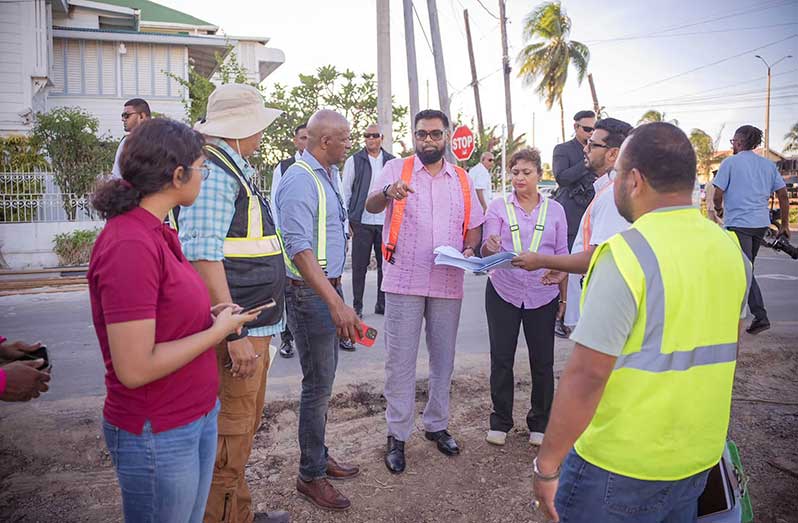
–President Ali, Minister Manickchand observe progress during inspection
PRESIDENT, Dr Irfaan Ali yesterday visited Thomas Street, Georgetown, to review ongoing works on the avenue, which is the first project to be implemented under his Healthy Streets Initiative.
He was accompanied by Minister of Local Government and Regional Development, Priya Manickchand, and members of the project team.
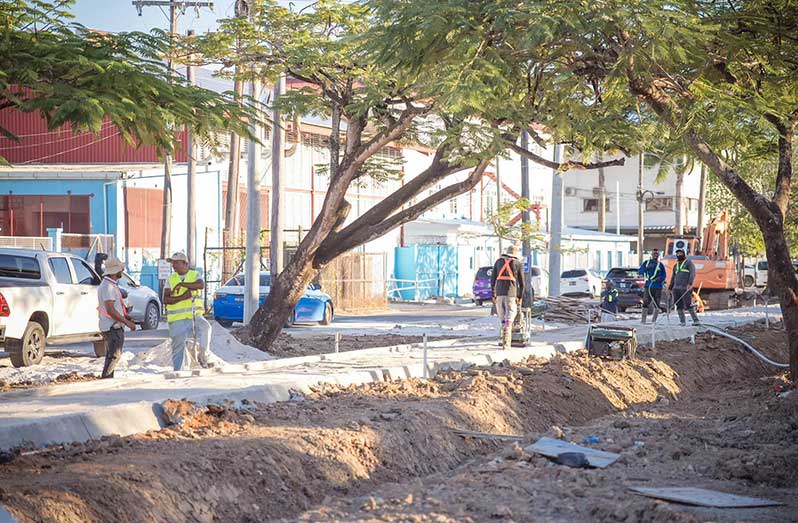
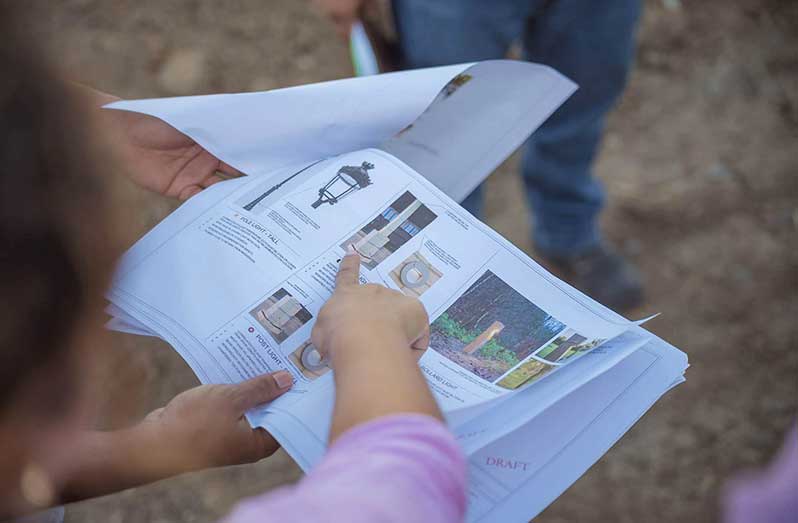
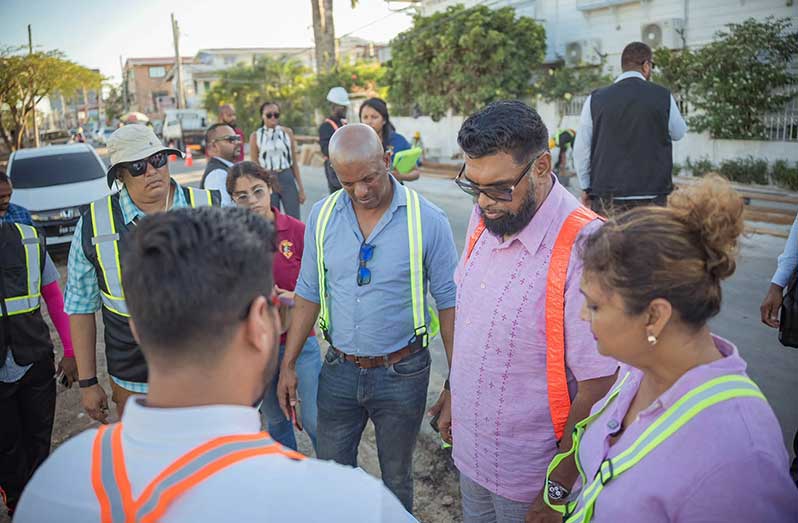
During the visit, according to information from the Ministry of Local Government and Regional Development, engineers outlined the practical and aesthetic considerations guiding the avenue’s transformation.
President Ali shared his vision for the completed space and gave input on several aspects of the design. The Head of State also examined how elements being introduced along Thomas Street could inform the transformation of other avenues across the city.
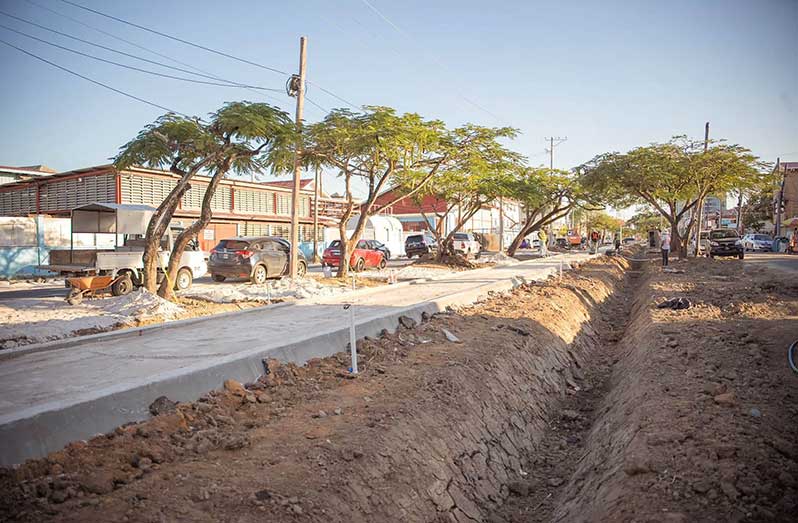
Particular attention was paid to ensuring that the roadway, avenue and drainage infrastructure work together cohesively. President Ali stressed the importance of getting the levels right between the road, drains and avenue as works progress.
The Thomas Street avenue, which stretches from Lamaha Street to Church Street, was designed by the King’s Foundation in collaboration with the Government of Guyana. The design emphasises healthier, greener, safer and more functional public spaces.
Minister Manickchand reiterated the importance of keeping the project on schedule while preserving its green character.
She stressed that existing trees should not be unnecessarily boxed off as the avenue is developed, noting that the project is intended to work with and enhance the existing natural environment.
After her engagement with the president, the minister walked the length of the project area with lead engineers Raul Boyer and Satrohan Nauth, other engineers, Project Manager Gregory Sukull and other officials, to further assess the works and the progress made to date.
The Thomas Street project forms part of the government’s broader efforts to transform Georgetown through sustainable urban development. The aim is to create public spaces that are more accessible, attractive and responsive to the needs of the people who use them.



