
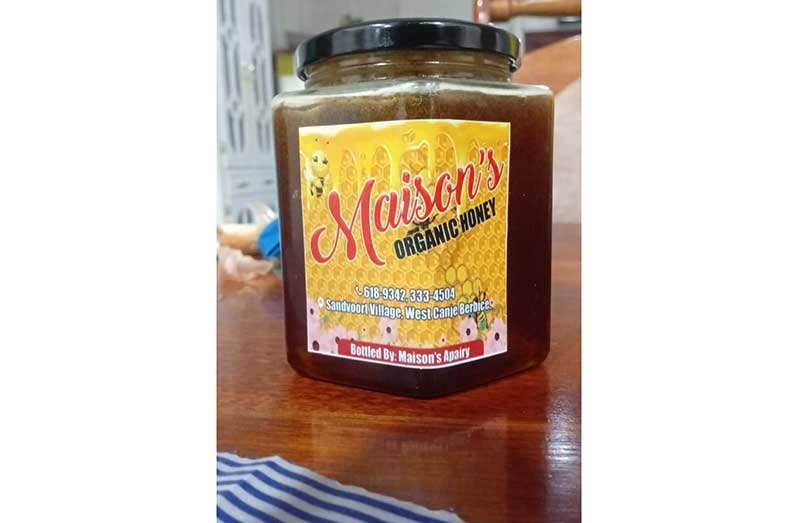
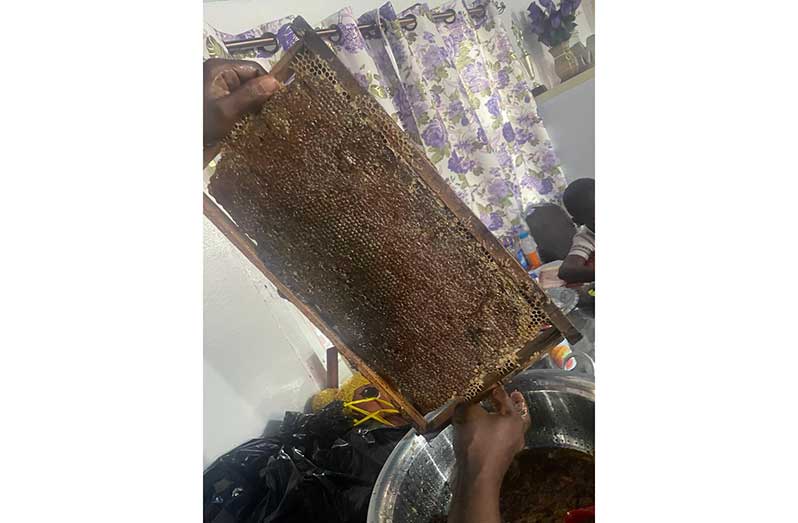
AS Guyana’s second honey flow of 2026 continues, the honey harvesters of Sandvoort Village, East Bank Berbice, are busy harvesting and making preparations for the Annual Honey Fest 2026.
This honey-producing community is celebrated for its award-winning honey, thoughtful environmental stewardship and proud beekeeping tradition.
Among its accomplished producers is Tiffany Maison, an enterprising beekeeper who has grown five hives into an expanding, environmentally conscious business.
Since joining the apiculture industry in 2019, Maison has gone beyond conventional honey production and has developed a range of value-added beeswax products.
Her experience shows that education, innovation and sustainable resource management can create substantial economic opportunities while encouraging more women and young people to take up agriculture.
The 34-year-old entrepreneur, a final-year University of Guyana student and mother of two, discovered her passion for beekeeping while attending the Guyana School of Agriculture (GSA).
Her cohort was the first at the institution to benefit from a programme that combined classroom learning with hands-on apiculture training.
Through the course, Maison gained a thorough understanding of bee biology, colony management, hive inspections and honey production.
Although she didn’t know at first whether she could look after the colonies herself, the practical experience she gained step by step eased her worries and helped her confidence grow.
“I wasn’t at first sure that I would be able to control the bees,” she recalled. “But afterwards, having acquired both knowledge and practical experience, I gained confidence and became comfortable in managing the colonies.”
The advice and encouragement she received from experienced beekeepers were very helpful, especially in Sandvoort, where generations have retained their knowledge of colony behaviour, seasonal honey flows, and the need to protect natural forage, enabling the village to become a respected centre of apiculture.
Beekeeping also gave Maison a valuable chance to earn extra income while raising her 16-year-old daughter and 13-year-old son.
The flexibility of the activity helped her balance her role as a mother with her professional duties and studies.
Maison has proudly been a prison officer for the last 10 years. In 2018, she received a scholarship to attend GSA, where she earned a certificate and graduated in 2021.
She then completed a diploma and is currently finishing a Bachelor of Science degree in Agricultural Science at the University of Guyana.
Because important activities such as hive inspections and harvesting can be carefully scheduled, Maison has been able to keep up her studies while growing her business.
The training she has received at school has also increased her understanding of apiculture as a science based on effective colony management, healthy ecosystems and responsible production practices.
Her apiary’s strategic location shows the close link between production and the environment. When she set up her first five hives, she placed them among the black mangroves and the Long John vegetation in Sandvoort.
The thriving natural habitats there offer plenty of nectar and pollen, creating ideal conditions for healthy colonies to form and for honey to be produced.
The lush Long John vegetation is found in the backlands of the village, since that area has not been heavily cleared and therefore remains mostly undisturbed.
When it flowers, it provides a valuable food source for Maison’s bee colonies. Moreover, she has hives near the black mangroves along the Canje Creek, whose seasonal flowering helps support honey production during the main honey flow.
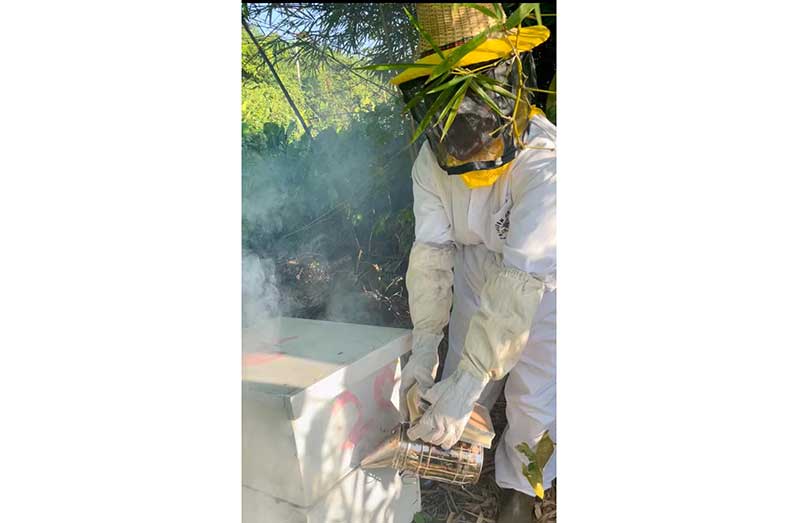
These habitats show the close relationship between apiculture and environmental stewardship, since mangroves, orchards and other flowering plants supply essential food for bee colonies; bees pollinate plants and thus contribute to higher agricultural productivity, biodiversity and ecological stability; and protecting these vital forage areas aids in preserving pollinator populations as well as the livelihoods that depend on them.
Maison’s 2026 harvest clearly reflects Sandvoort’s environment, as shown by the amount of honey she gathered during the second honey flow.
This flow started in the first week of September and, over 21 days, she obtained about 20 gallons from six of the 25 hives near the Long John vegetation.
The colonies in the black mangroves will also be ready for harvesting later in the season, since the nectar flow in that area is still developing.
In 2025, Maison likewise produced a significant amount of honey, taking in about 40 gallons in the first honey flow and 90 gallons in the second.
These results show the promise of well-managed bee colonies with access to ample natural food sources.
Yet environmental conditions still matter for productivity, since higher temperatures, less rainfall and El Niño-related changes can affect flowering patterns, water availability, colony health and honey production.
Maison remembered a long dry spell roughly two years earlier but noted it did not greatly interfere with honey flow in her region.
Nevertheless, that experience showed how important it is to monitor climatic conditions and prepare the colonies to withstand periods of stress better.
Honey remains the main product of Maison’s Apiary Enterprise, but she has carefully diversified its activities to earn extra income and use materials produced in the hive.
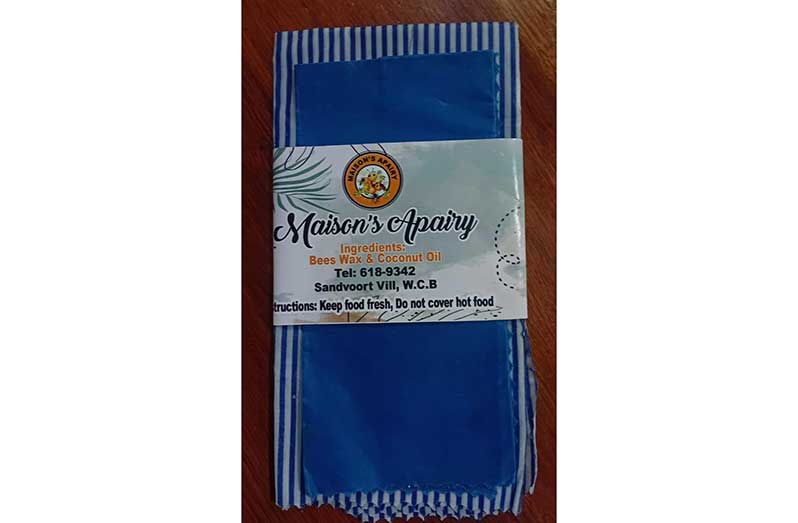
One of her more innovative products is a reusable food cover made from beeswax and pine resin.
It is a practical way to cover and preserve vegetables and other foods, helping them stay fresh longer.
Maison considers it an economical and environmentally friendly alternative to single-use plastic. She makes about 400 items each season, and the wraps have now become one of her best-selling products.
This innovation shows that beeswax, usually regarded as a by-product of honey collection, can be turned into a valuable commercial product.
Moreover, the initiative connects beekeeping with broader efforts to reduce plastic waste and encourage more sustainable practices at home.
Maison is increasing her business’s value while providing consumers with a locally produced, environmentally friendly alternative.
However, building a reliable market needs persistence. When she first started as a beekeeper, Maison had to establish her credibility and show that her honey was genuine and of good quality.
After consumers got used to her products and had come to see her as a trustworthy producer, demand increased steadily.
Maison’s Apiary Enterprise has built a loyal customer base for its honey and beeswax products, clearly showing that quality, consistency and consumer confidence drive the success of a sustainable agricultural business.
Maison owes a great deal to other beekeepers for the technical advice, practical assistance and encouragement they gave her at the beginning of her career.
Their generosity in sharing their knowledge helped her overcome her first doubts and gain confidence in running her colonies.
Since receiving that mentorship, she has helped others, particularly young people in Sandvoort who want to make the most of their time and build genuine sources of income.
Her accomplishments also counter the idea that apiculture is mainly a male activity; by managing bee colonies, harvesting and marketing honey, producing value-added products and training others, Maison demonstrates the important role women can play in promoting and developing the industry.
She is also thankful for the resources the Government of Guyana made available through the Guyana Livestock Development Authority (GLDA) to promote apiculture.
Maison thinks the creation of an active Apiculture Unit, the annual organisation of Honey Fest, the monitoring and evaluation of honey production, and the provision of training and equipment are all contributing to strengthening the industry.
In her opinion, these initiatives enable women and give young people meaningful opportunities to engage in agricultural entrepreneurship.
She also recognised the professional advice provided by GLDA under the leadership of its Chief Executive Officer, Dr Dwight Walrond, and the technical assistance given by Shane Fullerton, a member of GLDA’s Region Five Extension Team.
The training, equipment, extension services and market development opportunities are helping beekeepers build technical skills and expand their businesses.
Because new entrants have the interest and determination to succeed but may not have access to equipment, financing, or professional advice, such organised support is particularly important.
Maison’s participation in GLDA’s Honey Fest 2025 allowed her to promote her products, strengthen her market position and meet others in the industry.
She called the event a success because it offered valuable opportunities for networking, knowledge sharing and product promotion.
It was also a source of pride for Sandvoort, as its ten experienced beekeepers secured several awards in the competitive divisions, strengthening the village’s reputation for producing high-quality honey.
Inspired by this success, the community’s beekeepers have already begun preparing for Honey Fest 2026.
Maison is now getting ready for the next stage of her business. She seeks financing from the Guyana Development Bank to expand her apiary, increase honey production and strengthen her value-added operations.
Her aims go beyond commercial growth; she also seeks financial and technical assistance to develop a mobile application intended to increase public awareness of bees, improve community safety and reduce accidents that could injure people or bees.
The proposed application would include a safety-alert feature that would allow users to report bee swarms, possible attacks and other bee-related hazards.
It would also provide educational information and a directory connecting members of the public with trained beekeepers.
If bee colonies establish themselves near houses, businesses or workplaces, fear and misinformation may prompt dangerous actions.
Attempting to disturb, burn, or destroy bees might trigger a defensive reaction, put the public at risk, and lead to the unwarranted loss of valuable pollinators.
The app could help people safely evaluate, remove and relocate bee colonies by connecting them with experienced beekeepers, and its main aim would be to encourage informed coexistence between humans and bees through public education, prompt reporting and professional intervention.
The idea shows what Maison’s vision for agricultural entrepreneurship has become. Her aims are not confined to boosting honey production; they now include environmental conservation, digital innovation, public education and community safety.
The company has grown from five hives in 2019 into an example of the benefits of education, mentorship, innovation, and institutional support.
Because her products depend on natural habitats that need protection, they also show that environmental responsibility can lead to viable economic opportunities.
This example shows that environmental stewardship and economic development can reinforce one another: healthy ecosystems support productive colonies, which in turn sustain rural enterprises, and because successful beekeepers have a direct interest in preserving the landscapes on which their livelihoods depend, they want to protect them.
For Maison, confidence grew from knowledge and experience. Her achievements now send a clear message to women, young people and those aiming to set up businesses in the agricultural sector: if education, mentorship, institutional support and respect for the environment are provided, a small start-up can become a sustainable and profitable enterprise.