– innovative ideas shaping Guyana’s new Development Bank
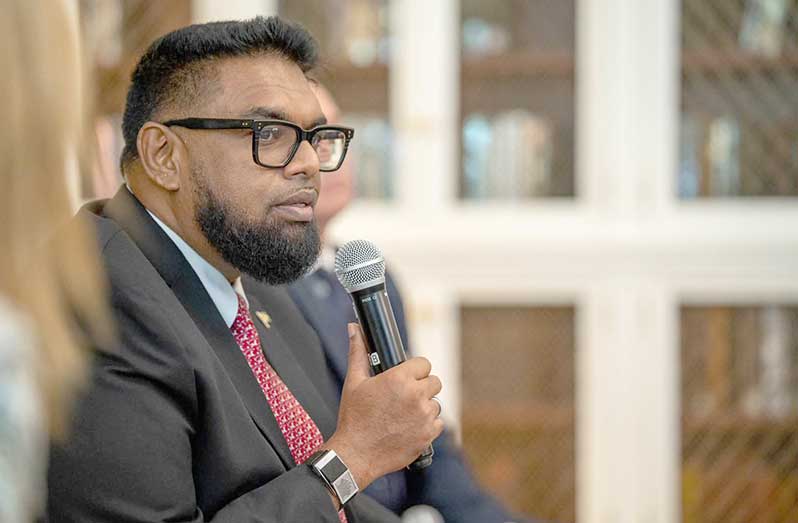
WHEN President Dr Irfaan Ali sat down with bankers and business leaders to discuss the soon-to-be-launched Guyana Development Bank (GDB), it quickly became clear that the institution is being built around more than policy and legislation.
It is already attracting a stream of concrete proposals from ordinary Guyanese, ranging from vacuum-packed breadfruit for supermarkets to air-conditioned (AC) river boats and set-menu home-cooked meals for busy parents.
Taken together, the ideas offer a vivid preview of how small entrepreneurs hope to turn the bank’s collateral-free, interest-free financing into sustainable livelihoods.
“This really has the potential of unlocking major opportunities. Already, we are seeing a lot of interest. People are writing in. Groups are writing in. Already, we have hundreds of letters coming in,” President Ali said on Sunday during a discussion.
One proposal, already engaging the attention of Housing Minister Collin Croal, comes from a group of young people in Region One who want to tackle the longstanding transport challenges faced by residents there.
As outlined by President Ali, they have approached the authorities with a plan to invest in an air-conditioned, 44-seater vessel to shuttle passengers between Port Kaituma and Charity. On the coast, a second group based in Charity would operate a bus service to take those same passengers on to Georgetown for a standard fare.
“A group of young people met with the Minister of Housing in Region One and said, ‘We want to be part of providing the solution for transportation going into Region One. We want to invest in an air-conditioned boat, 44-seater, that would go from Port Kaituma to Charity, but we want, when this boat gets to Charity, another set of young people in Charity to provide a transportation service with a bus to take these people from Charity to Georgetown.’”
Agro-processing is another recurring theme in the ideas now circling the bank. On the East Bank of Demerara, a family has put forward a proposal to offer a weekly set menu to working parents, allowing households to pre-order daily lunches or dinners for their children at an affordable, fixed price.
Under their model, families with several children could pick up a variety of hot, freshly cooked dishes every afternoon, tailored to different tastes, without the strain of late-evening cooking after work.
Similar thinking is emerging from the State House kitchen itself, where one staff member has suggested using a modest G$500,000 loan to buy breadfruit in bulk, season and pre-cook it, and then vacuum-pack the product for sale through major supermarkets such as Massy.
Customers would simply “open, fry and serve”, while a local micro-enterprise quietly grows behind the scenes.
President Ali also spoke of employees who see opportunities within their own workplaces. One young man, he recounted, had approached him after identifying a gap in staff transport. The worker believed he could provide a reliable service for colleagues, using GDB financing to purchase a vehicle and regularise what is now an informal, ad hoc arrangement.
In other cases, women who currently prepare small quantities of pepper sauce, plantain chips or traditional snacks at home are exploring how the bank might help them scale up production, improve packaging and negotiate shelf space in local and regional supermarkets.
For Dr Ali, these stories are not tangential to the bank; they are precisely the rationale for its creation.
“This is not a grant. This is your opportunity to earn. This is your opportunity to pay back. This is an opportunity to build your credit, because we’re going to use this to help you build your credit, also your credit score,” the President said, adding:
“This is really economic empowerment, equity, social empowerment, family empowerment, women’s empowerment all coming together, and that is what these types of banks do for a community and a society, especially empowering rural Guyana.”