






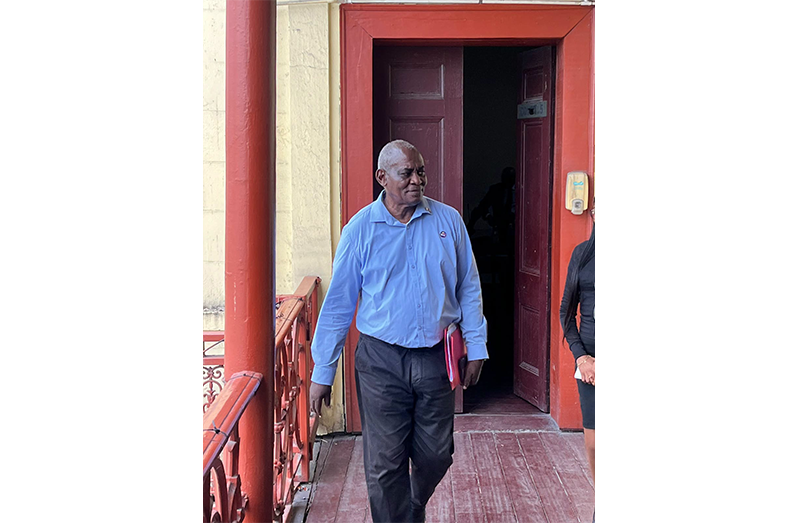
FORMER Home Affairs Minister and Guyana Elections Commission (GECOM) Commissioner Robeson Benn testified on Thursday that he was “plainly and clearly aware” of an effort to “steal the elections and to alter the results.”
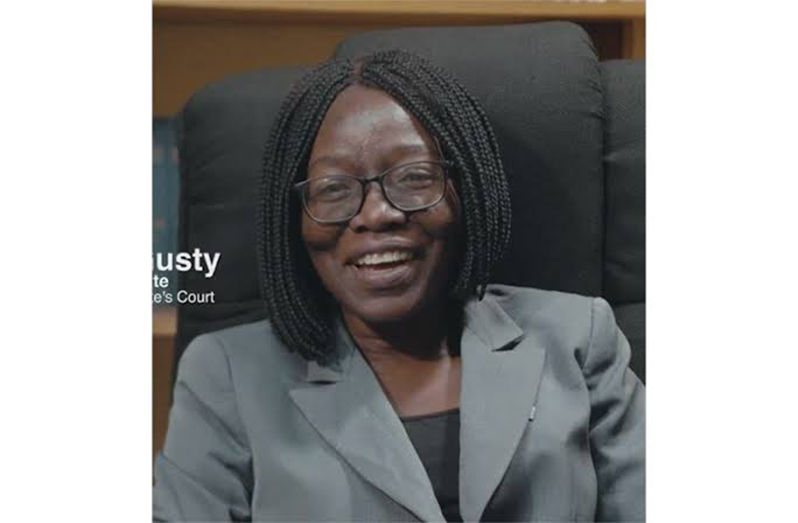
He made this known while being cross-examined by defence attorney Nigel Hughes in the ongoing election fraud trial before Principal Magistrate Faith McGusty at the Georgetown Magistrates’ Court. The cross-examination focused on events surrounding the March 2020 General and Regional Elections.
His testimony centred on events at Ashmins Building, where GECOM’s Command Centre and the office of the Region Four Returning Officer were located. Benn is currently a Senior Adviser to the Ministry of Home Affairs and the Ministry of Natural Resources.
“I was plainly and clearly aware that there was an effort underway to steal the elections and to alter the results,” Benn told the court, explaining why he remained at the building despite a police instruction to evacuate during a bomb scare.
Under questioning, Benn said he remained in his capacity as a GECOM commissioner and under what he described as his “full moral and ethical responsibility,” given the circumstances unfolding at the time.
Asked what authority permitted him to disregard the police instruction, Benn pointed to the Constitution of Guyana, the country’s supreme law. He said the events surrounding the police intervention contributed to his belief that an effort was underway to rig the elections. Benn testified, “It is my belief that the events as they unfolded, whether people were being misdirected or used, that it all evolved into the overall question of conspiracy to rig and/or steal the elections.”
Benn, however, distinguished between believing that police officers could have been used and accusing them of knowingly participating in a criminal conspiracy.
He said several officers had come to the building and told those present to “get out of the place” and “clear out of the place,” but he believed they “could have been used in certain ways” to facilitate the continuation of an effort to rig the elections.
“They may have been totally unaware of why they were sent and what they were supposed to do,” he said. Benn also testified about the use of watermarks on election materials. He recalled that the watermarks were decided upon at the commission level and said the parties knew the watermarks that were to be placed on the materials.
During verification, he said, Statements of Poll (SoPS) were scanned for the presence of watermarks.
“There was no instance of any problem of there being an absence of any watermark,” Benn said.
His evidence also touched on discussions among GECOM commissioners concerning Order 60 and the implementation of rulings issued by then Chief Justice Roxane George, SC.
Order 60 was the legal instrument through which GECOM established the national recount of ballots cast in all 10 electoral districts following the disputed March 2, 2020 elections. It set out the procedures for conducting, recording and tabulating the recount and provided for GECOM to declare the results of the “final credible count.”
Benn recalled meetings and discussions among the commissioners and said there was an understanding that the relevant requirements had to be followed. However, he said he could not recall whether minutes of those deliberations were subsequently recorded and adopted.
The former commissioner was also questioned about disruptions during the tabulation of votes.
He recalled an incident in which figures displayed on a screen prompted party agents to protest that the numbers differed from those contained in their Statements of Poll.
Benn said he was present and examined a SoP after seeing the figures displayed on the screen, but acknowledged that he did not document what he had observed.
“I did not document that, but I saw the figures,” he said. Asked whether he subsequently recorded the alleged discrepancies during the counting and recounting process, Benn again said he did not. He explained that the information was already a matter of public record and said he did not believe he had to document it himself. “The documentation and the discrepancies in the documentation were as a matter of public record.”
Benn’s cross-examination has been deferred, with a new witness expected to take the stand when the trial resumes on Friday at 09:30hrs.
The election fraud trial centres on allegations surrounding the tabulation and declaration of results from the 2020 polls, a process that led to months of political uncertainty before a final declaration was made five months after election day.
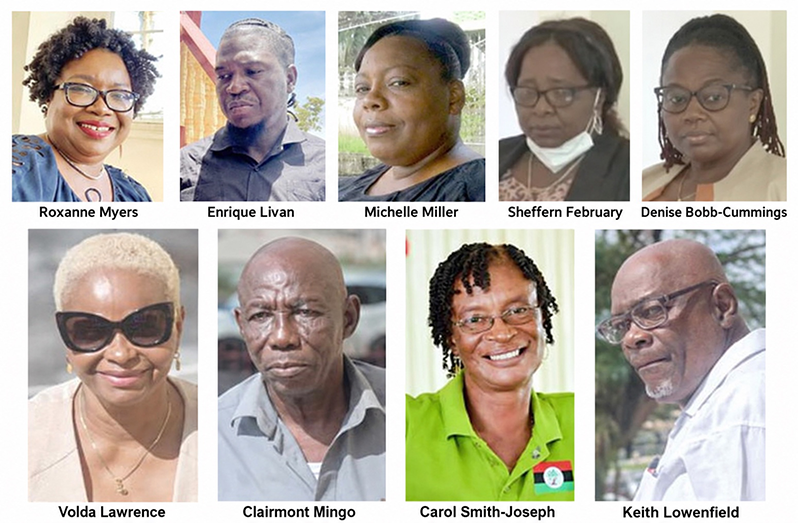
Those on trial include former Chief Elections Officer (CEO) Keith Lowenfield, former Deputy CEO Roxanne Myers, former Region Four Returning Officer Clairmont Mingo, former Health Minister Volda Lawrence and People’s National Congress Reform (PNCR) member Carol Smith-Joseph. Also before the court are former GECOM employees Michelle Miller, Sheffern February, Enrique Livan and Denise Babb-Cummings.
The defendants collectively face 19 charges, including conspiracy to defraud and misconduct in public office. All have pleaded not guilty and were released on cash bail.
The prosecution, led by King’s Counsel Darshan Ramdhani, contends that the accused played critical roles in efforts to inflate votes in favour of the then A Partnership for National Unity and Alliance For Change (APNU+AFC) coalition, while reducing votes cast for the People’s Progressive Party/Civic (PPP/C).
Following a five-month period of litigation and a Caribbean Community (CARICOM)-supervised national recount, the PPP/C was declared the winner of the elections with 233,336 votes to APNU+AFC’s 217,920. President Dr Irfaan Ali was subsequently sworn into office on August 2, 2020.
The Presidential Commission of Inquiry into the elections later concluded that there had been collusion and collaboration among senior GECOM officials to divert votes to APNU+AFC rather than safeguard the integrity of the electoral process.




