







By Andrea Hendricks
IN Melania Desa’s hands, a peeling purse can become a painted keepsake, an old sweater can acquire a striking new identity, and cardboard and paper can find fresh purpose. From her home in Stewartville, West Coast Demerara, Desa has built her creative work around a simple conviction: what is considered useless can still become something beautiful, practical and meaningful.
Her work spans recycling, repurposing, craft-making and celebration. Through Cactus Black Sheep and Fiestaville, she gives discarded materials another chance while encouraging people to consume less, save money and look differently at the objects around them.
Desa was born and raised in Venezuela to Guyanese parents before returning to her parents’ homeland years later. Creativity was woven into her early life. At school, drawing, craft-making, story writing and storytelling, game creation and carving sculptures were encouraged, almost mandatory.
Her first love was creating movies for children. “It wasn’t uncommon for children to learn crafts at an early age,” she recalled. “A lot of people love to make and purchase handmade items. It is supported by the local people.”

She also grew up loving nature and solitude. In the popular city where she lived with her parents, she spent time in national parks filled with waterfalls and cotton-bearing trees. As a child, she watched cartoons and began drawing them, bringing the images to life on paper with vibrant colours.
After completing her university-level education in graphics and publicity design, Desa returned to Guyana. As an art teacher, she enjoyed history and connecting with people who shared her interests. “Growing up, all my friends knew how to draw at different levels,” she said.
Crafting has been part of Desa’s life for as long as she can remember. At 13, she made her largest group of piñatas to supply others, an early sign of the creative enterprise that would develop in later years.
Recycling and repurposing have always been central to Desa’s way of working. She used shoes and clothing to create distinctive looks or change their appearance, a practice that made her stand out while she was at university. She does not recall having one particular inspiration for her creativity; the impulse to make and remake has been part of her life.
As the enthusiast behind Cactus Black Sheep and Fiestaville, Desa takes pleasure in transforming items that others might consider trash or unusable. With Cactus Black Sheep, reusable materials are turned into something new, while Fiestaville carries that same spirit into handmade celebration pieces: piñatas.
Her favourite materials are cardboard and paper because they are versatile and can be used across both brands. “I work with pretty much anything that comes my way,” she said.
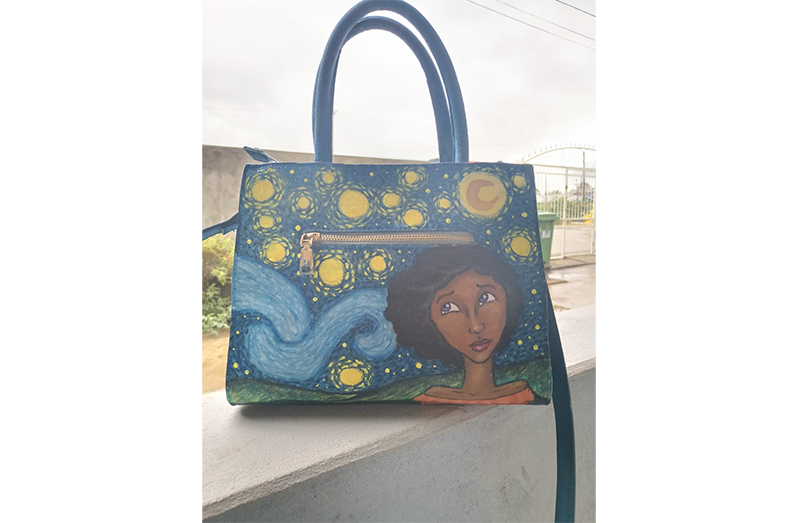
One example is the “Starry Night purse”, a cherished piece that began as an old bag. After its surface started peeling, Desa noticed a furry material beneath it. She peeled away the outer layers, painted a Starry Night design onto the purse and transformed it into a usable bag again.
Her most unusual creation, she recalled, involved old sweaters decorated with painted designs that attracted curious people drawn to their unique patterns. A recycled project can take about a week, depending on how much time is devoted to it each day.
Desa’s creative approach is also reflected in the name Black Sheep. “I don’t believe black sheep is something bad; it’s just something different from the crowd,” she said. Somewhere within that idea is her own story of being different. Cactus, meanwhile, was an alias she used in the dating pool.
Desa’s work with piñatas brings colour and anticipation to children’s gatherings and other celebrations. The piñata originated in Mexico and became a tradition across Spanish-speaking countries, where it is common at Hispanic children’s parties. Desa began making piñatas for children’s gatherings, starting with an ice-cream-cone style that she produced for many years. Fiestaville now offers a variety of designs.
“Piñatas are the mood-changer at every party,” she said. “I love the vibrant colours and the creativity inside the piñata, which makes partygoers curious to know what’s inside. It gives me a thrill.”
Although piñatas are not yet popular locally, Desa believes they can save a party by adding an element of surprise and excitement to a special milestone. To her, they represent mystery, fun, entertainment and the power to revive a celebration.
She considers herself a problem solver. When specific materials are unavailable, she improvises to complete the job. Customer satisfaction, she says, is guaranteed at the end of every project. With Cactus Black Sheep, reusable materials are always available, which makes the process different from sourcing materials for other creations.
Recycling is also at the heart of her junk journalling. The journals are fun, creative gifts for friends and loved ones, made by recycling and reusing household items. Desa’s passion began in childhood. “I was that kid when my mother would be ready to throw away things, like an old appliance. I would break it up and make jewels.”
Rather than throw things away, she looks for another purpose. Recreating and repurposing allow her to turn trash into treasured paintings or journals. “I try to give things a different purpose or meaning,” she said.
Her message is both environmental and practical. “I would like people to save the planet by giving life to things that are considered junk instead of repurchasing them; repurpose.” Reusing items and buying fewer products can also help people save money, she believes.
Cactus Black Sheep began as a hobby. As enough creations became available, they were displayed, advertised and sold. Piñatas can be ordered for special occasions and celebrations. Those interested can keep in touch through the social media pages for Fiestaville and Cactus Black Sheep or contact Desa at +592 680-3982.
For Desa, every discarded object is an opportunity: to protect the environment, spend less and create something useful or joyful. By giving unwanted items a second life, she is also encouraging people to trust their imagination and build a more resourceful local craft culture.



