

FOR Kroon Simon, beekeeping is far more than a hobby. Despite being a trained heavy-duty machine operator and maintaining full-time employment, apiculture has become an integral source of income and an enterprise in which he continues to invest his time, resources and vision.
Known in the digital space as “The Swag Beekeeper”, Simon has 28 years of experience in apiculture, specialising in bee removal and relocation, hive establishment and management, consultancy, equipment supply and honey production.
A resident of South Ruimveldt Park, Georgetown, Simon began his beekeeping journey in 1998 at the age of 22 while living on Howes Street, Charlestown.
It was there that he came under the mentorship of the late Henley De Souza, who was recognised at the time as one of Guyana’s best beekeepers.
De Souza’s encouragement, guidance and willingness to share his knowledge proved instrumental in shaping Simon’s career.
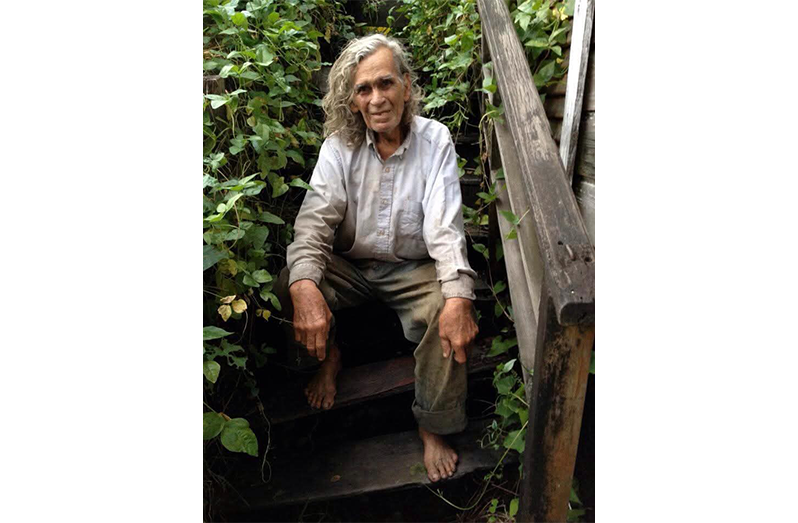
What began as an interest eventually developed into a specialised vocation that Simon has continued to build around his full-time career.
His fascination with bees began in childhood when a colony occupied a cashew tree in his family’s yard.
Although fear initially kept him at a distance, years of mentorship under De Souza and hands-on experience eventually gave Simon the confidence and technical expertise to safely remove bee colonies from homes, businesses and other locations.
After stepping away from beekeeping in 2004 due to circumstances beyond his control, Simon returned to the industry in 2018 and rebuilt his operation from scratch.
Determined to modernise his approach and improve efficiency, he invested in specialised equipment, including battery-operated bee vacuums.
He imported his first in 2021, followed by a second in August last year, with a third on the way. The equipment enables safer, faster and less labour-intensive bee removal while reducing his reliance on electricity.
Simon’s investment in technology reflects his broader entrepreneurial vision. He views beekeeping not as a casual pursuit but as a viable agricultural enterprise and important source of income.
Through a strategic partnership, he has established a 100-hive apiary at Silver Hill along the Linden–Soesdyke Highway, enabling the pooling of resources, expansion of hive capacity and increased honey production.
He also maintains a smaller apiary on family land at Moblissa, supported by a mobile honey house.

Moblissa is particularly important to Simon because of its vegetation and natural forage, which provide favourable conditions for the bees.
He reports as many as three honey-flow cycles annually in the area. However, Simon notes that rapid development and deforestation along the Linden–Soesdyke corridor are reducing vegetation and bee forage, disrupting bee activity and honey-production cycles.
The changes underscore the critical relationship between environmental conditions and apiary productivity.
For Simon, the partnership at Silver Hill and his operation at Moblissa form part of a deliberate strategy to transform beekeeping into a more structured and lucrative enterprise.
By combining his technical expertise, investment in modern equipment and collaboration with other beekeepers, he is seeking to increase production while making the business more efficient and economically sustainable.
His experience has also given him a clear perspective on the challenges facing beekeepers. Simon recalls that doing business before 2019 was considerably more challenging, particularly due to limited access to specialised beekeeping equipment.
He notes that recent government policies and initiatives have improved the operating environment, making it easier to import modern equipment that reduces labour, saves time and enhances operational efficiency.
He also welcomes the increasing emphasis on training and technical support for beekeepers. In his view, continued government assistance through training, equipment and other forms of sectoral support can help strengthen the industry.
He considers the resuscitation of the queen bee-rearing facility very important. He believes it will improve access to quality queens, which could contribute substantially to hive development, colony expansion and increased honey production.
Most recently, Simon received several bee boxes from the Ministry of Agriculture through the Guyana Livestock Development Authority (GLDA) to further expand his apiary.
He views the assistance as a timely investment in his productive capacity and an opportunity to build upon the foundation he has established.
Simon’s enterprise extends beyond honey production. He specialises in bee removal and relocation, hive establishment and management, bee trapping, consultancy and the supply of beekeeping equipment, including hive boxes.
Recently, he established five hives for a customer who has since harvested honey for the first time, demonstrating how his technical knowledge can help others enter and succeed in the industry.
His vision for apiculture is equally broad. Drawing from his agricultural background in crop production, Simon sees bees as an important component of the wider agricultural ecosystem and believes the sector has potential beyond honey extraction.
Colony development, queen production, pollination services, consultancy, equipment supply and value-added products, he believes, all present opportunities for economic expansion and future export development.
Importantly, Simon is investing in the next generation. His nephew, a final-year engineering student at the University of Guyana, and his son, who works with him part-time and is simultaneously pursuing technical and vocational training in heavy-duty machine operation at MACORP, are both developing their beekeeping skills under his tutelage.
For Simon, this combination of formal technical education and practical agricultural training can provide the younger generation with a diverse skill set while strengthening continuity of the family enterprise.
Simon’s commitment to apiculture extends to responsible bee management. With nearly three decades of experience, he advocates for the safe relocation of bee colonies rather than their destruction by burning.
He sanitises treated areas using environmental products to discourage colonies from returning and urges homeowners, schools and businesses to seek professional assistance when bees establish colonies in unsuitable locations.
He strongly discourages the practice of burning hives, which can endanger people and destroy valuable pollinators.
From a young man who was once afraid to approach bees in a cashew tree to an experienced beekeeper, entrepreneur, innovator and mentor, Simon’s journey illustrates the potential of apiculture as a viable agricultural enterprise.
His story demonstrates that with entrepreneurship, modern technology, strategic partnerships, appropriate government support and investment in the next generation, beekeeping can evolve from a personal passion into a sustainable and increasingly profitable source of income.
For the “#1 Swag Beekeeper, Never #2”, the future of apiculture is not simply about producing more honey.
It is about working smarter, protecting the resource, developing people and building an industry capable of generating greater economic value for Guyana.