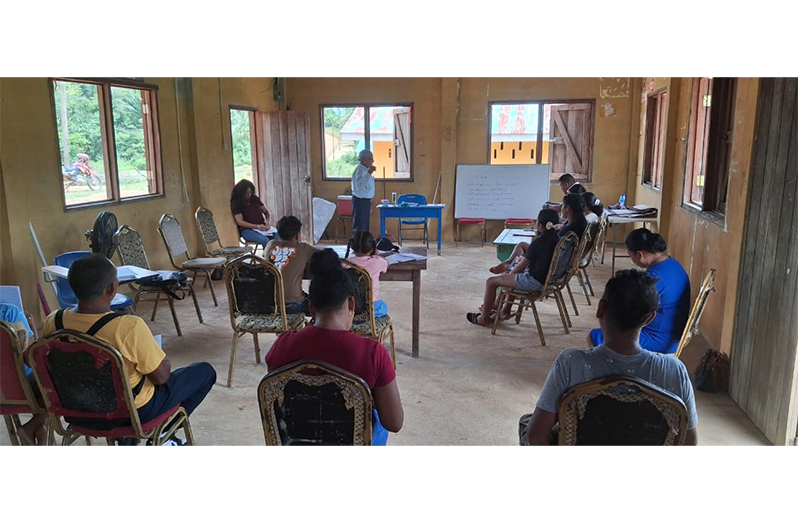
FOR some residents of Karaburi, a simple word heard at home suddenly took on a new meaning.
During a five-day Lokono language workshop held from August 24 to 28, 2026, residents discovered that words they had grown up hearing from their parents were not merely familiar expressions—they were part of their Indigenous Lokono heritage.
This revelation was among the highlights of the workshop held at Karaburi, commonly known as Six Miles on the Kumaka-Kwebana Road, Moruca, as the Area Council intensified efforts to reconnect residents with their language, traditions, and cultural practices.
The initiative was spearheaded by Area Councillor Earl Rodrigues, who said there is an urgent need to encourage younger people to learn and preserve Indigenous customs before they disappear.
“I am trying to revive the traditions and practices of Indigenous customs at Karaburi for the people, especially those who are interested,” Rodrigues said.
He explained that the language workshop was part of a wider programme of cultural activities being organised in the community.
The previous week, residents participated in craft-making activities, including mucru stripping for basket-making and the use of other local craft materials.
Following the language workshop, the council planned to continue the cultural activities with traditional dancing.
Rodrigues said the objective is to expose young people to their heritage and stimulate an interest in keeping those traditions alive.
“Through all of these Indigenous engagements, I hope to trigger an interest among young people to learn and maintain their Indigenous customs and practices before they all die out,” he said.
LANGUAGE BRINGS GENERATIONS TOGETHER
Between 15 and 20 people, including children, adults and the elders, participated in the five-day workshop.
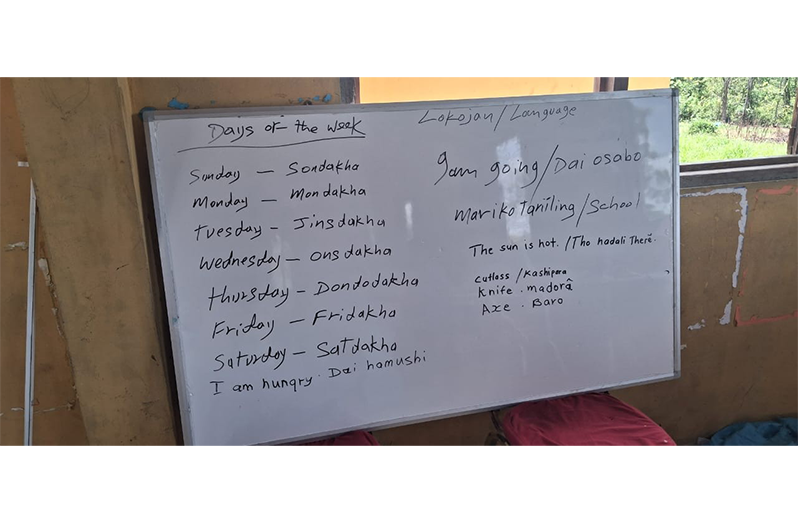
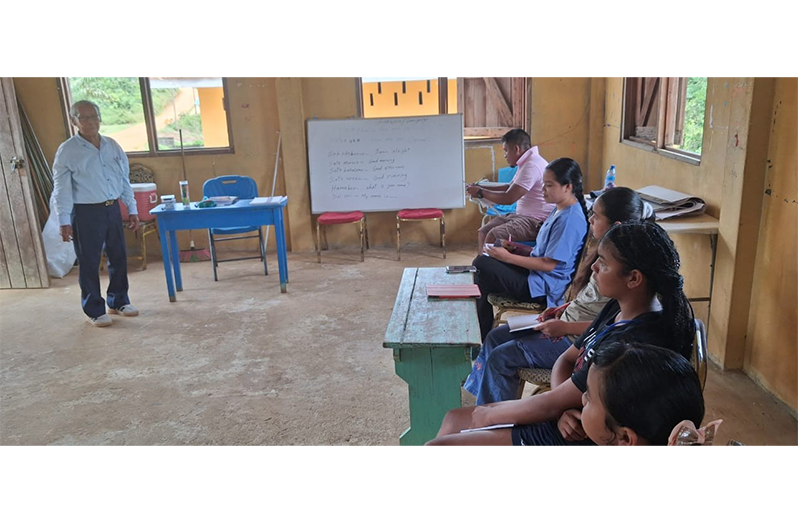
The sessions were highly interactive, with participants asking tutors to translate everyday English words and phrases into Lokono. They were also introduced to basic spelling, pronunciation, and writing.
The lessons were conducted by Priest Jones and his granddaughter, Kim Federicks, from Wakapoa Village in the Pomeroon River, Region Two. Medino Abraham from Santa Rosa acted as the liaison and helped facilitate their visit to the Region One community.
Priest Jones, who is experienced in speaking and writing Lokono, played a key role in helping participants become more familiar with the language.
As he spoke the language and explained its words and meanings, participants became increasingly interested in learning more.
For one participant, learning to count in Lokono was an “amazing” experience.
They learned numbers including Abaro (one), Biama (two) and Kabun (three) etc, while also learning traditional greetings such as “Halekuba” or “Halekuja,” meaning “How are you?”
But perhaps the most memorable moments came when participants realised that some words they had heard in their homes for years were actually Lokono.
Words such as “Hatchi,” meaning pepper, and “Kali,” meaning cassava, were among those identified during the workshop.
INVESTING IN THE NEXT GENERATION
For Rodrigues, the value of the programme extends beyond learning words and phrases. He sees it as an investment in the cultural identity of future generations.
The Area Councillor expressed appreciation for the Lokono language team and said he hoped participants would continue to show greater interest in their culture and language.
He also described the use of LCD funds to support cultural activities as an important investment in the community.
“This is a wonderful way to invest some of the LCD money in cultural and language learning, revival and promotion of the area for future generations,” Rodrigues said.
The Karaburi workshop may have lasted only five days, but for those who participated, it offered an opportunity to rediscover a part of their identity.
As children, adults and elders learned words together, the workshop demonstrated that language could be used to do more than communicate; it can help generations reconnect with their history, culture, and heritage.
For Karaburi, the effort to keep Lokono alive has begun at the community level, one word, one phrase and one generation at a time.