
AS the afternoon sun softens over
the vast Rupununi savannah, the landscape surrounding Awarewaunau appears almost untouched by time. Cattle move slowly across the open grasslands; farmers tend their crops, cotton is spun by hand, and traditional hammocks are carefully woven using skills passed from one generation to the next. Yet beneath this familiar rhythm, a quiet transformation is taking place.
Roads are being paved, solar panels are converting sunlight into electricity, new homes are rising, teachers are pursuing further education Online, and farmers are looking beyond subsistence towards commercial markets. Awarewaunau is not leaving its past behind; it is drawing on its heritage as the foundation for its future.
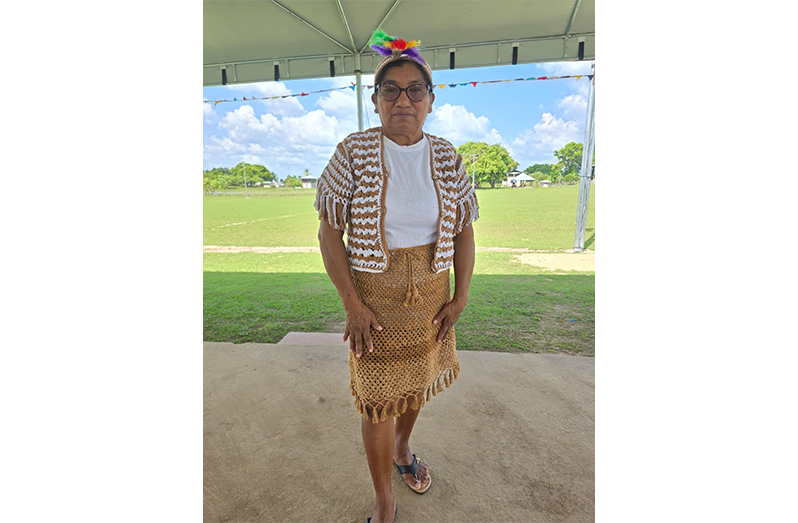
That transformation is being championed by Toshao Roxanne Beck, a lifelong resident whose own journey mirrors the resilience and determination of the community she serves.
A teacher, farmer, cattle rancher, mother and community leader, Beck has devoted much of her life to creating opportunities for residents. For her, development has little meaning unless it improves the lives of families, and creates opportunities that future generations can sustain.
“We have the market, and we want to expand our cattle-rearing venture at the community level,” she told Pepperpot Magazine, expressing a vision in which livestock can become an even stronger pillar of the village economy while contributing to local food security.
That vision is particularly significant in a community where geography has historically shaped economic opportunity.
Awarewaunau, an Indigenous Wapishana community in the Deep South Rupununi of Region Nine, is home to approximately 848 people in 230 households.
For generations, its remoteness limited access to markets, transportation, education and essential services.
Today, however, that isolation is gradually being reduced as investments in infrastructure, renewable energy, transportation, housing and digital connectivity create new possibilities for residents.
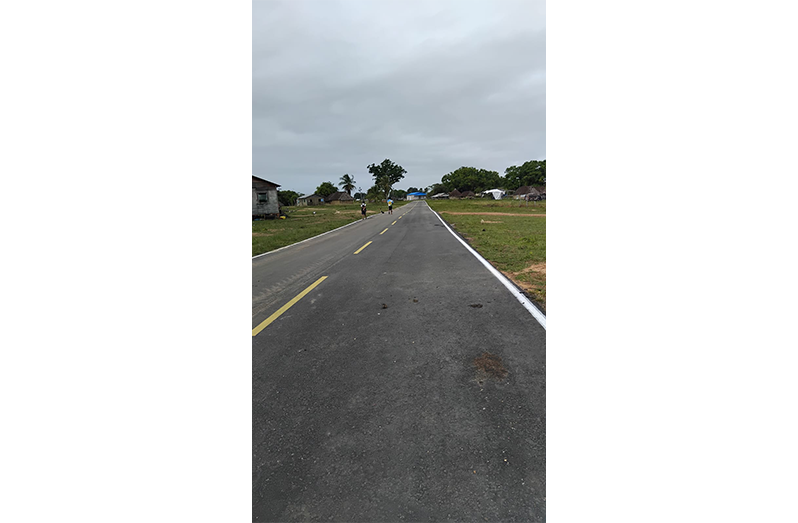
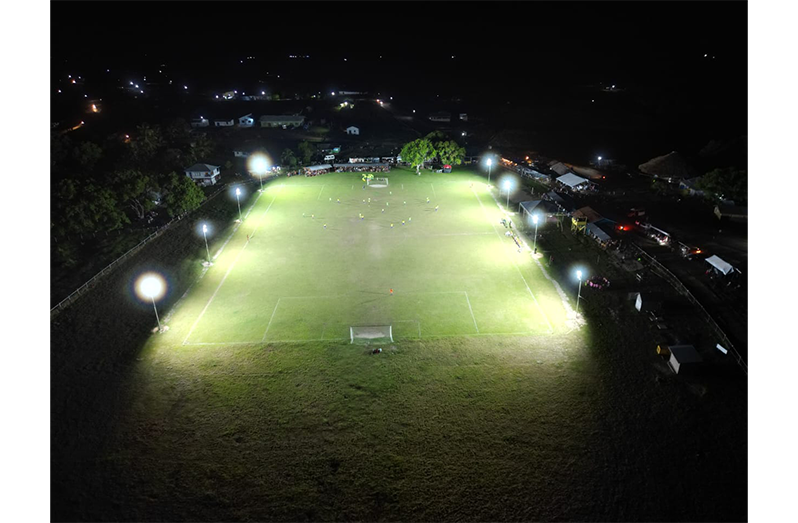
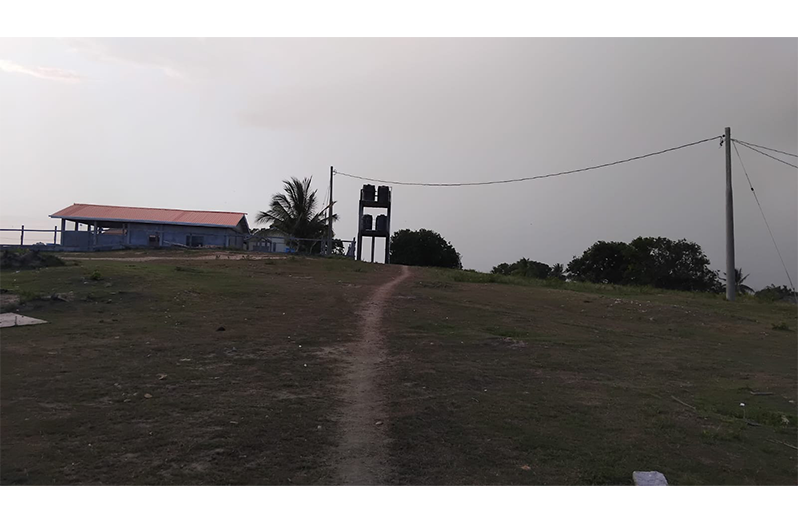
One of the most visible manifestations of this change is the community’s approximately 1.5-kilometre asphalt road, complemented by a solar farm and solar-powered lighting around public buildings.
These improvements have enhanced mobility and security while providing a stronger foundation for education, community services and economic activity.
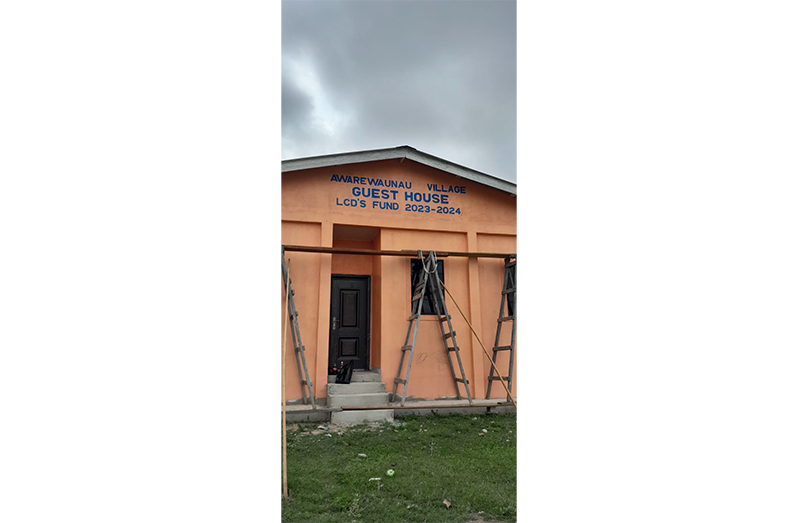
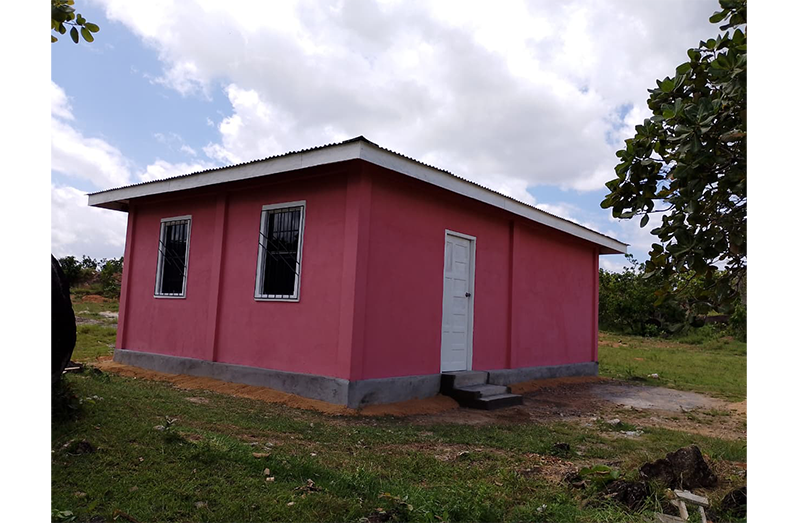
The transformation has also extended into housing, with three new homes recently constructed through support from the Government’s Men on Mission initiative, providing improved living conditions for families, and adding to the growing signs of development within the community.
Improved transportation is further strengthening this foundation. Awarewaunau has also benefitted from a Canter truck provided by the Ministry of Amerindian Affairs, supplementing the community’s existing vehicle fleet.
The additional capacity is particularly valuable in a remote settlement where the ability to move agricultural produce, livestock supplies and essential goods can determine whether production remains at the household level or reaches a wider market.
In this respect, every transportation improvement represents an investment in the community’s economic potential.
These investments have been supported, in part, by Guyana’s Low Carbon Development Strategy (LCDS), which has enabled communities to channel resources towards projects that reflect their own development priorities.
In Awarewaunau, LCDS investments have supported productive activities, including livestock development, while community vehicles are helping farmers transport produce to Lethem, Marudi and neighbouring communities.
As a result, agriculture is gradually gaining greater commercial potential, with farmers better positioned to move beyond producing primarily for household consumption and participate in wider markets.
SOLAR DYNAMICS
The community’s solar farm adds another important dimension to this transition. In a remote settlement where extending conventional electricity infrastructure can be challenging and costly, solar power provides a practical and sustainable energy source.
Beyond illuminating public facilities, it supports communication, education and digital services, demonstrating how hinterland communities can participate directly in Guyana’s low-carbon development pathway.
The same sun that has long sustained life across the Rupununi savannah is now helping to power Awarewaunau’s future.
Yet, even as modern infrastructure changes the physical landscape, one of the community’s most important economic assets remains deeply rooted in its history: Cattle rearing.
Livestock production is inseparable from the story of the South Rupununi, where vast grasslands supported the development of cattle ranching and shaped a distinctive culture of horsemanship, cattle handling and open-range grazing.
The influence of major ranching operations, including the neighbouring Dadanawa Ranch, helped establish the region’s ranching traditions, while Wapishana communities developed exceptional knowledge of the savannah and the animals that thrive within it.
From that tradition emerged the legendary Rupununi vaquero, whose skill, endurance and intimate knowledge of cattle and the landscape became an enduring symbol of the region.
That heritage remains relevant today, but Awarewaunau is now seeking to transform it into a more organised, productive and commercially sustainable livestock enterprise.
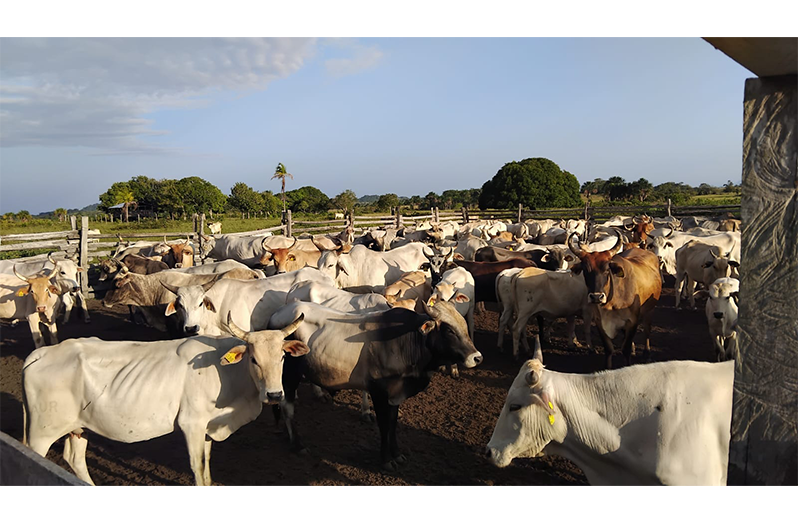
At the heart of that effort is the community cattle ranch, which currently maintains approximately 107 heads of cattle and is supported by a dedicated paddock, a newly constructed corral, and fencing.
During the dry season, the animals graze across the surrounding savannah, preserving an important feature of traditional Rupununi ranching.
When the rains come, however, cattle sometimes move back towards the village, creating challenges as they wander onto the new asphaltic road and agricultural lands.
It is this challenge that has prompted the community to consider fencing the village itself. According to Beck, such fencing would provide greater control over livestock movement while protecting roads, farms and residential areas.
Although the investment may appear modest, it represents an important step towards more organised livestock management.
The goal is not to separate cattle from the savannah, which remains central to the community’s ranching tradition, but to manage livestock in ways that protect new infrastructure while improving productivity and efficiency.
The community ranch, however, represents only one part of Awarewaunau’s livestock economy. Collectively, farmers in the community own approximately 1,000 head of cattle, making livestock one of the village’s most significant productive assets.
This substantial private and community-owned herd provides a strong foundation for developing a more coordinated local livestock industry and creating greater opportunities for farmers to supply the growing demand for beef within Region Nine.
To realise that potential, Beck believes the next step must be improving the quality of the herd. The community is seeking access to improved breeding stock, particularly high-quality heifers, to strengthen genetics and increase productivity.
LIVESTOCK MANAGEMENT
This ambition aligns with national livestock development efforts and the technical support provided by the Guyana Livestock Development Authority (GLDA) and its Region Nine Extension Team, headed by Dr. Darren Halley.
The team conducts regular outreach in Awarewaunau and provides technical assistance to farmers as needed.
At the same time, Awarewaunau is looking beyond cattle to diversify its agricultural base. The community is interested in expanding into pig production and Black Belly sheep to create additional sources of food, income and employment.
Such diversification could make the local economy more resilient by reducing dependence on a single livestock enterprise while opening new avenues for families, women and young people to participate in agriculture.
The motivation is both economic and practical. Beef and other animal products are important components of the local diet, and as the population grows, so too does the demand for food. Increasing local production would strengthen food security and reduce reliance on supplies transported from distant locations, while any surplus could be marketed in neighbouring communities.
With commercial and mining activity expanding across Region Nine, Beck believes there is considerable potential for locally produced beef and other agricultural products to meet an expanding market.
Her confidence is grounded in personal experience. Beck is herself a cattle rancher and, following the death of her husband, the late teacher Lester Beck, approximately a decade ago, she inherited about 125 cattle.
Through determination and careful management, she says her herd has since grown to more than 400 head.
The achievement is remarkable not only because of the size of the herd but because it has been built alongside her responsibilities as a teacher, farmer, mother and community leader.
Her agricultural experience has also shown her how production can create benefits far beyond the farm itself.
Beck recalls that income earned from peanut cultivation enabled her family to purchase a tractor, which was subsequently used to transport goods and essential supplies to other remote communities.
What began as income from a small agricultural enterprise, therefore, became an investment in an asset that served a much wider community purpose.
It is precisely this multiplier effect that Awarewaunau hopes to generate through more organised agriculture and livestock production.
While the community looks increasingly towards commercial markets, it continues to draw upon traditional methods that have sustained families for generations.
Tasso beef, prepared through salting, seasoning and sun-drying, remains an important part of local food culture.
Long before refrigeration became widely available in the interior, such methods allowed families to preserve meat for extended periods.
LOOKING AHEAD
Today, tasso remains a cherished food across Amerindian communities in the Rupununi, providing a tangible link between contemporary life and the practical knowledge of earlier generations.
That relationship between past and present extends beyond food and livestock to one of Awarewaunau’s most treasured cultural traditions: The making of the Wapishana hammock.
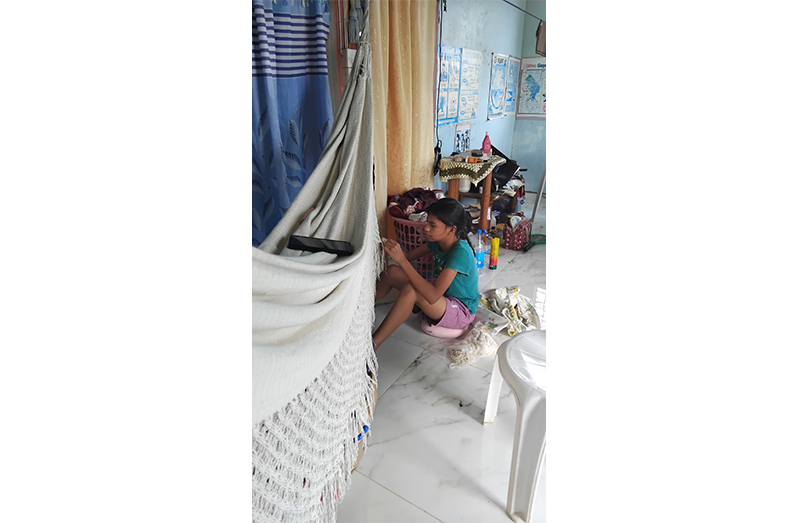
Despite the arrival of paved roads, solar electricity, ICT facilities, and modern housing, the community continues to produce its distinctive hammocks using pure, hand-spun cotton, a tradition that has survived because knowledge and craftsmanship are passed from one generation to the next.
The process itself is an expression of cultural knowledge. Natural cotton fibres are carefully prepared and hand-spun into strong threads, then meticulously woven into the finished hammock.
The work requires patience, precision and considerable skill. The final product is lightweight yet durable, flexible yet strong and aesthetically simple while reflecting generations of craftsmanship.
For the Wapishana people, however, the hammock is far more than a household item. It is a living expression of Indigenous identity.
Each hammock embodies knowledge of natural materials, craftsmanship and the environment while connecting contemporary generations with those who came before them.
In an increasingly sustainability-conscious world that values handmade products, cultural authenticity and environmentally responsible production, this traditional craft also offers opportunities for cultural tourism, entrepreneurship and income generation, particularly for women artisans.
In many ways, the hammock provides the perfect metaphor for Awarewaunau itself. Its strength comes from many individual strands carefully brought together.
Likewise, the community is drawing strength from many interconnected elements: Livestock, agriculture, education, renewable energy, infrastructure, transportation, technology and traditional craftsmanship. Individually, each contributes something important; woven together, they create a stronger and more resilient foundation for the future.
That future, however, will depend heavily on the community’s young people. Beck acknowledges concerns that relatively few young people from Awarewaunau have pursued agricultural studies at the Guyana School of Agriculture.
Some young men leave the community in search of employment in Marudi, while teenage pregnancy has affected the educational prospects of some young women.
But Beck emphasises that these setbacks should not define the future of those young women. Instead, she points to the opportunities available through programmes designed to help them regain independence and continue their personal development.
Young women affected by teenage pregnancy are being offered opportunities to become financially independent through the Community Service Officer programme, while they are also encouraged to pursue further education through the Guyana Online Academy of Learning (GOAL) programme.
For Beck, providing such pathways is essential to ensuring that young people are not defined by their circumstances but are given the tools to shape their own futures.
Her emphasis on education is deeply personal. Beck began her teaching career as a teenager and later pursued formal training at the Cyril Potter College of Education.
Leaving the interior to attend classes was challenging, but the experience enabled her to become a qualified educator.
Even after formally retiring approximately a decade ago, she continues to teach on contract because, she says, teaching remains the work she loves.
The opportunities available today are markedly different from those of her youth, particularly because technology has reduced some of the barriers to accessing education.
Approximately 10 teachers from Awarewaunau are pursuing CPCE classes online through the community’s ICT Hub, enabling them to advance their professional qualifications without leaving the village for extended periods.
For Beck, who remembers a time when some children attended school barefoot and educational supplies were scarce, the transformation represents just how far Awarewaunau has travelled.
Her commitment to education has also shaped her family. Beck was able to send one of her children to Region Four on a scholarship, where that child later earned a master’s degree.
Her family’s experience reinforces her belief that education is one of the most powerful investments a community can make and that, when combined with agriculture, entrepreneurship, and local economic opportunity, it can create a cycle of development that benefits generations.
For Awarewaunau, therefore, progress cannot be measured solely in kilometres of asphalt, numbers of cattle, solar panels, vehicles or newly constructed homes. It must also be measured in human capability, cultural resilience and the capacity of residents to create opportunities for themselves.
The continued production of Wapishana hammocks, the preparation of traditional tasso beef, the preservation of farming and livestock knowledge and the commitment to education demonstrate that modernisation has not erased the community’s identity.
Instead, the two are increasingly reinforcing one another. LCDS investments can provide modern infrastructure while traditional knowledge continues to guide agriculture.
Solar energy can power the ICT Hub while artisans continue to spin cotton by hand. Improved livestock genetics can strengthen cattle production while traditional tasso remains part of the local diet. New homes can improve living standards while cultural practices continue to connect families to their heritage.
The road ahead will nevertheless require sustained investment. Improved livestock genetics, veterinary services, pasture development, fencing, transportation, agricultural education and market access will all be necessary if Awarewaunau is to convert its considerable productive potential into lasting economic gains.
Equally important will be expanding opportunities for young people and strengthening avenues for traditional crafts and Indigenous knowledge to contribute to household incomes.
THE ULTIMATE OBJECTIVE
For Beck, the ultimate objective is simple: produce more food locally, create sustainable sources of income, strengthen the community’s productive capacity and ensure that the next generation can find opportunities without having to abandon the place that raised them.
Her own life is perhaps the strongest illustration of that philosophy. She grew up in a farming household, became a teacher, raised a family, cultivated crops, developed a substantial cattle enterprise and now serves as Toshao while continuing to educate young people.
Her story is inseparable from that of Awarewaunau: a story of perseverance, adaptation and an enduring commitment to community.
Today, the village stands at an important crossroads. Behind it lies a history of cattle trails, open savannahs, subsistence farming, traditional food preservation and Indigenous craftsmanship.
Ahead lies the possibility of a more diversified and resilient local economy powered by livestock, agriculture, renewable energy, technology, education and improved market access.
Yet Awarewaunau does not have to choose between these two worlds.
Its future can be built from both. From the cattle trails of the Rupununi vaqueros to solar-powered public buildings; from traditional tasso beef to organised livestock production; from hand-spun cotton hammocks to digital classrooms; from open-range cattle ranching to improved genetics and structured herd management, Awarewaunau is demonstrating that sustainable development is most meaningful when it is rooted in the culture, knowledge and aspirations of the people themselves.
And perhaps nowhere is that philosophy better captured than in the Wapishana hammock.
Its strength does not come from one strand but from many strands carefully brought together by skilled hands.
Each strand has a purpose, and it is only when they are woven together that they become strong enough to carry the weight of another generation.