





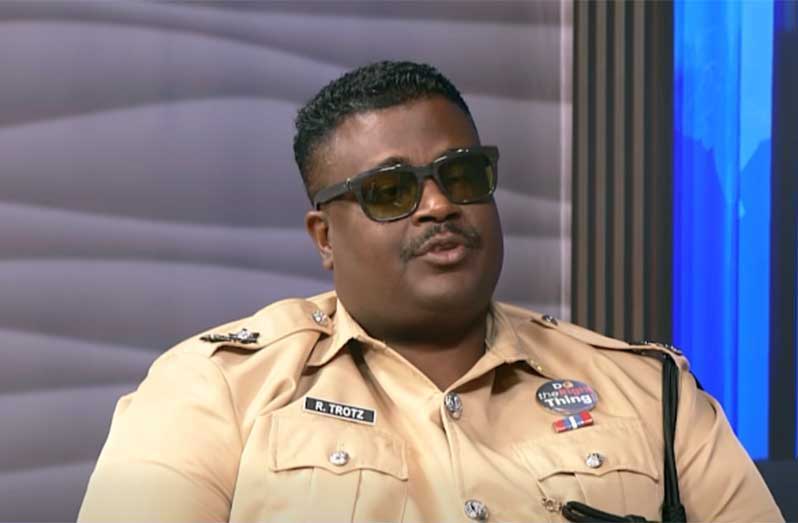
THE Guyana Police Force’s Traffic Education Department is urging minibus operators to put passenger safety ahead of profits, warning that overloading vehicles and other unsafe practices continue to place thousands of commuters at risk every day.
Appearing recently on the Road Safety & You programme, Inspector Richard Trotz of the Traffic Education Department said complaints about the conduct of minibus operators remain among the most common concerns raised by members of the public.
“As we move to public transportation, minibus operators are always a concern for most Guyanese,” Trotz said.
He related that during engagements with commuters at busy parks and transport hubs, the department consistently hears reports of operators playing excessively loud music, overcrowding vehicles and disregarding passenger safety.
He said, “When we interact with members of the public at congested areas, say the park areas, persons travelling to and from work, they will always have a concern that minibus operators are in the habit of having excessive music, overloaded minibuses that carry above the permitted number of passengers.”
The inspector warned that overloading a minibus significantly increases the danger to passengers in the event of a crash.
“We have to be reminded as road users that when a minibus operator overloads his or her minibus, they put you at risk, and they put everyone in the vehicle at risk,” Trotz said.
“And in the event of an accident, the space that is provided to you in the vehicle might not be enough to protect you.”
To underscore the consequences of unsafe driving, Trotz referenced a recent incident on the West Coast Demerara in which a minibus ended up in a trench at Leonora.
“For example, on the West Demerara, we had a minibus operator ended up in a trench at Leonora. He put himself and all the passengers in the vehicle at risk,” he said.
The Traffic Education Department official appealed directly to drivers of public transportation vehicles to recognise the responsibility they bear for the lives of their passengers.
He stressed, “So, I am pleading to operators of minibuses and even hire car operators that you are not only responsible for yourself, but you are responsible for every single individual in your vehicle.”
While highlighting concerns about public transportation, Trotz also pointed to the continuing loss of life among motorcyclists, stating the department has recorded numerous fatalities involving riders, pillion passengers and e-bike users this year.
He attributed many of those deaths to the failure of riders and passengers to wear protective helmets.
“The concern within the department is that these persons who utilise this mode of transportation are failing to protect themselves by simply not wearing a safety helmet,” he said.
Trotz reminded motorists that anyone operating a motorcycle on a public road must ensure both the motorcycle and the rider are properly licensed and that an approved safety helmet is worn.
“A helmet is your responsibility. It affords you the protection that, in the event of an accident, you will not receive serious head injuries,” he added.
The inspector also addressed the operation of heavy-duty commercial vehicles, particularly articulated lorries, stressing the importance of employing porters to assist drivers when manoeuvring.
According to Trotz, porters play a critical role in helping drivers navigate blind spots, particularly when making turns or reversing in areas where pedestrians or other road users may be present.
He said that a porter should leave the vehicle and guide the driver through difficult manoeuvres rather than remain seated inside the cab.
Beyond enforcement, Trotz said the Traffic Education Department has significantly expanded its public awareness campaign by embracing technology and digital platforms.
He noted that the department has moved beyond traditional print and broadcast messaging to utilise social media and other electronic platforms to reach road users more effectively.
The department is also encouraging motorists to make use of the Road Watch application, developed by the Ministry of Home Affairs, to support safer road use.
In addition, Trotz highlighted the continued rollout of the Safe Road Intelligence System, which uses technology to detect speeding and seat belt violations and automatically issue electronic tickets to offending motorists.
He said these initiatives form part of the Guyana Police Force’s broader strategy to improve compliance with traffic laws, reduce dangerous driving practices and ultimately save lives on the country’s roads.
The enhanced use of technology, coupled with continued enforcement and public awareness campaigns, is expected to play a key role in improving compliance with traffic laws and curbing dangerous driving practices.





