






– Guyana highlights legal reforms, regional co-operation at ARIN-CARIB annual meeting
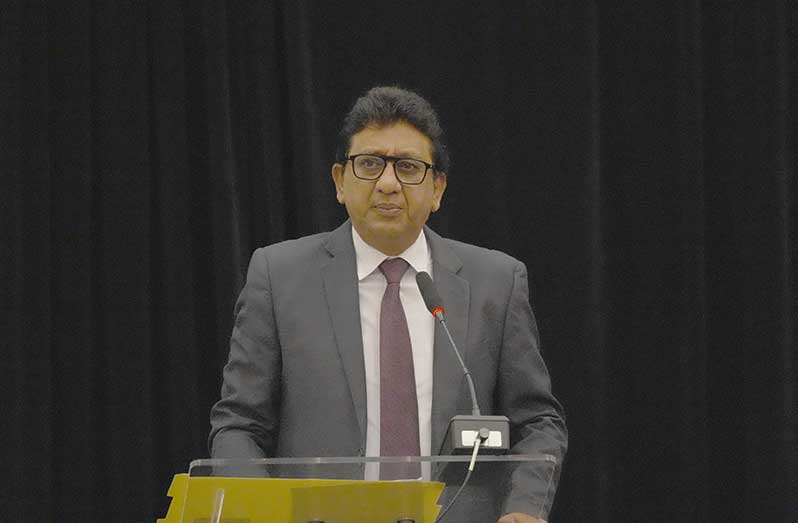
THE Caribbean must strengthen its legal systems, deepen regional co-operation and deprive organised criminal networks of their illicit wealth if the region is to effectively combat transnational crime, Attorney General and Minister of Legal Affairs, Anil Nandlall, said on Wednesday as Guyana hosted the 9th Annual General Meeting of the Asset Recovery Inter-Agency Network of the Caribbean (ARIN-CARIB).
The two-day conference, being held at the Guyana Marriott Hotel under the theme “From Tracing to Transformation: Building an Asset Recovery-Ready Caribbean,” has brought together prosecutors, judges, investigators, financial intelligence officials and regional security stakeholders to enhance co-operation in tracing, confiscating and recovering the proceeds of crime.
Delivering the feature address, Nandlall said organised criminal groups have become increasingly sophisticated, operating across jurisdictions through advanced technology, complex financial systems and virtual assets to conceal illegally acquired wealth.
“Asset recovery is no longer simply about identifying illicit proceeds. It is about transforming the way our institutions cooperate, strengthening our legal framework, enhancing public confidence in the administration of justice and ensuring that organised crime can never retain the financial rewards of its activities,” he said.
The Attorney General warned that criminal organisations now move funds across borders within seconds while exploiting differences in national legal systems to evade investigators and frustrate prosecutions.
“If criminals have learned to collaborate without regard for borders, then governments, prosecutors, investigators and financial intelligence units must collaborate even more effectively,” he said, describing international co-operation as “an operational necessity.”
GUYANA STRENGTHENING ANTI-MONEY LAUNDERING FRAMEWORK
Nandlall outlined several measures Guyana has implemented to reinforce its anti-money laundering and countering the financing of terrorism (AML/CFT) framework, noting that reforms extend beyond legislation to include stronger institutions, enhanced inter-agency coordination, expanded international co-operation and increased technical capacity.
He said agencies including the Attorney General’s Chambers, Financial Intelligence Unit (FIU), Guyana Police Force, Special Organised Crime Unit (SOCU), Customs Anti-Narcotic Unit (CANU), Guyana Revenue Authority (GRA), Guyana Geology and Mines Commission (GGMC) and the Office of the Director of Public Prosecutions are working collaboratively to identify, restrain, confiscate and recover criminal assets.
The Attorney General also disclosed that comprehensive amendments to Guyana’s AML/CFT legislation are being prepared to modernise confiscation measures, strengthen investigative powers and ensure compliance with evolving international standards ahead of the country’s fifth-round mutual evaluation.
Among the latest developments, he noted Cabinet’s approval of staffing for the Guyana Compliance Commission, describing it as a major step towards strengthening oversight of designated non-financial businesses and professions while expanding supervision of reporting entities.
Nandlall also said the Government is developing legislation to regulate virtual assets and virtual asset service providers as financial crime continues to evolve.
He noted that Guyana’s status as a major gold-producing nation has heightened concerns over illegal gold smuggling, which is often associated with trade-based money laundering, tax evasion, organised criminal networks and corruption.
“Our response to organised crime must therefore be comprehensive. Whether criminal wealth originates from narcotics trafficking, corruption, environmental crime, illegal mining, wildlife trafficking or financial fraud, the objective must remain the same: to identify, restrain, confiscate and ultimately deprive criminals of the proceeds of their unlawful conduct,” he said.
JOINT INVESTIGATIONS CRITICAL
The Attorney General described joint investigative teams as one of the most significant advances in international law enforcement, allowing investigators and prosecutors from multiple jurisdictions to collaborate from the earliest stages of complex investigations.
“Criminals have already united. The Caribbean must be equally united from the side of law enforcement and the rule of law,” he said, urging regional governments to move beyond reactive co-operation towards sustained, coordinated and proactive partnerships.
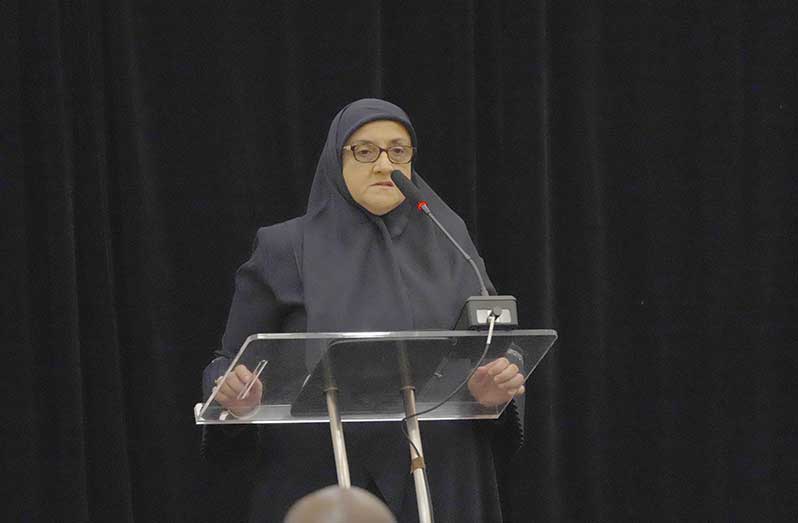
Director of Public Prosecutions, Shalimar Ali-Hack, echoed the need for greater regional collaboration, observing that organised crime is increasingly borderless and technology-driven.
She stressed that successful prosecutions depend fundamentally on the quality of criminal investigations, which in turn require well-trained investigators, timely access to evidence and legislation that supports co-operation among agencies.
“Prosecutions are important to this fight, but they are based on the quality of the investigations. The quality of those investigations depends on investigators’ understanding of the law and their access to relevant evidence,” Ali-Hack said.
She added that regional networking enables investigators to exchange information more rapidly through trusted channels, leading to stronger investigations, increased asset confiscations and greater public confidence in the justice system.
REGIONAL STRATEGY
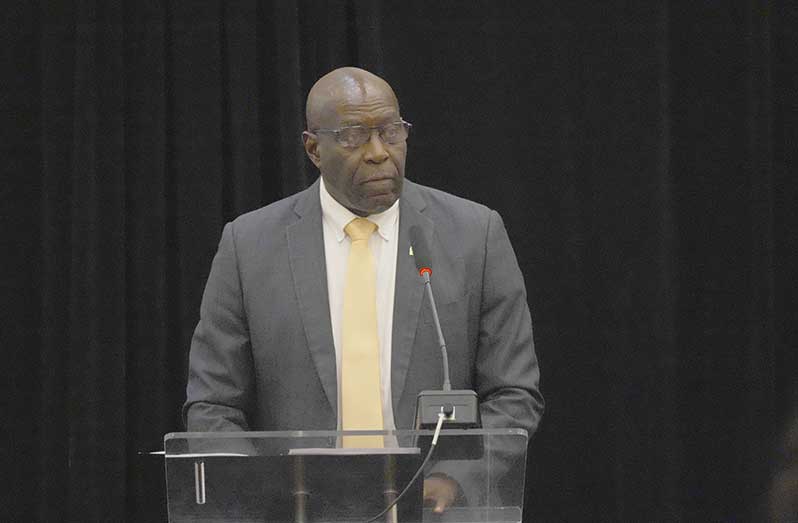
Deputy Executive Director of the Regional Security System (RSS), Ashley Rodney, also called for asset recovery to become a central pillar of the Caribbean’s broader security strategy.
He said the conference theme reflects a vision that extends beyond confiscating illicit wealth to strengthening institutions, modernising legislation and developing professional expertise across the region.
“Asset recovery is about far more than identifying and confiscating illicit wealth. It is about strengthening institutions, modernising legislation, building professional capacity and ensuring organised crime can no longer profit from its activities,” Rodney said.
He identified three regional priorities: strengthening legislative and policy frameworks, expanding specialised training for criminal justice practitioners and deepening regional and international co-operation.
Rodney noted that the RSS has already trained more than 200 criminal justice practitioners in the use of joint investigative teams and continues to support legal reforms that facilitate international co-operation.
“Our work extends beyond criminal assets. It is about restoring public confidence, strengthening governance, protecting our communities and ensuring that the proceeds of crime are redirected to the benefit of our citizens rather than criminal organisations,” he said.
The ARIN-CARIB annual meeting continues today with technical discussions focusing on judicial expectations in asset recovery, joint investigative teams, international co-operation and emerging strategies to strengthen the Caribbean’s capacity to trace, confiscate and recover the proceeds of organised crime.




