






—data shows gov’t investing heavily in youth to build Guyana’s future
GUYANA’S sustained investment in education, scholarships and skills training is translating into measurable gains for the country’s young people, with data showing a sharp increase in university graduates alongside a significant decline in the number of youths who are neither studying nor working.
Statistics released by the Bureau of Statistics (BoS) to mark World Population Day 2026 indicate that the number of youths attaining a bachelor’s degree or equivalent qualification increased by 56.7 per cent between the third quarter of 2021 and the fourth quarter of 2024.
At the same time, the proportion of young people classified as not in education, employment or training (NEET) declined from 35.7 per cent in the third quarter of 2021 to 25 per cent by the fourth quarter of 2024.
The figures suggest that more young Guyanese are remaining in school, pursuing higher education or entering the labour market as government investments in human capital continue to expand.
The data forms part of Guyana’s observance of World Population Day under the theme “Realising the hopes and aspirations of young people – today and for the future.”
GOVERNMENT’S HUMAN CAPITAL AGENDA
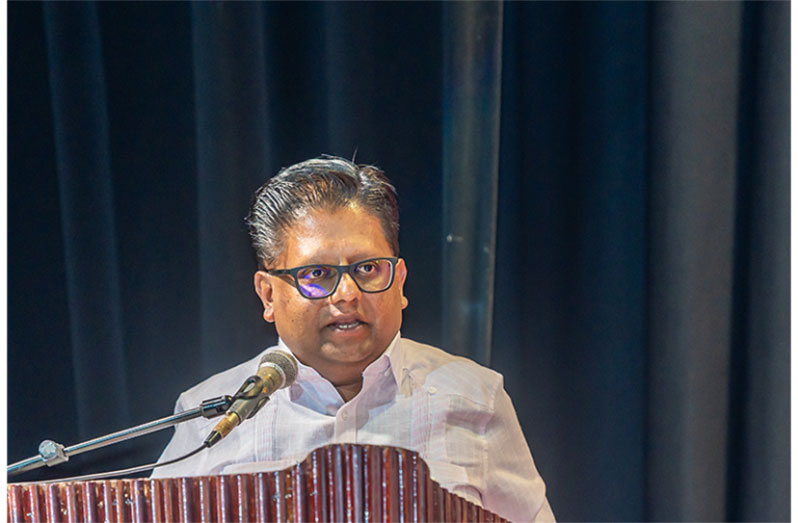
In his World Population Day message, Senior Minister in the Office of the President with responsibility for Finance, Dr Ashni Singh, said Guyana’s development strategy is centred on investing in people from infancy through adulthood.
“As Guyana progresses through the ongoing unprecedented transformation, our Government remains steadfast in our commitment to nurturing, enhancing and realising the potential of every Guyanese citizen,” Dr Singh said.
“Our people-centred policy framework is geared towards supporting all Guyanese from infancy through adulthood. By empowering our youths from nursery to university and into the workforce, we are building the foundations of a sustainable and prosperous ‘One Guyana’,” he added.
According to the minister, those investments begin before birth through expanded maternal and paediatric healthcare, continue throughout the education system and extend into tertiary education, vocational training, entrepreneurship and home ownership.
Central to that strategy is the Government’s policy of providing free education from nursery to university.
Dr Singh said that over the past five years more than 100 new schools have been constructed across Guyana while existing schools have undergone extensive rehabilitation.
He noted that access to learning has also expanded through the Guyana Learning Channel, EdYouFM and the Digital School, helping to make educational resources available to students regardless of where they live.
Financial support for students has likewise increased substantially.
This year, families are receiving $85,000 per child through the combined Because We Care grant and the school uniform and supplies grant, representing a single-year investment of approximately $17 billion in schoolchildren.
The Government has also maintained the full subsidisation of CSEC and CAPE examination fees for up to eight subjects while expanding the National School Feeding Programme, which now provides daily meals to more than 110,500 nursery and primary school learners.
Together, these interventions are intended to reduce financial barriers that might otherwise prevent children from completing their education.
RECORD DEMAND FOR UNIVERSITY EDUCATION
The data also reflects growing interest in higher education.
According to Dr Singh, applications to the University of Guyana climbed from approximately 17,800 for the 2024/2025 academic year to around 26,000 for the 2025/2026 academic year.
Meanwhile, the Guyana Online Academy of Learning (GOAL) has now awarded more than 54,000 scholarships, allowing Guyanese to pursue certificate, diploma, bachelor’s, master’s and postgraduate programmes through international institutions.
The minister said the Government remains committed to expanding scholarship opportunities and investing in the country’s academic and professional development.
SKILLED WORKFORCE
Beyond traditional academics, Government has increased investment in technical and vocational education to prepare young people for careers in Guyana’s rapidly changing economy.
Dr Singh said more than 2,000 youths have completed specialised training through the Youth Entrepreneurship and Apprenticeship Programme (YEAP).
Another 14,000 young people have benefitted from the Youth Entrepreneurial and Skills Training (YEST) programme administered through the Board of Industrial Training.
Additionally, approximately 2,500 youths have participated in robotics, coding and digital technology training through the Presidential Award for Youth, Entrepreneurship and Robotics (PAYR) initiative.
These programmes are designed to equip young Guyanese with practical skills for careers in construction, engineering, manufacturing, technology and the country’s expanding oil and gas sector.
The Government is also seeking to cultivate a new generation of entrepreneurs.
According to Dr Singh, the Small Business Bureau’s Youth Entrepreneurship Programme has already trained more than 500 secondary school students in entrepreneurship and corporate fundamentals.
Participants can also access grants of up to $400,000 to support viable business ideas.
Looking ahead, he said the soon-to-be-established Guyana Development Bank will further strengthen the entrepreneurial ecosystem by providing accessible and affordable financing to young innovators and small businesses.
DATA SHOWS PROGRESS
Chief Statistician Errol La Cruz said the latest figures demonstrate the value of using labour market data to guide national development.
He noted that the increase in tertiary qualifications and the decline in the number of young people outside education and employment point to positive changes in the country’s human capital profile.
“Those gains demonstrate the importance of using labour-market information to align education, technical and vocational training with the changing needs of the economy,” La Cruz said.
“Reliable data can help ensure that young Guyanese acquire the skills and competencies required to participate meaningfully in both established and emerging areas of economic activity.”
He said official statistics also help policymakers anticipate future demands and identify emerging trends in education, employment and social development.
INVESTING IN THE FUTURE
Dr Singh emphasised that sustained investment in young people remains one of the Government’s foremost priorities, noting that demographic data continues to guide policy decisions across sectors.
“The successful execution of these expansive, cross-sectoral interventions relies entirely on the availability of timely, high-fidelity and reliable demographic data,” he said.
“By systematically investing in our youth and strengthening our statistical architecture, we are securing an inclusive, equitable and sustainable future. Let us continue to work in unison to build a stronger, more resilient and prosperous Guyana for generations to come.”




