






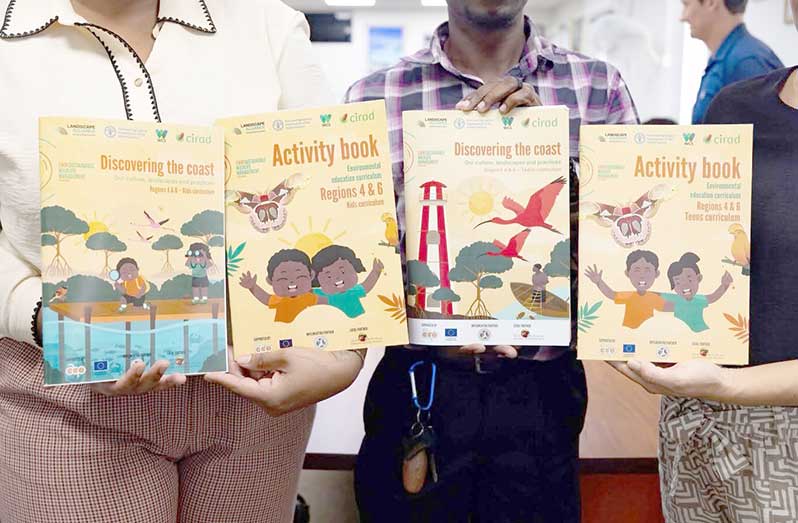
STUDENTS in Regions Four and Six will now have access to a new environmental education resource aimed at strengthening awareness and appreciation for Guyana’s natural heritage following the official launch of the Environmental Education Curriculum (EEC) on Tuesday, at the Umana Yana.
Developed over a period of more than one year, the curriculum is designed to provide students with practical, hands-on lessons focused on Guyana’s native wildlife, ecosystems, waterways, agriculture, fishing and coastal culture throughout the academic year.
The initiative includes an activity book, teacher’s handbook and guidebook, which will support educators in delivering structured environmental lessons while encouraging students to better understand the importance of conservation and sustainable management of natural resources.
The Environmental Education Curriculum was developed through collaboration among several key stakeholders, including the Sustainable Wildlife Management (SWM) Programme, the European Union, the Guyana Wildlife Conservation and Management Commission (GWCMC), the Ministry of Education and the South Rupununi Conservation Society.
The SWM Programme expressed appreciation to the partners whose contributions and co-operation helped bring the initiative to fruition.
The programme noted that the curriculum represents an important step in promoting environmental stewardship among young Guyanese by introducing students to topics directly connected to their surroundings and communities.
Through lessons on wildlife, habitats, waterways, farming practices, fishing traditions and coastal ecosystems, the curriculum seeks to encourage students to develop a stronger connection with the environment while understanding the need for responsible use and protection of natural resources.
The launch marks another effort to integrate environmental awareness into the education system and equip the next generation with knowledge and skills to support conservation and sustainable development in Guyana.




