






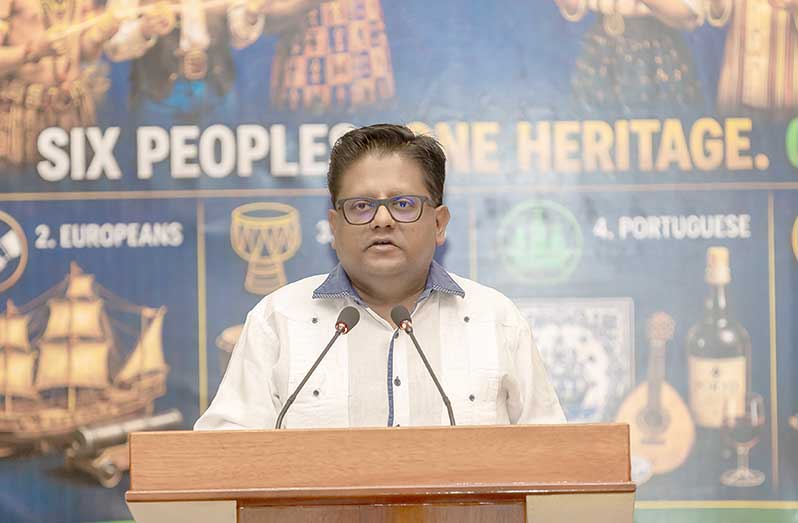
–Minister Singh tells ERC symposium, urges Guyanese to separate rhetoric from reality
–support cohesion, efforts to build unity to confront challenges
FINANCE Minister Dr Ashni Singh has hailed Guyana’s ethnic, religious and cultural diversity as its “greatest source of strength”, urging citizens to celebrate the country’s hard-won cohesion and reject attempts to turn differences into division.
Addressing the Ethnic Relations Commission’s (ERC) national symposium at the Arthur Chung Conference Centre on Tuesday, Dr Singh praised generations of Guyanese who, despite arriving through “force and deception” and enduring “terrible hardship”, forged what he described as a “richly and beautifully diverse kaleidoscopic tapestry” that is modern Guyana.
Held under the theme, “Unity, Diversity and the Path Forward,” the symposium brought together stakeholders from across all sections of society to promote dialogue, national unity and social cohesion.
“All of our ancestors arrived and laboured for generations, centuries, and decades. I believe that it is fair to say that they managed collectively to forge a really remarkable and diverse Guyana, and it is a diversity that we must not be shy to flaunt and to celebrate,” the minister said.
Dr Singh noted that, while modesty is a personal virtue, nations must be prepared to acknowledge and speak confidently about their successes, especially where ethnic harmony is concerned.
“All of our ancestors arrived and laboured for generations, centuries, and decades. I believe that it is fair to say that they managed collectively to forge a really remarkable and diverse Guyana, and it is a diversity that we must not be shy to flaunt and to celebrate,” he added.
The Finance Minister said Guyana stands out internationally for the extent to which people of different ancestry, different ethnic origin, different religious persuasions and different denominations live, work, study and worship together cohesively.
He stressed that the People’s Progressive Party/Civic (PPP/C) Government, hold an “unshakable view” that diversity is central to Guyana’s development trajectory.
“We in the Peoples Progressive Party/Civic Government are of the firm and unshakable view that Guyana’s diversity is a source of tremendous strength for our country and the strength that we have every intention of leveraging, of protecting and of deploying in the collective national good,” he said.
Dr Singh tied this position to President Ali’s “One Guyana” platform, which he described as a deliberate effort to highlight the country’s oneness while ensuring that every single Guyanese person is able to participate in, contribute to, and benefit from the economic transformation that is underway.
While urging Guyanese to recognise and celebrate the gains already made, the minister noted that efforts to promote cohesion are far from being completed and called for honesty in confronting remaining challenges.
“We need to be frank about separating rhetoric and sound bites from reality. We have a duty to work to ensure that our diversity continues as it has been in the past, that our diversity continues to be the source of strength, that it has been over the generations that preceded us, and that we continue to build on this instead of becoming a source of division and weakness,” Dr Singh said.
He added that political leaders in particular bear a responsibility not to foster and promote suspicion, but to promote cohesiveness in all that we do.”
Dr Singh also commended the Ethnic Relations Commission and its successive cohorts for their work since being established through the 2001 constitutional reforms, lauding Tuesday’s symposium as part of that ongoing effort to safeguard Guyana’s ethnic harmony as the country enters a new phase of economic and social transformation.
‘HARNESS YOUR DIVERSITY’
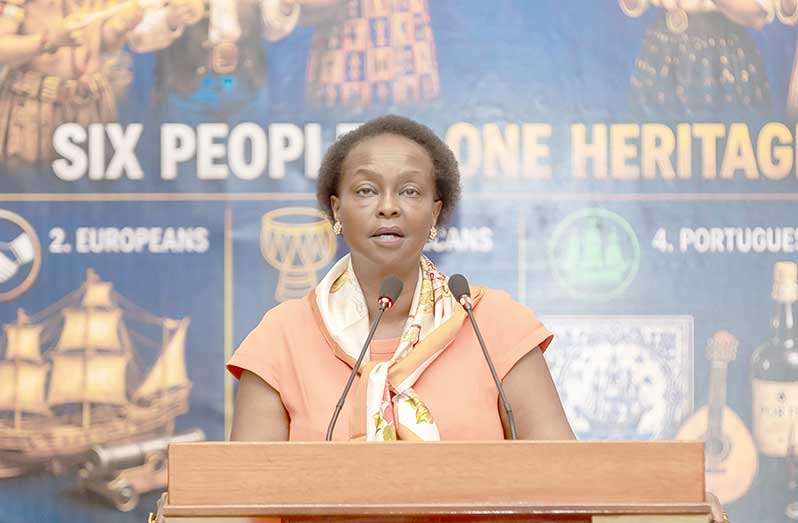
Meanwhile, United Nation’s Resident Coordinator, Jean Kamau urged Guyana to invest deliberately in social cohesion, inclusive institutions and civic education, warning that unity cannot be taken for granted.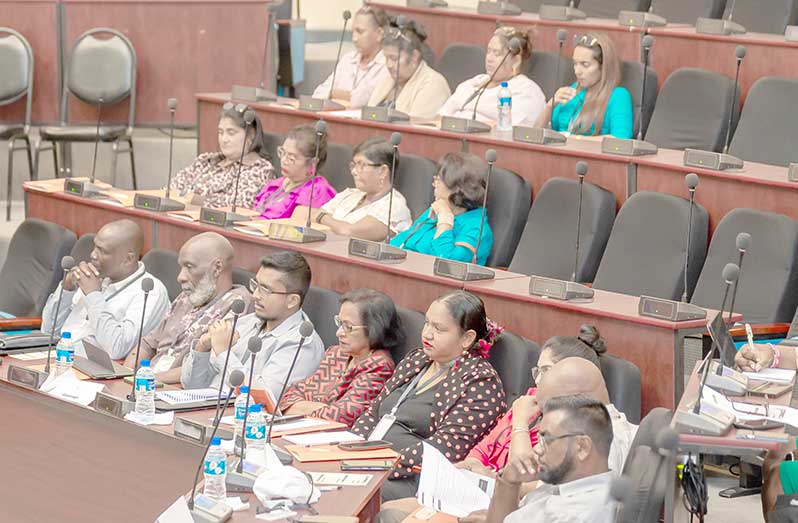
She said the UN, through its forthcoming Cooperation Framework for the Caribbean (2027–2031) and the CARICOM-UN Framework for Action, would continue to support Guyana’s efforts to strengthen inclusion, human rights and social resilience.
“Guyana’s story is still being written. The next chapter will be defined by, will not be defined by ethnicity alone, but by the choices made today about the kind of society future generations will inherit,” she said, adding: “The opportunity before Guyana is not simply to manage diversity, but to harness it as a source of strength, creativity, and national progress.”
She further proposed five practical lessons for Guyana’s path forward.
These include expanding interaction across communities, especially among young people; investing in education and civic education that promote shared citizenship; strengthening public dialogue to counter misinformation and divisive narratives; building institutions that are trusted, inclusive and accessible; and nurturing a shared national vision in which diversity is celebrated as an asset.
“The question is not whether differences exist. The question is, how do we choose to engage with these differences, and whether we can transform them into a source of collective strength,” she said.



