 –as new solar farm brings improvements to essential service
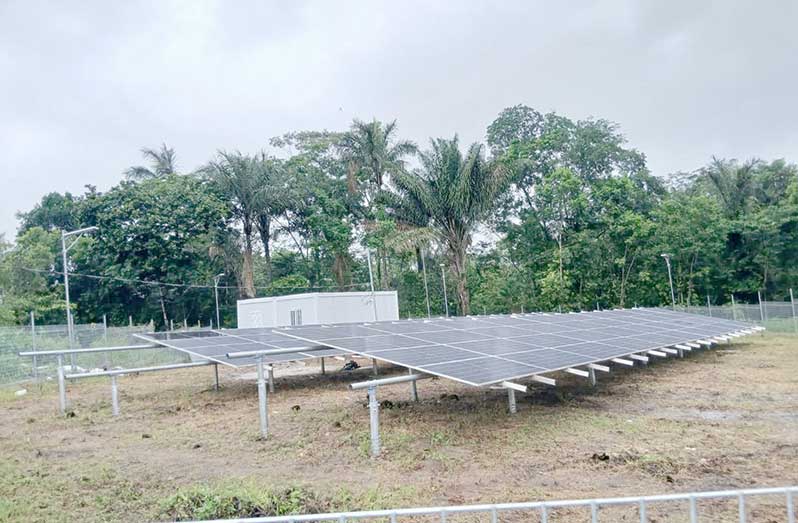
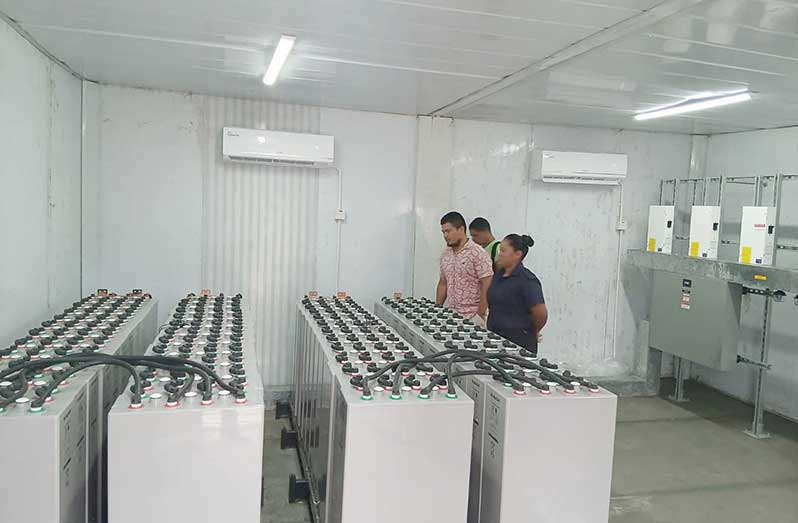
RESIDENTS of White-Water Village in Region One are now benefitting from reliable and sustainable electricity following the commissioning of a Mini Solar Farm, a government-funded project aimed at improving energy access in hinterland and remote communities.
According to a statement shared by Vice President Bharrat Jagdeo on Monday, the facility is already delivering tangible benefits, with the village health centre now receiving 24-hour electricity and enhanced cold-storage capacity for vaccines, insulin and other essential medicines. Schools, churches and other community facilities are also expected to benefit from the clean energy supply.
“White Water Village in Region One is now benefitting from a fully operational Mini Solar Farm, delivered through a government investment aimed at expanding access to reliable and sustainable energy,” the statement read.
The project forms part of the government’s wider strategy to expand renewable energy generation and improve electricity access across Guyana, particularly in communities that are not connected to the national grid.
Earlier this year, Prime Minister, Brigadier Mark Phillips (Ret’d) disclosed that the country has been steadily decentralising and expanding power delivery through a range of energy projects, with more than 37 megawatts of renewable energy now installed across several communities.
Since August 2020, more than 186 megawatts of new generating capacity have been added to the Guyana Power and Light (GPL) integrated system, contributing to over 500 megawatts of newly installed capacity from a mix of natural gas and renewable sources.
Upgrades to the national grid are underway, alongside the rollout of solar farms at Onderneeming, Charity, Leguan, Wakenaam, Trafalgar, Prospect, Hampshire, Bartica, Mahdia and Lethem. Mini-hydropower plants at Moco-Moco, Kumu and Kato have also been completed, 46 solar mini-grids installed and more than 37,000 solar home systems distributed, resulting in over 37 megawatts of renewable energy now powering communities.
He had announced, too, efforts to promote low-carbon transportation, with 23 electric vehicle charging stations set to be installed nationwide to support the emerging domestic electric vehicle industry. Energy efficiency and conservation measures are also being advanced through public-education campaigns, appliance energy-labelling standards and equipment-replacement initiatives.
Under the Caribbean Efficient and Green Energy Buildings Project, more than 250 public buildings are targeted for retrofitting and distributed solar photovoltaic systems.
He had further highlighted Guyana’s environmental stewardship, noting the country’s record of maintaining one of the lowest global deforestation rates. Through the Low Carbon Development Strategy (LCDS) 2030, Guyana has pioneered jurisdictional carbon credits under the ART-TREES standard, secured a US$750 million forest-carbon credit agreement, and ensured that at least 15 per cent of revenues flow directly to Indigenous and hinterland communities.
Additionally, the government is aiming to bring at least 5,000 households on board in the first phase of its grid-connected solar programme, as part of efforts to advance the country’s low-carbon energy transition.
Recently the government announced a 25 per cent reduction in electricity rates for households in Bartica, Region Seven.