





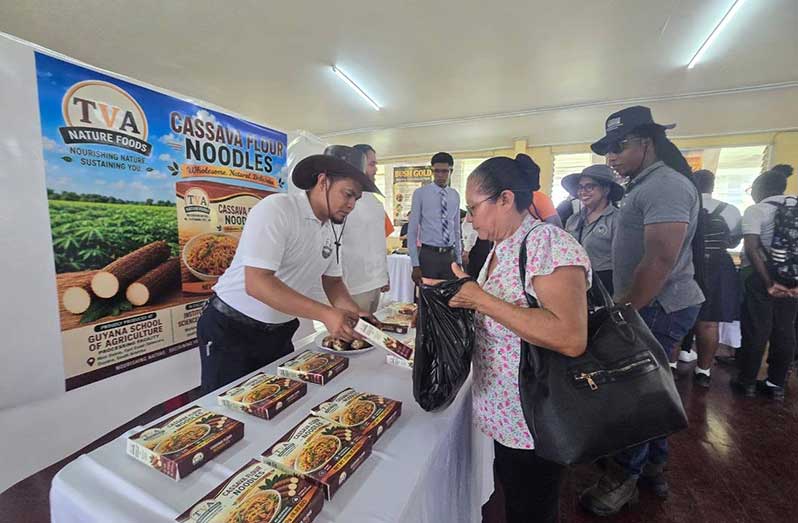
 THE Guyana School of Agriculture (GSA) has highlighted the growing potential of agro-processing and value-added agriculture through its Annual Final Year Agro-Processing Exhibition, where students unveiled a range of innovative products developed from locally sourced agricultural materials.
The exhibition, a key component of the institution’s academic programme, provided final-year students with an opportunity to demonstrate the practical application of their training in Food Science, Technology and Agribusiness Management. Through product development, research and business planning, students showcased their ability to transform raw agricultural commodities into market-ready products with commercial potential.
According to GSA, the projects reflected a high level of creativity, technical competence and entrepreneurial thinking, underscoring the institution’s commitment to preparing graduates for careers within Guyana’s expanding agri-food sector.
The exhibition featured a variety of value-added products designed to capitalise on locally available resources while addressing market demands. Students were required to integrate scientific principles, quality control measures and business strategies into their projects, providing a comprehensive demonstration of the skills acquired during their studies.
Beyond showcasing student achievement, the event also highlighted the important role agro-processing can play in Guyana’s agricultural development. Industry stakeholders have long identified value addition as a critical mechanism for increasing farmers’ incomes, reducing post-harvest losses, improving food security and creating employment opportunities throughout the agricultural value chain.
The exhibition comes at a time when Guyana is placing greater emphasis on agricultural diversification and agro-industrial development as part of efforts to strengthen food production and reduce dependence on imported goods. Value-added products are increasingly being viewed as a means of expanding export opportunities while creating new avenues for economic growth.
GSA noted that the students’ projects demonstrated how innovation and entrepreneurship can be used to transform traditional agricultural production into competitive and profitable enterprises capable of contributing to national development.
The institution reaffirmed its commitment to providing high-quality agricultural education and practical training, emphasising that programmes such as the annual exhibition equip students with the knowledge, experience and technical expertise required to support the continued advancement of Guyana’s agriculture sector.
Through initiatives that combine classroom learning with hands-on experience, the Guyana School of Agriculture continues to play a central role in developing the next generation of agricultural professionals and entrepreneurs needed to drive the sector’s future growth.





